A cracked window, foggy pane, or damaged glass door can affect more than your home’s appearance. It may allow heat, rain, noise, and insects inside while creating a safety concern for your family. Residential glass replacement can solve the problem, but choosing the right replacement takes more than measuring the visible opening. The glass must suit the frame, room, weather exposure, privacy needs, and local building requirements. Florida homeowners may also need to consider hurricane protection, impact ratings, humidity, and salt air. Before approving a repair, learn how to tell whether you need new glass, frame repairs, or a complete window replacement. The right information can help you avoid unnecessary costs and achieve a safer, more comfortable home.
Key Takeaways
- Match the glass to the space: Consider safety, privacy, sunlight, noise, energy performance, and storm exposure before choosing glass for windows, doors, mirrors, or shower enclosures.
- Inspect the complete opening: Glass-only replacement may work when the frame and hardware remain sound, but leaks, fogging, rot, corrosion, or operating problems may call for additional repairs or a full replacement.
- Choose a qualified local installer: Request precise measurements, written product specifications, Florida code guidance, installation details, and warranty information before approving the project.
Which Residential Glass Fits Your Home?
The right residential glass depends on where it will be installed, how much heat and sunlight the opening receives, and the level of privacy, safety, and storm protection you need. A bathroom shower enclosure has different requirements from a living room window. Likewise, a coastal home may need more protection from wind, debris, and salt air than a property farther inland.
Start by considering the opening’s purpose. Windows may need insulation, glare control, and impact protection. Doors often require safety glazing because people can walk into them or fall against them. Mirrors and closet doors need secure mounting, compatible hardware, and an appearance that suits the room. Your budget, maintenance preferences, local building requirements, and the condition of the existing frame also affect the best choice.
Glass Rescue helps homeowners select glass for windows, doors, mirrors, shower enclosures, and other residential applications. Our residential glass services are available throughout Dade County, Broward County, Hollywood, Hillsborough County, and Tampa. A professional assessment can help you compare glass types and confirm that the selected product fits the opening correctly.
Single-, double-, and triple-pane glass
Single-pane glass has one layer and may work for some interior applications, older windows, or openings where insulation is not a primary concern. However, it offers less protection from outdoor heat, temperature changes, and noise than insulated glass.
Double-pane glass contains two panes separated by an insulating space. Triple-pane glass adds another pane and insulating layer, which can provide greater thermal and sound control. Clark Hall Doors explains how double- and triple-glazed glass can improve insulation and energy efficiency.
For many Florida homes, double-pane glass offers a practical balance between performance, cost, and weight. Triple-pane glass may suit rooms that need additional insulation or noise reduction, but it is thicker and heavier. The existing frame must be able to support the unit without creating problems with operation, seals, or hardware.
Tempered safety glass for doors and bathrooms
Tempered glass is heat-treated to provide greater strength than standard annealed glass. When it breaks, it is designed to crumble into small, less jagged pieces rather than producing large, sharp shards. Pella’s glass guide describes tempered glass as approximately four times stronger than regular annealed glass.
This makes tempered glass a common choice for shower doors, bathroom enclosures, patio doors, entry doors, and other areas where someone could walk into or fall against the glass. Building codes may require safety glazing near doors, tubs, showers, stairs, and floors.
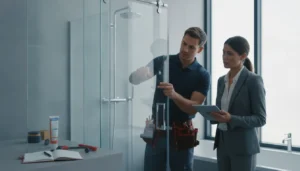
Tempered glass cannot be cut or altered after treatment. Any holes, notches, edgework, and other fabrication must be completed before tempering. Accurate measurements are essential, particularly for frameless shower doors and custom bathroom enclosures. Professional installation also helps ensure the glass is properly supported and the hardware is correctly positioned.
Laminated and impact-resistant glass for Florida homes
Laminated glass contains two or more glass layers bonded around a durable interlayer. If the glass cracks, the pieces generally remain attached to that interlayer. This can help limit flying shards and may provide additional security and sound control.
Impact-resistant glass is tested for stronger wind and flying debris conditions. Florida homeowners should consider the property’s location, local requirements, insurance documentation, and the exposure of each opening. Homes in Dade and Broward counties may be subject to High-Velocity Hurricane Zone requirements, while homes in Tampa and Hillsborough County may have different wind-borne debris requirements.
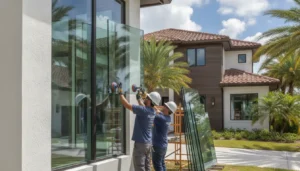
Impact protection depends on the complete assembly, not just the pane. The frame, anchors, hardware, glazing system, and installation method must work together and meet applicable approval requirements. ASP SuperHome explains how impact windows with Low-E coatings and suitable solar heat gain ratings can support comfort and energy performance. Ask your glass professional which approved products fit your opening and location.
Low-E, argon-filled, and acoustic glass
Low-E glass has a thin coating that helps control heat transfer and ultraviolet exposure. In Florida, the right Low-E option can reduce solar heat entering sun-facing rooms while helping indoor spaces stay more comfortable. It may also help protect flooring, furniture, artwork, and fabrics from fading.
Argon-filled insulated glass uses argon gas between the panes to improve thermal performance. The gas works with the spacer and seals, so a failed seal can reduce the unit’s effectiveness. Fogging or moisture between panes may indicate that the insulated glass unit needs replacement.
Acoustic glass is designed to reduce outside noise and may be useful for homes near busy roads, airports, entertainment districts, or active neighborhoods. Ardmor’s guide to energy-efficient glass explains how Low-E coatings help manage heat during warmer and cooler conditions. A professional can compare pane thickness, air space, coatings, and frame condition to help identify a suitable combination.
Privacy, tinted, decorative, and custom-shaped glass
Privacy glass can limit visibility while still allowing natural light into a room. Frosted, etched, patterned, textured, and tinted options may suit bathrooms, entry doors, sidelights, bedrooms, and street-facing windows. Each option creates a different balance of privacy, light, glare control, and design.
Tinted glass changes the appearance of incoming light and can reduce glare. Decorative glass adds pattern or texture, while custom-shaped glass can follow arches, curves, unusual openings, and specialty designs. Clark Hall Doors outlines how frosted, tinted, patterned, and textured glass can support privacy and design.
Think about maintenance before selecting a textured or decorative surface. Some patterns collect more dust or water spots than smooth glass. Also consider nighttime privacy, since interior lighting can make a window more visible from outside. Your installer can help you choose a finish that suits the room and the direction of the opening.
Window, door, mirror, and mirror closet glass
Window glass often needs to address insulation, glare, solar heat, weather exposure, and ventilation. Door glass must also account for impact risk, safety glazing, hardware, and frequent operation. A sliding patio door, front door, and interior French door may each require a different glass specification.
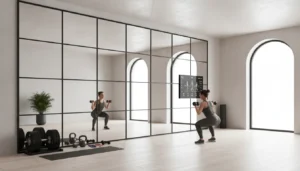
Mirrors have different requirements from windows. Bathroom mirrors may need moisture-resistant installation and protected edges, while wall mirrors require secure mounting based on their size and weight. Mirror closet doors must be selected as a complete system, with compatible tracks, rollers, frames, and panels.
The right glass should suit both the purpose of the opening and the home’s design. Pella’s overview of window glass types highlights the importance of matching glass to a window’s structure and performance needs. Glass Rescue also provides mirror and custom glass solutions for residential spaces.
Match replacement glass to the opening
Replacement glass must match more than the visible width and height. The installer should check the thickness, pane configuration, edge details, glazing method, frame material, hardware clearance, and drainage design. Incorrect thickness can prevent the glass from fitting securely or interfere with the sash, seals, and hardware.
The existing frame matters just as much as the replacement pane. A frame that is bent, corroded, rotted, cracked, or unable to hold the glass tightly may continue to cause leaks, drafts, fogging, or movement after installation. Renewal by Andersen recommends matching replacement glass to the opening and considering the frame’s thermal performance.
Before approving the work, request the glass type, thickness, coating, pane count, safety rating, and any impact or product approval details in writing. For custom glass, confirm the shape, edge finish, cutouts, hardware, and installation method. These details make it easier to compare estimates and verify that the replacement is suitable for your home.
Should You Replace the Glass or the Window?
A cracked, foggy, or drafty window does not always need a complete replacement. If the frame is straight and stable, replacing the glass may restore the opening without removing the surrounding trim or changing the entire window system. This approach can work well for a single broken pane, a failed insulated glass unit, or glass that no longer provides the desired level of privacy, safety, or energy performance.
However, glass is only one part of a window. The frame, sash, seals, locks, tracks, and surrounding wall all affect how well the opening performs. A new pane will not fix a warped frame, rotted sill, damaged hardware, or water intrusion around the window. In these cases, full-window replacement or additional repairs may provide a more dependable result.
Florida homes also face conditions that can accelerate window damage, including strong sunlight, high humidity, heavy rain, salt air, and wind-borne debris. A professional inspection can help identify visible and hidden problems, then compare repair, glass replacement, and full-window replacement options. Glass Rescue provides residential glass services throughout Dade, Broward, and Hillsborough counties, including communities such as Hollywood and Tampa.
Replace only the glass when appropriate
Glass-only replacement may be suitable when the existing frame is straight, secure, and free from rot, corrosion, or major deterioration. This option can address a cracked pane, shattered glass, or failed insulated glass unit while keeping the existing frame and surrounding trim in place.
Check whether the window still opens, closes, locks, and seals correctly. The sill should also be dry and firm, without soft wood, staining, or signs of recurring leaks. If these components remain in good condition, replacing the glass may restore safety and appearance without changing the full window assembly. R3 Homes explains that repairing an existing window can make sense when the damage is limited and the frame and other components remain sound.
Replace the frame, sash, seals, or hardware when needed
A replacement pane cannot correct a warped frame, damaged sash, broken lock, worn balance, or deteriorated weather seal. If these parts prevent the window from closing tightly, the opening may continue to admit air or water after new glass is installed.
Look for soft wood, corrosion, gaps, loose hardware, peeling finishes, or movement when operating the window. A sash that sticks, drops, or will not stay open may need more than a pane replacement. Severe structural deterioration can also affect how securely the glass is held in place. As R3 Homes notes, a badly damaged frame may require more than a simple surface repair. Full-window replacement may be the better choice when several parts have failed.
Address cracks, fogging, drafts, leaks, and water damage
Cracked or shattered glass creates an immediate safety concern. Keep children and pets away from the area, avoid touching loose pieces, and arrange professional service promptly. R3 Homes recommends limiting unnecessary handling when glass is badly cracked, unstable, or broken.
Fogging between double-pane or triple-pane glass usually indicates a failed insulating seal. Moisture has entered the space between the panes, which can reduce insulation and leave the window looking permanently cloudy. Drafts, water stains, bubbling paint, damp sills, and peeling caulk also deserve attention. These signs may point to failed seals, drainage problems, or damage around the opening. Repairing only the visible glass may not solve the underlying issue if water has reached the frame or wall.
Consider age, corrosion, rot, operation, and storm damage
The window’s age and location can influence the right replacement choice. Salt air may corrode metal frames, fasteners, tracks, and hardware, especially near the coast. High humidity can contribute to rot in wood components, while repeated storms may damage seals, screens, tracks, and surrounding trim.
Pay attention to how the window performs from season to season. Does it stick, rattle, leak, or allow excessive heat and glare into the room? When selecting replacement glass, compare factors such as U-value, solar heat gain coefficient, frame materials, and glazing types. These details can help determine whether new glass will address the home’s needs or whether the complete window assembly has reached the end of its useful service life.
Choose repair, glass replacement, or full-window replacement
A minor hardware, seal, or caulking problem may only require a repair. A damaged pane with a sound frame may be a good candidate for glass replacement. Full-window replacement becomes more appropriate when the frame is warped, the sash no longer operates correctly, or moisture has damaged the sill, wall, or surrounding structure.
Safety and performance also matter. You may want to replace standard glass with tempered, laminated, Low-E, or impact-resistant glass, but the existing frame must support the new product. The opening may also need to meet local safety or storm requirements. A glass professional can inspect the complete assembly and explain which option fits the opening, the home, and your plans for the property.
Understand why glass-only replacement may not cost less
Replacing only the glass often uses fewer materials than replacing the entire window, but it does not always produce the lowest total cost. Custom sizing, insulated glass construction, specialty coatings, impact ratings, difficult access, removal, disposal, and installation all affect the estimate.
A glass-only project may also reveal problems with the frame, sash, glazing channel, or seals after work begins. Those repairs can add labor and materials to the original scope. In some cases, a new complete window offers better insulation, easier operation, and a longer service life for a similar overall investment. Homeowners do not have to replace every window at once. Estimators recommends prioritizing leaking, damaged, drafty, or broken windows when managing a larger project over time.
Confirm measurements and frame compatibility
Accurate measurements are essential before replacement glass is ordered. A professional should verify the opening, glass thickness, edge clearance, glazing method, frame condition, and space available for seals or spacers. Measuring only the visible pane can lead to an incorrect size, poor fit, or an unreliable seal.
The replacement glass must also match the frame’s design and performance requirements. Confirm whether the opening accepts single-pane, double-pane, tempered, laminated, Low-E, or impact-rated glass. Weight can also matter, especially when the glass is installed in a movable sash with older balances or hardware. Renewal by Andersen explains that selecting the correct glass type is important for managing energy use and comfort. A written assessment from Glass Rescue can clarify the recommended product, measurements, scope of work, and installation requirements before the project begins.
What Does Residential Glass Replacement Cost?
Residential glass replacement does not have one fixed price. The total depends on the size of the opening, the condition of the frame, the type of glass, and the work required for a safe installation. Replacing one pane in an accessible window may cost much less than replacing a large impact-rated unit, a custom-shaped bathroom panel, or an entire window system.
Florida requirements can also affect the product and installation method. Properties in Miami-Dade and Broward may need products approved for High-Velocity Hurricane Zones, while homes in Tampa and Hillsborough County may require solutions suited to local wind exposure and storm conditions. A professional inspection can identify the right option before you commit to a price. Glass Rescue provides residential glass services throughout Dade, Broward, and Hillsborough counties.
When comparing estimates, look beyond the starting price. Ask what glass is included, whether labor and disposal are covered, how the frame will be inspected, and whether permits or product approvals apply. A lower quote may leave out necessary repairs, upgraded glass, or installation details that affect long-term performance.
Compare glass-only and full-window replacement costs
Glass-only replacement involves removing the damaged pane and installing new glass into an existing frame or sash. It can be a practical option when the frame is straight, secure, and free from rot, corrosion, failed seals, and operating problems. This approach may preserve the existing appearance and limit the amount of material removed from the home.
Full-window replacement includes the frame, sash, glazing, and installation of a new window unit. It may be more suitable when the frame is damaged, the window leaks, the hardware no longer works, or the opening needs improved storm or energy performance. A full-frame project may also involve trim, flashing, and structural adjustments.
The difference is not simply the cost of glass compared with the cost of a window. As window replacement budgeting guidance explains, installation scope and property-specific adjustments can significantly affect the total. When both options are possible, ask the provider to price each one separately.
Account for size, thickness, panes, and glass type
Larger panes usually cost more because they require additional material, careful handling, and more installation time. Thickness matters as well. A small piece of standard glass is easier to handle than a large pane of thick safety or impact glass, which may require special equipment and multiple installers.
The number of panes also affects the estimate. Single-pane glass has a simple construction, while double-pane and triple-pane units contain sealed spaces between layers. These units can improve insulation, but they must be measured and installed correctly to maintain the seal. The replacement must also fit the opening’s glazing pocket, frame depth, and hardware.
Glass type is another major cost factor. Clear annealed, tempered, laminated, Low-E, and impact-rated glass each serve different purposes. Performance measurements such as U-factor and solar heat gain coefficient can help homeowners compare energy properties, as explained in this guide to energy-efficient glass types.
Include labor, access, removal, disposal, and installation
A written estimate should separate the glass price from the work required to install it. Labor may include measuring, preparing the opening, removing the damaged pane, setting the replacement, applying compatible glazing materials, and inspecting the finished installation.
Access can affect the total cost. A ground-floor window with clear access is usually easier to service than a second-story opening, a large fixed panel behind furniture, or glass installed in a tight space. Oversized or heavy panels may require additional equipment, protective materials, or installers.
Removal and disposal should also appear in the estimate. Broken glass requires careful handling to protect residents, pets, flooring, and workers. The project may also require removing old sealants, damaged stops, trim, or glazing materials before the new pane is installed. Confirm that cleanup and disposal are included rather than assuming they are part of the base price.
Price Low-E, argon, tempered, laminated, and impact glass
Upgraded glass generally costs more than basic clear glass, but the right option can improve safety, comfort, privacy, or energy performance. Low-E coatings help control heat transfer and solar radiation, which can be useful in rooms exposed to strong Florida sun. Argon-filled insulated units can improve thermal performance when the frame and seals are in good condition.
Tempered glass is heat-treated for safety and is commonly used in shower enclosures, doors, and areas near the floor. When it breaks, it is designed to crumble into smaller pieces rather than form large, sharp shards. Laminated glass contains an interlayer that helps hold the glass together after breakage and may also reduce outside noise.
Impact-rated glass must meet specific testing and approval requirements for wind and debris exposure. It costs more because the complete product and installation system must meet those standards, not simply because the glass is thicker. Homeowners can review information about impact glass energy performance when comparing comfort and safety benefits.
Account for custom shapes, hardware, and frame repairs
Standard rectangular panes are usually easier to measure, order, and install. Arched, triangular, round, oversized, and other custom-shaped pieces require precise measurements and special fabrication. Even a small error can make the finished pane unusable, so custom glass should be measured by an experienced professional.
Frame repairs can add to the project cost. A technician may find corroded metal, deteriorated wood, loose glazing stops, damaged seals, or water intrusion around the opening. These issues should be addressed before the replacement is installed, or the new glass may not seal or operate properly.
Hardware can affect the estimate, too. Windows and doors may need new rollers, handles, locks, hinges, closers, or tracks. If the glass is in good condition but the door does not close securely, replacing the pane alone will not resolve the full problem. Ask whether existing hardware will be reused, repaired, or replaced.
Consider permits, Florida code, storm upgrades, and insurance
Florida building code can affect both the product and installation method. In Miami-Dade and Broward counties, many projects fall within High-Velocity Hurricane Zone requirements. New construction and certain renovation projects may require approved impact products or another accepted form of storm protection. The requirements should be confirmed for the specific property and opening before glass is ordered.
Storm upgrades can increase the initial cost, but they may provide added protection from wind-borne debris and severe weather. Product approvals, fasteners, installation details, and surrounding construction all matter. Do not assume that any thick or laminated glass qualifies as hurricane-rated glass.
Insurance coverage depends on the policy and the cause of damage. Take photographs, save receipts, and ask your insurer whether an inspection or claim documentation is required. Glass Rescue can help discuss project details and arrange an assessment through its contact page, although the insurance company makes the final coverage decision.
Find local repair assistance in Hillsborough County
Homeowners in Tampa and Hillsborough County should choose a glass contractor familiar with local weather conditions, common construction, and the needs of coastal and inland properties. Salt air, humidity, wind exposure, and storm debris can affect glass, seals, frames, and hardware in different ways.
Local service also makes it easier to arrange an inspection, confirm measurements, and address questions after installation. An independent specialist can assess whether the problem is limited to the glass or connected to the frame, seal, track, or surrounding opening. This helps prevent homeowners from paying for the wrong repair.
When requesting assistance, provide the property location, opening type, approximate dimensions, visible damage, and photographs if available. Mention whether the glass is insulated, tempered, laminated, tinted, or impact-rated. These details give the contractor useful information before the site visit and help determine whether an assessment is needed.
Include key details in a written estimate
A useful estimate should describe the complete project rather than list one total. It should identify the opening being serviced, glass type, thickness, number of panes, dimensions, coating, tint, and any safety or impact rating. For insulated units, ask whether the estimate identifies the spacer, gas fill, and warranty terms.
The labor section should explain removal, opening preparation, installation, sealing, cleanup, and disposal. It should also identify access charges, lift or equipment costs, hardware work, frame repairs, trim work, and structural adjustments. If a condition cannot be confirmed until removal begins, ask how additional work will be documented and approved.
The estimate should include the expected schedule, payment terms, warranty information, and whether permits or fees are included. Request separate pricing for optional upgrades such as Low-E coatings, impact glass, decorative patterns, or replacement hardware. A detailed scope makes it easier to compare providers fairly.
Compare price, service life, comfort, and maintenance
The least expensive option may not offer the best value if it has a short service life, poor insulation, or limited protection from Florida weather. Compare the purchase price with expected durability, energy performance, noise control, safety, and maintenance requirements. A higher-quality replacement may make sense for an opening exposed to direct sun, frequent storms, or heavy daily use.
Consider the entire assembly, not only the pane. Efficient glass will perform poorly if the frame is damaged, the sash does not close tightly, or the installation allows air and water infiltration. A sound frame and professional sealing are essential to getting the expected results from upgraded glass.
Maintenance needs also vary. Keep tracks and hardware clean, inspect seals for gaps, and address leaks or fogging early. For coastal properties, regular cleaning can help remove salt deposits from glass and metal components. Ask your glass provider which replacement option fits the opening, the home’s conditions, and your long-term maintenance expectations.
How Does Energy-Efficient Glass Improve Your Home?
Energy-efficient glass helps Florida homes stay more comfortable by controlling how heat and sunlight pass through windows and glass doors. The right glass can reduce unwanted solar heat, soften glare, limit ultraviolet exposure, and help your air conditioning system maintain a steady indoor temperature. It may also improve comfort near large windows, sliding doors, and other areas that feel noticeably warmer than the rest of the room.
The best replacement glass depends on more than the glass itself. Consider the opening’s size, direction, frame condition, room use, privacy needs, and exposure to sun, traffic, or storms. A sunny west-facing window may need different features than a shaded bedroom window or a bathroom door.
Energy efficiency also depends on the complete window or door system. A well-rated glass unit cannot correct a warped frame, failed seal, loose hardware, or poor installation. During a residential glass replacement assessment, Glass Rescue can evaluate the opening and help you compare glass options that fit your home, budget, and Florida conditions.
Compare U-factor, solar heat gain, and visible transmittance
Three ratings can help you compare energy-efficient glass. U-factor measures how quickly heat passes through the glass and frame. A lower U-factor generally indicates better insulation. Solar heat gain coefficient, or SHGC, measures how much solar heat enters through the opening. A lower SHGC is often useful in Florida because it limits heat from direct sunlight.
Visible transmittance, or VT, measures how much visible light passes through the glass. Higher VT can make a room brighter, while lower VT may help reduce glare. Look at all three ratings together instead of choosing based on one number. The National Fenestration Rating Council explains window energy ratings in more detail.
Use Low-E glass to reduce Florida heat, glare, and UV exposure
Low-emissivity, or Low-E, glass has a thin coating that helps control heat transfer. For Florida homes, solar-control Low-E glass can reduce heat entering through sun-facing windows and glass doors. This can make rooms more comfortable and may reduce how often your cooling system needs to run.
Low-E glass can also reduce glare and block much of the sun’s ultraviolet radiation. That protection may help slow fading on flooring, curtains, artwork, framed photographs, and furniture. Different coatings suit different climates and exposures, so ask a professional to compare Low-E glass options for each opening.
Consider double-pane glass and argon fills
Double-pane glass contains two sheets separated by an insulating space. This design slows heat transfer and can make the interior surface feel more comfortable than single-pane glass. Many insulated glass units use argon in the space between panes because it provides more insulation than ordinary air.
Double-pane, argon-filled glass can be a practical choice for living rooms, bedrooms, and frequently used glass doors. It may reduce temperature differences near the glass and improve overall comfort. The unit must remain properly sealed, however. If the seal fails, moisture can collect between the panes and create fogging that usually requires insulated glass replacement.
Choose triple-pane or krypton options when appropriate
Triple-pane glass adds a third sheet and another insulating space. It can provide stronger insulation and noise reduction, but it is also heavier, thicker, and generally more expensive than double-pane glass. The existing frame, sash, and hardware must support the added weight and depth.
Krypton gas may be used in some insulated glass units, particularly when the space between panes is narrow. It can provide strong insulation, but it may not be necessary for every Florida home. Ask a glass professional to compare the expected comfort and sound benefits with the added material and installation requirements before selecting triple-pane or krypton-filled glass.
Use laminated glass to reduce noise and improve safety
Laminated glass consists of two glass layers joined by a durable inner interlayer. If the glass breaks, the pieces generally remain attached to the interlayer instead of scattering as easily. This makes laminated glass a useful option for certain doors, large windows, and openings where added safety matters.
The interlayer can also help soften outside noise from traffic, nearby businesses, or busy neighborhoods. Laminated glass is not automatically the same as impact-rated glass, so confirm the product’s testing and approval requirements for the specific opening. Glass Rescue’s residential glass services include solutions for replacement, safety, sound control, and custom applications.
Match glass performance to each room and opening
A bedroom facing a busy road may benefit from laminated or acoustic glass, while a sunny living room may need Low-E glass with a lower SHGC. A bathroom may require tempered safety glass, privacy glass, or a combination of both. A front door or patio opening may need laminated, impact-resistant, or other code-compliant glazing.
Consider the opening’s direction as well. South- and west-facing windows often receive strong sunlight, especially during the afternoon. Shaded or north-facing openings may have different priorities. Evaluate each room’s temperature, glare, privacy, noise, safety, and natural-light needs. Window placement and sun exposure can help determine which glass features make the most sense.
Remember that efficient glass cannot fix damaged frames or poor installation
Even high-performance glass may perform poorly when installed in a warped, corroded, rotten, or poorly sealed frame. Damaged weatherstripping, failed spacers, loose hardware, and water intrusion can also create drafts, leaks, and condensation. Replacing only the glass may not resolve these problems.
Installation quality matters just as much as product selection. The replacement must be measured accurately, fit the frame correctly, and be sealed with appropriate materials. A professional inspection can show whether you need glass-only replacement, frame repairs, or a complete window replacement. When contacting Glass Rescue, include photos, the opening’s location, and details about fogging, drafts, leaks, corrosion, or storm damage.
What Should Florida Homeowners Know About Glass Replacement?
Florida’s climate creates special considerations for residential glass replacement. Heat, humidity, heavy rain, salt air, and hurricane-force winds can affect the glass, frame, seals, hardware, and surrounding materials. Replacing a broken pane is not always as simple as matching its visible dimensions. The opening, room, frame condition, storm exposure, and local building requirements all matter.
Miami-Dade and Broward County homeowners face particularly strict requirements because these counties are within Florida’s High-Velocity Hurricane Zone, also known as the HVHZ. Tampa and Hillsborough County homeowners must also account for wind-borne debris, heavy storms, and local permitting rules. The Florida Building Code provides statewide guidance, while local building departments can provide project-specific requirements.
A professional contractor can inspect the opening, identify the cause of the damage, and recommend glass that fits the home and its location. Glass Rescue offers residential glass services for windows, doors, mirrors, and custom applications throughout Dade County, Broward County, Hollywood, Tampa, and Hillsborough County.
Account for heat, humidity, salt air, and coastal corrosion
Florida’s climate can affect both glass and the materials around it. Extended sun exposure may increase indoor heat, glare, and ultraviolet exposure. Humidity can contribute to failed seals, condensation, and deterioration around the frame. Near the coast, salt air may corrode metal hardware, fasteners, and frame finishes over time.
When choosing replacement glass, consider performance as well as appearance. Low-E coatings can help manage solar heat and UV exposure, while insulated glass may improve indoor comfort when the existing frame can support it. The spacers, seals, fasteners, and frame materials should also suit the property’s environment.
A contractor should inspect the full opening before recommending a replacement. Installing new glass in a corroded frame or damaged sill may allow leaks, drafts, or seal failure to continue. This Florida residential glass replacement guide also emphasizes the importance of accounting for humidity, coastal conditions, heat, and hurricane exposure.
Meet Dade and Broward High-Velocity Hurricane Zone requirements
Miami-Dade and Broward Counties are within Florida’s High-Velocity Hurricane Zone. Depending on the property and project, local requirements may call for impact-rated windows, doors, or approved protective coverings. A standard replacement pane may not provide the performance required for new construction, renovation, or storm-related work.
Impact glass usually has a laminated construction that helps hold the glass together after an impact. However, the glass is only one part of the tested assembly. The frame, anchors, fasteners, hardware, and installation method must also work together. Installing impact glass in an incompatible frame may not provide the expected protection or satisfy local requirements.
Before ordering materials, confirm the property location, opening type, and applicable approvals. The Miami-Dade County product control system lists information about approved building products and systems. A qualified contractor can help determine whether your project requires permits, approved components, or additional documentation.
Prepare for storm exposure in Hillsborough County and Tampa
Tampa and Hillsborough County are not subject to every HVHZ requirement that applies in Miami-Dade and Broward, but storm exposure still deserves careful attention. Strong winds, flying debris, heavy rain, and pressure changes can damage windows and doors, especially when seals are worn or frames and fasteners are already weakened.
Ask whether the replacement product is rated for the conditions at your property. Depending on the opening and project scope, the right option may include impact-resistant laminated glass, an approved window system, or a properly rated protective covering. The contractor should also inspect the sill, frame, anchors, and surrounding wall for movement or signs of water intrusion.
Permitting rules can vary by location and project type. Hillsborough County’s building services and permitting resources can help homeowners find the appropriate department and application information. Keep product specifications, approvals, invoices, and installation records for your own files and, when needed, your insurer.
Check wind-borne debris zones, impact ratings, and product approvals
A pane can look strong and still be unsuitable for a particular opening. The property’s location, wind-borne debris zone, opening size, height, exposure, and surrounding structure may affect the required rating. Do not select replacement glass based only on thickness or a general label such as “hurricane glass.”
Impact-rated products are tested as complete assemblies. The approval may apply only when the specified glass is installed with the approved frame, anchors, hardware, and installation details. Changing one component can affect the assembly’s performance and approval status.
Before work begins, request the glass type, thickness, manufacturer, impact rating, approval number when applicable, and installation method. This overview of Florida impact-glass requirements explains why Miami-Dade and Broward projects involve additional testing and product certifications. A detailed estimate should identify these specifications instead of simply listing “impact glass.”
Follow safety-glazing, permit, and local code requirements
Safety glazing is important in areas where someone could collide with or fall through the glass. Common examples include shower enclosures, bathroom doors, entry doors, sidelites, stairways, and large panels near walking paths. These locations may require tempered or laminated safety glass, depending on the design and applicable code.
Tempered glass is heat-treated so it breaks into smaller pieces when damaged. Laminated glass contains a bonded inner layer that helps hold broken pieces together. Neither option is automatically right for every opening. The contractor should consider the location, size, use, frame, and safety requirements before selecting the product.
Permits may be required for window, door, structural, or storm-related work. Requirements can differ between Miami, Fort Lauderdale, Hollywood, Tampa, and other municipalities. Ask who will handle permitting and whether inspections are included. You can review Florida Building Code resources, but the local building department remains the best source for project-specific instructions.
Prepare insurance documents and meet replacement requirements
If storm damage caused the broken glass, contact your insurance company before removing evidence or authorizing extensive work. Photograph the damaged glass, frame, nearby walls, water intrusion, and visible debris. Record the incident date, repair notes, receipts, and conversations with your insurer and contractor.
Your insurer may request an estimate, proof of ownership, product specifications, or documentation showing that the replacement meets current requirements. Coverage can differ for ordinary glass, impact-rated products, frames, shutters, and water damage. Your policy, deductible, exclusions, and the cause of damage will affect the claim.
Ask the contractor to separate glass, labor, frame repairs, disposal, permits, and storm-related upgrades in the estimate. Clear line items make the paperwork easier to review. If you are unsure what your policy requires, speak with your insurance representative before work starts. You can use Glass Rescue’s contact page to request project information and discuss an assessment.
Correct common residential glass replacement misconceptions
Thicker glass is not automatically safer, stronger, or more energy efficient. Thickness matters, but so do the glass type, construction, coating, frame, seals, and installation. Tempered, laminated, insulated, Low-E, and impact-rated glass serve different purposes and should not be treated as interchangeable.
Replacing the glass also does not necessarily fix the entire window. A warped, corroded, rotted, or poorly sealed frame may continue to cause drafts, leaks, or operating problems after a new pane is installed. Fogging between insulated panes often indicates failed seals, but the frame and surrounding materials still need inspection.
It is also not always best to replace a damaged pane with an identical product. Matching the original may make sense, but another glass type could better suit the opening’s safety, privacy, energy, noise, or storm-protection needs. Ask what failed, what caused the problem, and whether the proposed replacement addresses it. This guide to common glass installation misconceptions offers helpful points to consider.
Avoid costly DIY measurement and installation errors
Measuring replacement glass involves more than recording the visible width and height. The contractor may need to check the exact opening, rebate depth, glass thickness, frame condition, setting blocks, clearances, and drainage paths. A small measurement error can prevent the pane from fitting correctly or place pressure on the glass.
Installation requires safe handling, proper support, compatible sealants, and accurate alignment. A panel that is forced into place may crack later. Poor sealing can allow air leaks, water intrusion, and damage to the surrounding wall. Large or heavy panels also create serious handling risks without the right equipment.
Avoid ordering custom glass from one measurement or installing it without the necessary experience. Request an on-site assessment that includes measurements, photographs, frame observations, and a written glass specification. Guidance on common window replacement mistakes explains why alignment and sealing deserve professional attention. Careful installation helps protect the new glass and the structure around it.
How Do You Choose a Residential Glass Replacement Provider?
Choosing a residential glass replacement provider involves more than comparing the lowest estimate. The right company should understand your home, the type of glass you need, Florida’s climate, and the installation details that affect long-term performance. A careful provider will inspect the opening, explain your options, and help you determine whether you need glass-only replacement, frame repairs, or a complete window or door replacement.
Start with a local glass company that has experience in the communities it serves. Florida homes face heat, humidity, heavy rain, salt air, and hurricane exposure, all of which can affect glass, seals, frames, and hardware. For exterior windows and doors, ask how the recommended products and installation methods meet applicable requirements. The Florida Building Code provides statewide construction standards, while local jurisdictions may have additional rules for wind exposure and storm protection.
Clear communication also matters. A professional provider should explain the proposed materials, confirm measurements, provide a written estimate, and describe the installation process before work begins. These details make it easier to compare companies and reduce the risk of unexpected costs.
Choose Glass Rescue for service in Dade, Broward, Hollywood, Tampa, and Hillsborough County
Choose a provider that regularly works in your area and understands the conditions local homes face. Glass Rescue serves customers throughout Dade County, Broward County, Hollywood, Tampa, and Hillsborough County. Its residential services include glass for windows, doors, mirrors, shower enclosures, and custom applications.
Local experience can help a technician account for a property’s location, exposure, architectural style, and existing construction. A home near the coast may need different hardware and maintenance recommendations than a home farther inland. Your provider should also discuss how heat, humidity, salt air, and storm exposure may affect the replacement.
Miami-Dade and Broward County homes may fall within the High-Velocity Hurricane Zone. Ask whether your project requires impact-rated glass, approved products, specific anchoring methods, or permits. You can review Glass Rescue’s residential and commercial glass services before contacting the team about your home.
Work with Glass Rescue’s 20-plus years of experience
Experience gives a glass replacement provider a stronger foundation for handling older frames, unusual openings, custom shapes, and difficult access conditions. Glass Rescue has more than 20 years of experience serving residential and commercial customers, from straightforward replacements to detailed custom installations.
An experienced technician can look beyond the visible damage. A cracked pane may be the main problem, but the frame, sash, seal, hardware, or surrounding opening may also require attention. Fogging between insulated panes can indicate seal failure, while recurring leaks may point to an issue with drainage, flashing, or installation.
Ask how long the company has handled the type of project your home requires. A provider experienced with frameless shower doors may use different methods for a mirror, sliding glass door, or storm-rated window. Glass Rescue shares more about its background and project approach on its About Us page.
Look for residential window, door, mirror, and custom-glass experience
Your provider should have experience with the specific product being repaired or replaced. Residential glass work may include window panes, sliding doors, entry doors, shower enclosures, bathroom mirrors, mirror closet doors, tabletops, partitions, and custom-shaped pieces. Each application has different requirements for thickness, safety, support, hardware, edges, and installation.
Ask whether the company has completed projects similar to yours. For a shower enclosure, discuss waterproofing, door alignment, and safe hardware placement. For a mirror or mirror closet door, ask how the piece will be supported and positioned. For a window or exterior door, discuss weather resistance, energy performance, and compatibility with the existing frame.
Photos and approximate dimensions can provide helpful information before the appointment. Include images of the glass, frame, surrounding trim, hardware, and access area. Final measurements should still be completed by the provider before fabrication.
Check reviews, insurance, qualifications, and installation methods
Reviews can provide insight into punctuality, communication, workmanship, and follow-up service. Look for consistent feedback across several sources, and pay special attention to reviews describing projects similar to yours. A customer’s experience with a small mirror installation may not reflect the company’s ability to replace a large exterior window.
Ask whether the company carries appropriate insurance and whether its installers have training for the work involved. You can also ask who will complete the installation, whether subcontractors will be used, and how the team protects floors, walls, furnishings, and landscaping.
A reputable provider should explain its installation method in plain language. This explanation may cover how the existing glass will be removed, how the opening will be prepared, how the replacement will be supported and sealed, and how the finished installation will be inspected. Florida homeowners should also ask how the company addresses applicable safety-glazing and wind-related requirements.
Request clear product specifications and code-aware recommendations
Do not approve a replacement based only on phrases such as “strong glass” or “energy-efficient glass.” Request the important product details in writing. Depending on the project, these may include glass thickness, number of panes, tempered or laminated construction, Low-E coating, gas fill, impact rating, tint, privacy level, and manufacturer information.
For exterior openings, ask how the proposed glass and installation relate to local building requirements. Miami-Dade and Broward County projects may involve High-Velocity Hurricane Zone rules. Properties in Tampa and Hillsborough County may have different wind exposure and permitting considerations. The Miami-Dade product control system can help property owners review approved products in that jurisdiction.
A code-aware recommendation should account for the entire opening, not only the pane. The frame, fasteners, anchoring, sealants, and installation method can all affect performance. If a provider cannot explain why a product suits your home, ask for more specific information before approving the work.
Confirm workmanship warranties, product warranties, and service standards
Ask what the warranty covers and how long it lasts before installation begins. Product warranties and workmanship warranties are different. A manufacturer may cover defects in the glass or hardware, while the installer may cover issues related to fitting, sealing, alignment, or installation.
Request the warranty terms in writing. Check whether coverage includes labor, replacement parts, service calls, seal failure, hardware adjustments, or only the original product. Also ask about exclusions, including damage from impact, misuse, building movement, improper cleaning, or modifications made by another contractor.
A dependable company should explain what to do if you notice a problem after installation. Ask how to report a leak, difficult operation, loose hardware, or visible seal issue. Clear service standards give you a direct point of contact when follow-up work is needed.
Review estimates, scheduling, and communication details
A written estimate should describe the scope of work, materials, measurements, labor, removal, disposal, access requirements, and expected timeline. It should also identify factors that could change the price, such as frame damage, concealed water damage, special-order glass, permits, or repairs discovered after removal.
Compare estimates by reviewing the complete service, not only the total price. One company may include removal, disposal, and final cleanup, while another may charge separately for these tasks. The estimate should also state whether the provider is replacing only the glass or repairing the frame, sash, seals, rollers, locks, and surrounding trim.
Ask how long fabrication may take, when installation can be scheduled, and how the company will communicate changes. If the glass is custom-made, confirm the final measurements and specifications before production. You can use Glass Rescue’s contact page to request an assessment and discuss your project with the team.
Protect safety and performance with professional installation
Glass replacement involves heavy, sharp, and fragile materials. Cracked or unstable glass can break during handling, while an improperly installed pane may lead to safety hazards, leaks, drafts, poor operation, or premature seal failure. Avoid removing damaged glass yourself unless a qualified professional confirms that the work can be done safely.
Professional installation begins with a careful inspection and accurate measurement. The technician should remove the damaged component safely, prepare the frame, install the replacement with suitable supports and sealants, and test the finished result. Windows and doors should open, close, lock, and seal correctly. Mirrors and custom pieces should sit securely and align with nearby surfaces.
Before the installer leaves, review the completed work and ask about maintenance for the glass, seals, and hardware. Keep copies of the estimate, product information, permits, and warranty documents. These records can help with future repairs, insurance questions, or additional glass work in your home.
What Does the Residential Glass Replacement Process Involve?
Residential glass replacement involves more than taking out a cracked pane and installing a new one. A professional evaluates the entire opening to determine whether the glass, frame, sash, seals, hardware, or surrounding structure also needs attention. This helps ensure the replacement fits correctly and performs as expected.
The process may differ depending on whether you need window glass, door glass, mirror glass, or a custom-shaped piece. Your location and the opening’s exposure also matter. Florida homes must contend with heat, humidity, heavy rain, salt air, and storm conditions. These factors can influence the glass type, sealants, installation method, and local requirements.
From the initial inspection to final cleanup, careful workmanship helps reduce drafts, moisture intrusion, heat transfer, and future damage. Here is what homeowners can expect during a residential glass replacement project.
Inspect the glass and window
The process begins with an inspection of the damaged glass and the surrounding window or door. A technician checks for cracks, chips, shattered areas, fogging between panes, loose glass, and signs of water intrusion. They also examine the frame, sash, tracks, seals, locks, hinges, and other hardware.
Some problems are easy to miss at first glance. Warped frames, difficult operation, corrosion, and deteriorated seals may indicate that the issue extends beyond the glass. This window deterioration guide explains several signs homeowners may overlook.
The inspection helps determine whether glass-only replacement is appropriate or whether the opening needs frame repairs, new hardware, or a full window replacement.
Measure accurately and specify the glass
Accurate measurements are essential for a secure fit. A technician generally measures the width, height, and depth of the opening at several points. This accounts for frames that may have shifted or become slightly out of square over time.
The technician also identifies the existing glass thickness, pane count, edge details, spacer type, and installation method. These details help confirm that the replacement unit will work with the existing frame.
The glass specification should match the opening and the room. A bathroom or door may need tempered safety glass, while a coastal window may require laminated or impact-resistant glass. Low-E coatings and insulated glass units may support better indoor comfort. Homeowners can compare energy-efficient glazing options based on the home’s exposure and existing window system.
Select the glass and approve the written estimate
After measuring the opening, the glass professional can explain the available options. Depending on the project, you may compare safety, energy performance, privacy, appearance, sound reduction, and storm protection. The estimate may identify details such as thickness, pane count, Low-E coating, argon fill, tint, laminate, impact rating, or decorative features.
Ask how each option will perform in the specific room and opening. U-factor, solar heat gain coefficient, frame material, and glazing type can all affect comfort and energy use. This comparison of energy-efficient glass offers useful context for those choices.
Before approving the work, review the written estimate. It should list the glass specifications, dimensions, labor, removal and disposal, installation, sealants, repairs, permits when applicable, and warranty information. Confirm the schedule and payment terms as well.
Prepare the home and work area
A clear work area makes the project safer and more efficient. Move furniture, electronics, decorations, rugs, and other belongings away from the opening. Remove curtains, blinds, or wall décor if they may interfere with access. Keep children and pets out of the area until the work is finished.
The technician may cover floors, countertops, furniture, and nearby walls with protective materials. Outdoor preparation may include moving patio furniture, trimming plants, or clearing a path between the work vehicle and the opening.
Florida homes face intense heat, humidity, heavy rain, salt air, and storm exposure. Those conditions make proper preparation and product selection especially important. This Florida homeowner’s guide to glass replacement explains several climate-related considerations.
Remove, handle, and dispose of damaged glass safely
A trained technician secures the area before removing damaged glass. Cracked or shattered panes may require temporary support, tape, or controlled removal to keep pieces from falling. The method depends on how the glass is held in place, such as with glazing beads, clips, sealant, or a surrounding frame.
Homeowners should avoid touching unstable glass or attempting removal without the right tools and protective equipment. Broken pieces can cause serious cuts, and a damaged opening may leave the home exposed to weather, insects, and security risks. This guidance for damaged windows recommends limiting unnecessary handling.
The installer removes the broken glass, old sealants, and other materials as needed. Debris is collected for appropriate disposal, and the opening is checked for hidden damage before installation begins.
Install, seal, and weatherproof the replacement
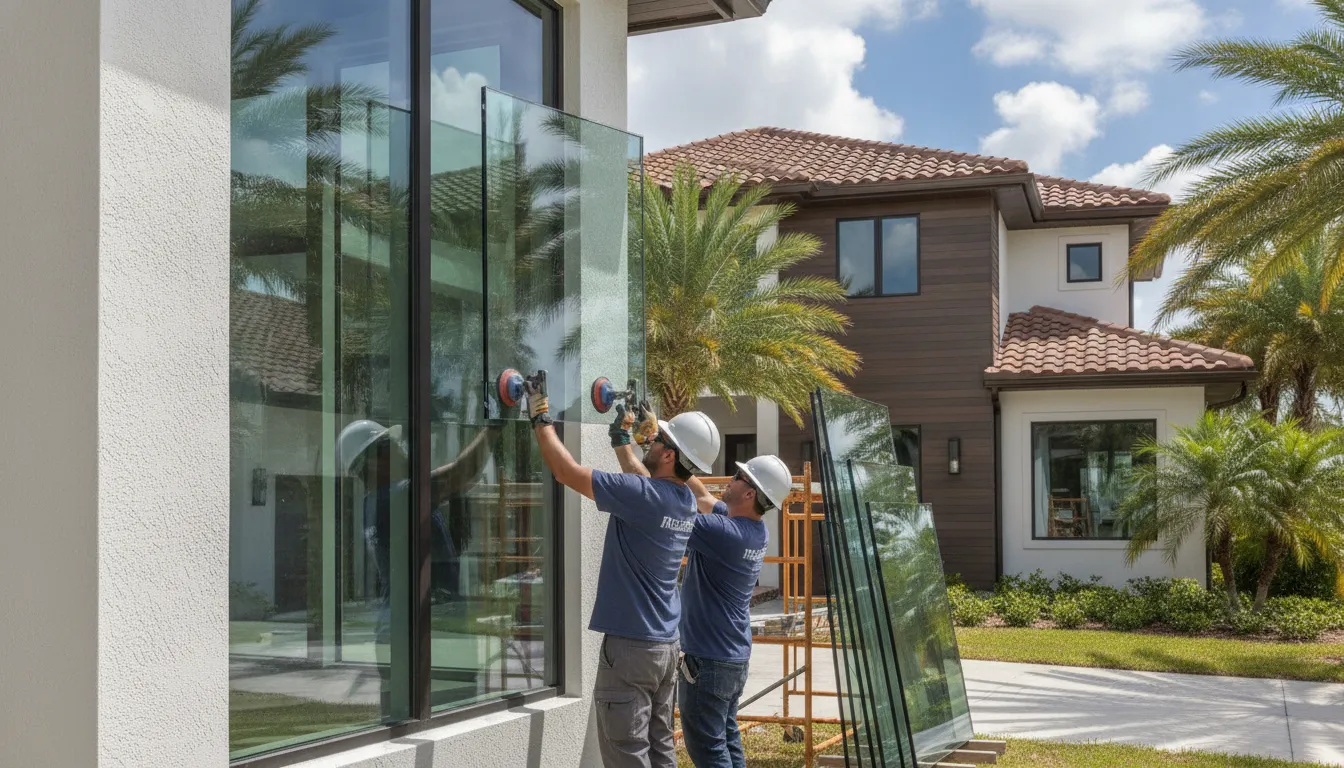
The replacement pane is positioned carefully in the prepared opening. Setting blocks, spacers, fasteners, glazing materials, and compatible sealants help keep the glass stable and aligned. The installer also checks for proper clearance and confirms that the pane is not under uneven pressure.
A continuous weather-resistant seal is particularly important in Florida. Heavy rain, humidity, heat, and wind can expose gaps around windows and doors. Proper sealing helps limit water intrusion and air leakage. For insulated glass units, the edge seal also protects the space between panes and helps reduce future fogging.
Installation quality affects the replacement’s performance just as much as the glass itself. Professional window installation guidance highlights the importance of proper placement, frame materials, and climate-appropriate design.
Check operation, safety, and cleanup
After installation, the technician checks the glass, frame, seals, and hardware. A window should open, close, lock, and latch smoothly. A door should swing or slide without rubbing or binding. The glass should sit securely, and the sealant should appear continuous and neatly finished.
Safety glazing markings and protective features should be reviewed when required, especially for glass near doors, stairs, tubs, showers, and other areas where accidental impact is possible. The frame and trim should also be free from sharp edges, loose materials, and excess sealant.
The work area is cleaned, including the glass, sill, tracks, and nearby floor. Before the technician leaves, ask how long the sealant needs to cure and whether the opening has any temporary use restrictions.
Maintain the replacement glass, frames, and seals
Simple maintenance helps preserve the appearance and performance of replacement glass. Clean the pane with a soft cloth and an appropriate glass cleaner. Avoid abrasive tools that could scratch the surface or damage a specialized coating. Wipe moisture from sills and tracks after heavy rain or when condensation appears.
Inspect the seals, glazing beads, weatherstripping, locks, hinges, and frames periodically. Watch for gaps, loose components, corrosion, soft wood, peeling sealant, or water stains. Do not force a window or door that sticks, since extra pressure can damage the hardware or frame.
Small issues are often easier to address before they become serious repairs. These routine window maintenance recommendations can help homeowners establish a practical inspection routine. After severe weather, check for cracked glass, leaks, movement, and damaged seals.
Request a residential glass replacement assessment from Glass Rescue
A professional assessment gives you clearer answers before you approve a repair or replacement. Glass Rescue can inspect the opening, discuss suitable glass types, confirm measurements, and explain whether the project requires glass-only replacement or additional frame and hardware work.
With more than 20 years of experience, Glass Rescue serves homeowners throughout Dade County, Broward County, Hollywood, Hillsborough County, and Tampa. The team handles residential projects involving windows, doors, mirrors, mirror closet doors, and custom glass solutions.
If you are dealing with damage, fogging, drafts, storm concerns, or a planned home improvement project, contact Glass Rescue to request an assessment. A detailed evaluation and written estimate can help you plan the work with confidence.
Related Articles
- Comparing Glass Types for Energy Efficiency
- Types of Glass for Front Doors
- Energy Efficiency of Impact Windows
- Understanding Glass Options
- The Florida Homeowner’s Guide to Residential Glass Replacement and Repair
Frequently Asked Questions
Should I replace only the glass or the entire window?
Glass-only replacement may work when the frame, sash, seals, and hardware remain straight, secure, and functional. A full window replacement may be more suitable when you notice rot, corrosion, leaks, warped frames, damaged locks, or ongoing operation problems. A professional inspection can help identify the most practical option.
What type of glass is best for a Florida home?
The right glass depends on the opening and its exposure. Low-E and insulated glass can help manage heat and glare, while tempered glass is commonly used for showers and doors. Laminated or impact-rated glass may be appropriate for storm protection, but the frame, anchors, hardware, and installation must also meet applicable requirements.
How much does residential glass replacement cost?
Pricing depends on the pane’s size, thickness, construction, performance features, access, labor, disposal, and the condition of the existing frame. Custom shapes, impact-rated glass, insulated units, hardware repairs, permits, and difficult installation conditions can add to the total. Request a written estimate with product details and a complete scope of work.
What should I expect during a glass replacement appointment?
A technician will inspect the opening, take detailed measurements, confirm the glass specifications, and review the estimate with you. During installation, the damaged glass is removed safely, the opening is prepared, and the replacement is secured and sealed. The technician should then check operation, weatherproofing, safety features, cleanup, and warranty information.
Does Florida building code affect residential glass replacement?
It can. Miami-Dade and Broward County properties may fall under High-Velocity Hurricane Zone requirements, while Tampa and Hillsborough County projects may have different wind and permitting rules. Safety glazing may also be required near showers, doors, stairs, and floors. Ask your glass professional which approvals, permits, and installation specifications apply to your property.