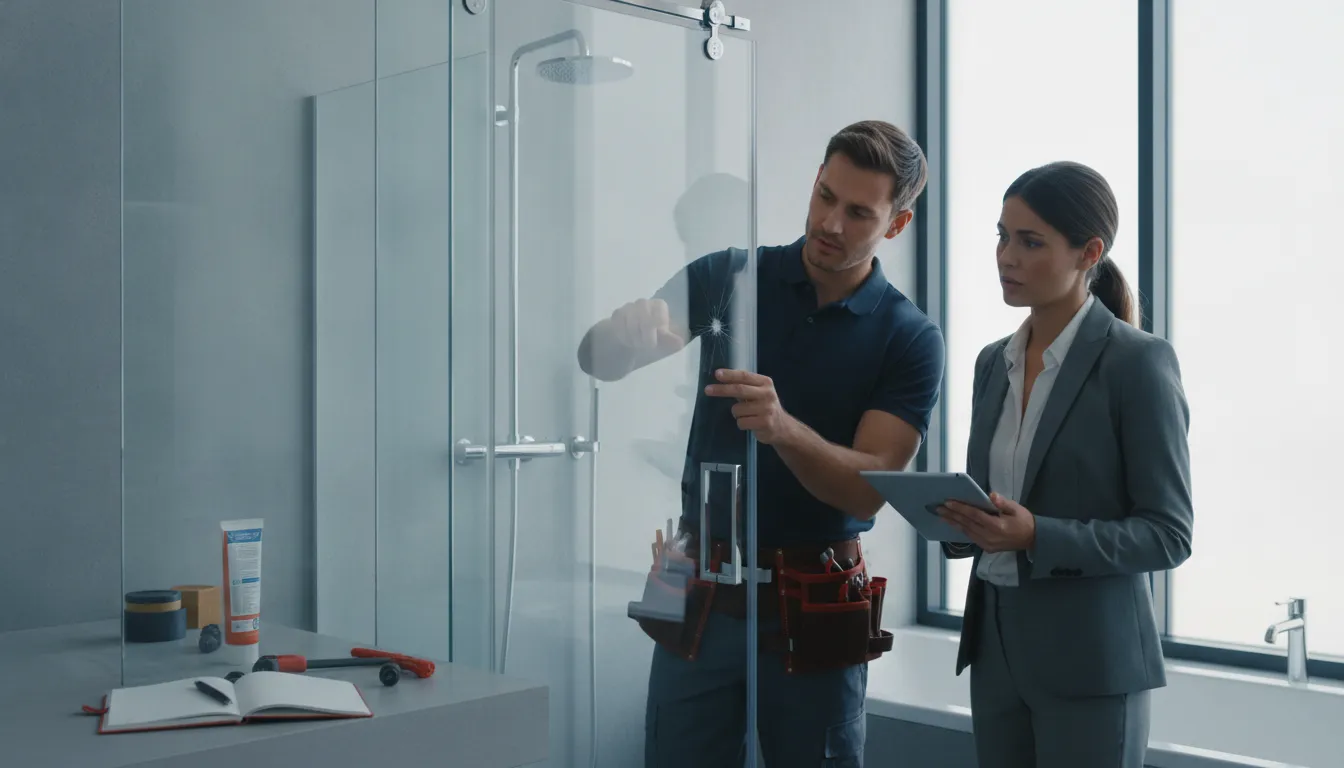
Many shower door problems begin with subtle changes. The door may feel heavier than usual, leave a small puddle on the floor, or make a scraping sound when it opens. These signs often point to worn hardware, poor alignment, damaged seals, or buildup in the track. Ignoring them can make the enclosure harder to use and place unnecessary pressure on the glass. Professional shower door repair can address the source of the issue instead of covering it with a temporary fix. Glass Rescue serves homeowners, property managers, contractors, and businesses across Dade, Broward, Hollywood, Tampa, and Hillsborough County with careful glass repair and replacement services.
Key Takeaways
- Address problems early: Leaks, sticking, sagging, loose hardware, worn seals, and mineral buildup can worsen over time and damage nearby tile, flooring, walls, or glass.
- Treat damaged glass as a safety issue: Stop using the enclosure if the glass is cracked, shattered, unstable, or pulling away from its hardware, then contact a qualified glass professional.
- Choose repairs based on the full enclosure: An inspection can determine whether you need a seal, roller, hinge, or hardware adjustment, replacement glass, or a complete shower door update.
Does Your Shower Door Need Repair?
A shower door often shows small signs of trouble before it becomes a safety concern. Water on the bathroom floor, a door that drags across the track, or a loose handle may seem minor, but these problems can worsen with daily use. Prompt repairs can help protect your tile, walls, flooring, and glass enclosure.
Some issues are simple maintenance tasks, while others require a professional glass technician. Cleaning mineral buildup may improve a door’s movement, but cracked glass, loose mounting hardware, and repeated leaks need a closer inspection. Glass Rescue provides shower door repair and glass services for residential and commercial properties throughout Dade County, Broward County, Hollywood, Tampa, and Hillsborough County.
Use the signs below to decide whether your shower door needs an adjustment, hardware replacement, glass replacement, or a complete enclosure update.
Check for leaks around the enclosure
Water escaping from the shower enclosure is one of the clearest signs that something needs attention. Check the floor, curb, corners, wall joints, and areas near the door after each shower. A small amount of water may come from a worn sweep or seal, while heavier pooling can point to a misaligned door, damaged caulk, an uneven curb, or a problem with the enclosure design.
Leaks are more than a cosmetic issue. Continued moisture can stain grout, loosen tile, damage baseboards, and encourage mold growth. Inspect the bottom edge of the door and the vertical meeting points for visible gaps. If replacing a seal or refreshing the caulk does not solve the problem, schedule a professional inspection. This guide to common shower door leaks can help you recognize warning signs.
Fix sticking, scraping, or hard-to-slide doors
A shower door that sticks, scrapes, or requires force to open usually has a movement problem. Sliding doors can collect soap residue and mineral buildup in the track, while worn rollers or guides may cause the panels to wobble. Hinged doors can drag when the hinges loosen or the glass shifts out of alignment.
Start by checking for visible debris and cleaning the track with a gentle, nonabrasive product. Do not force the door if the glass twists, hits the frame, or appears unstable. Repeated pressure can damage rollers, hinges, brackets, or the glass edge. Sliding doors have several moving parts, so understanding their track and panel design can help explain why professional adjustment may be necessary.
Address cracked, chipped, or shattered glass
Cracked or chipped shower glass requires prompt attention. Even a small chip near an edge, hinge cutout, handle opening, or mounting point can weaken the panel. A crack may spread with normal use, temperature changes, or movement around the hardware. If the glass has shattered, keep everyone away from the area and avoid touching the pieces with bare hands.
Do not try to repair cracked shower glass with adhesive or tape. Shower doors typically use tempered safety glass, which must be replaced rather than patched. A technician can measure the opening, identify the glass thickness and type, and determine whether the existing hardware can be reused. Cracks that reach mounting points or cutouts often require panel replacement, according to glass replacement guidance from The Glass People.
Tighten loose hinges, handles, brackets, or fasteners
Loose hardware can make a shower door feel unstable and place extra stress on the glass. Check whether the handle wiggles, the hinges move against the wall, or brackets appear to pull away from the panel. Screws and fasteners may loosen over time because of repeated movement, moisture, and daily use.
Some minor adjustments may be straightforward, but glass shower doors need careful handling. Over-tightening a screw can place pressure on the glass, while using the wrong fastener can damage the mounting hole or surrounding tile. Do not hang towels, baskets, or other items from the handle. If the hardware continues to loosen after adjustment, have a professional inspect the installation. Common shower door repair guidance also recommends checking screws and hardware before a small issue affects the entire door.
Realign sagging, misaligned, or off-track doors
A sagging or uneven door may leave a gap along one side, rub against the curb, or fail to close completely. Sliding panels can jump out of their track when rollers wear down, while hinged doors may shift when screws, hinges, or wall anchors loosen. Uneven tile and walls that are not perfectly plumb can also affect a custom enclosure.
Do not lift or force a heavy glass panel back into position without the right tools and support. A misaligned door can fall, crack, or damage the surrounding tile. A technician can inspect the hinges, rollers, guides, brackets, wall anchors, and opening before making an adjustment. If the same problem returns after several repairs, compare the ongoing cost with a properly fitted replacement. Repeated service calls may eventually cost more than a dependable new door, according to replacement guidance from The Glass People.
Replace worn seals, sweeps, gaskets, and caulk
Seals and sweeps help direct water back into the shower and cushion contact between the door and nearby surfaces. Over time, they may become brittle, cloudy, loose, split, or discolored. Caulk can also shrink or separate from the tile, glass, curb, or wall. These changes can create small leaks even when the door still opens and closes normally.
A replacement sweep or gasket may solve the problem when the glass and hardware remain in good condition. The new part must match the panel thickness, door configuration, and installation location. Remove old caulk carefully, clean and dry the surface, and use a product intended for wet areas. If water continues to escape, the issue may involve alignment, slope, or the enclosure design. Some problems need only a new sweep, seal, handle, or hinge adjustment, while others require a wider repair.
Remove hard-water buildup and corrosion
Mineral deposits can form on glass, hinges, brackets, handles, rollers, and sliding tracks, particularly in areas with hard water. Soap scum and mildew may collect in the lower track, restricting movement and holding moisture against metal components. Corrosion can weaken hardware and make the door harder to operate.
Use a soft cloth or nonabrasive sponge with a cleaner suitable for the glass and hardware finish. Avoid steel wool, harsh scouring pads, and strong chemicals that may scratch surfaces or damage protective coatings. Dry the enclosure after cleaning so water does not remain around the hinges or track. Sliding bypass doors often need more frequent track cleaning because the lower channel collects residue. A comparison of shower door styles explains why sliding systems can require more maintenance than simpler hinged designs.
Know when to stop using the door
Stop using the shower door if you notice cracked or shattered glass, a panel moving inside its brackets, a loose hinge, severe sagging, exposed sharp edges, or hardware pulling away from the wall. You should also stop using it if the door will not close securely or repeatedly jumps off its track. Keep children and pets away from the enclosure until a professional has assessed it.
Do not try to catch, brace, or reposition a heavy glass panel by yourself. If the door has shattered, keep people out of the area and contact a glass professional for safe cleanup and replacement. Repeated leaks, alignment problems, and hardware failures also deserve attention rather than another temporary fix. A qualified technician can determine whether the enclosure can be repaired safely or whether replacement is the better option.
Choose repair or full replacement
Repair may be the right choice when the glass is intact and the problem involves a worn sweep, loose fastener, damaged roller, hinge adjustment, or deteriorated caulk. Replacing one compatible part can preserve the existing enclosure and reduce the scope of the work. This option makes sense when the door is stable, operates smoothly, and replacement hardware is still available.
Full replacement may be more practical when the glass is cracked, hardware is discontinued, the frame or track is badly corroded, or the enclosure requires frequent repairs. Custom fabrication, unusual measurements, uneven walls, and older systems can affect the price difference between replacing one panel and installing a new enclosure. A professional inspection can identify the cause instead of treating only the visible symptom. Glass Rescue can assess your current setup and recommend a suitable custom glass solution based on the opening, hardware, glass condition, and safety requirements.
Which Shower Door Types and Brands Can You Repair?
Many shower doors can be repaired when the glass remains intact and the existing enclosure is structurally sound. The right solution depends on the door’s design, how it opens, the condition of its hardware, and the availability of compatible replacement parts. A frameless door with a loose hinge needs a different repair than a framed bypass door with worn rollers.
Before ordering parts, identify how the door operates and where the hardware connects to the glass, wall, frame, or track. Look for cracks, chips, severe edge damage, corrosion, loose fasteners, and signs of water leaking around the enclosure. These details help determine whether the problem involves a small component, a larger alignment issue, or the glass itself.
Door design also affects repair compatibility. A roller made for one sliding system may not fit another, even if the parts look similar. Likewise, hinges, pivots, seals, and brackets must match the glass thickness and mounting holes. An inspection can also reveal problems caused by uneven tile, an out-of-plumb wall, or a damaged curb.
Glass Rescue provides shower door repair and glass services for residential and commercial properties throughout Dade County, Broward County, Hollywood, Tampa, and surrounding areas. Its team can assess common systems, custom installations, older doors, and replacement needs before recommending a practical solution.
Repair frameless doors with exposed hardware
Frameless shower doors use thick glass with visible hinges, handles, brackets, and seals instead of a full metal frame. Their clean appearance makes them popular, but the exposed hardware must remain properly adjusted to support the glass and keep the enclosure watertight.
Common repairs include tightening loose fasteners, adjusting sagging hinges, replacing worn door sweeps, and correcting leaks near the opening. A door that drags against the curb or no longer closes evenly may need hinge adjustment or a closer inspection of the wall and glass alignment. Typical frameless door problems include leaks, loose hardware, worn sweeps, and hinge sag, as AGM Glass Design explains.
Because frameless glass is heavy, do not attempt to lift or realign the door alone. A technician can inspect the hardware, protect the glass edges, and determine whether the existing mounting points can support a safe repair.
Fix sliding and bypass doors, rollers, and tracks
Sliding and bypass shower doors usually have two glass panels. One panel remains fixed while the other moves along a metal track. When the door becomes difficult to open, the rollers, guides, track, or frame may need attention. Hair, soap residue, mineral deposits, and corrosion can all interfere with smooth movement.
A repair may involve cleaning the track, replacing worn rollers, adjusting the guides, or securing a loose frame. If the door jumps off the track, scrapes the frame, or sits at an angle, continued use can place stress on the glass and hardware. Fab Glass and Mirror describes how sliding doors depend on properly working tracks and rollers.
Not every roller fits every enclosure. The wheel shape, housing, mounting hole, and glass thickness all matter. A technician should compare the replacement part with the existing hardware before installation.
Repair hinged and pivot doors
Hinged shower doors swing from hinges attached to a wall, fixed glass panel, or another supporting surface. Pivot doors use pivot hardware to support the door and control its movement. Both systems can develop similar problems, including sagging, uneven gaps, loose fasteners, scraping, and incomplete closure.
A small adjustment may correct a door that has shifted slightly. More serious wear may require replacement hinges, pivot hardware, gaskets, or mounting components. The design of hinged and pivot shower doors shows why proper hinge condition and alignment are important to safe operation.
Do not force a door that binds, drops, or shifts when opened. Excess pressure can damage the glass around a hinge cutout or weaken the wall connection. A professional can inspect the hinge area and determine whether the hardware can be adjusted or should be replaced.
Fix bi-fold and folding doors
Bi-fold shower doors fold inward or outward on connected panels, making them useful in bathrooms with limited clearance. Their moving parts may include hinges, pivots, guides, and a track. When one component wears out, the panels may stop folding evenly or begin rubbing against the frame.
Repairs commonly focus on folding hinges, pivot points, guides, and alignment. Mineral buildup can make movement stiff, while loose hardware can cause the panels to hang unevenly. M.T. Copeland Technologies explains that folding doors provide broad shower access while using less floor space than many swinging designs.
Since folding systems contain several moving points, replacing one part without checking the others may not solve the problem. A complete inspection can identify whether cleaning, adjustment, hardware replacement, or panel replacement is the most suitable option.
Repair framed shower doors
Framed shower doors use metal channels around the glass to support and protect the panels. They may be sliding, hinged, or pivoting. Repairs can include replacing rollers, guides, handles, sweeps, seals, screws, and other frame components.
Framed doors are often easier to match with replacement parts because common profiles and hardware styles remain available. However, older frames may have corroded channels, discontinued components, or damage that prevents a new part from fitting correctly. Homedit’s shower door guide notes that framed doors are generally more common and less expensive than frameless styles.
A technician should check the frame for corrosion, loose joints, sharp edges, and movement around the glass before installing new hardware. If the frame no longer holds the glass securely, replacing one component may not provide a lasting repair.
Service custom, older, and commercial systems
Custom and older shower enclosures often require more careful evaluation than standard residential doors. The original manufacturer may no longer produce the hardware, and the glass may have unusual measurements, cutouts, or thickness. Commercial systems can also experience more frequent roller, hinge, seal, and fastener wear because of repeated daily use.
A repair may still be possible with compatible hardware, custom-fabricated components, or replacement glass. In some cases, replacing one panel costs less than replacing the entire enclosure. In other cases, repeated repairs may become unsafe or cost more than a new system. The Glass People discusses how repair decisions depend on the condition of the glass, hardware, and enclosure.
Glass Rescue works with residential and commercial customers, including those with unusual openings or existing systems that require careful matching. An on-site assessment can clarify which parts can be reused and which need replacement.
Repair Kohler, Delta, DreamLine, and other common brands
Brand names can help identify a shower door system, but they do not guarantee that every replacement part will fit. Kohler, Delta, DreamLine, and other manufacturers may use different hinge patterns, roller assemblies, seals, handles, and glass dimensions across their product lines.
When requesting service, provide the brand name, model information, photos, and approximate installation age if available. A technician can compare the existing components with current or compatible parts. If the glass has a manufacturer logo or etched marking, photograph it before the inspection.
Brand-specific repairs may involve sourcing an original part, choosing a compatible replacement, or fabricating a new glass panel. Frequent repairs can eventually cost more than a dependable replacement, especially when the enclosure has widespread corrosion or several worn components, as The Glass People notes.
Identify discontinued hardware and replacement parts
Finding the correct replacement part can be the most difficult part of repairing an older shower door. Rollers may look similar but differ in diameter, mounting style, housing shape, or track position. Hinges and brackets must also match the glass thickness, hole placement, and weight of the panel.
Before ordering, record the part’s measurements and take clear photos from several angles. Include the door type, glass thickness if known, mounting location, and any markings on the hardware. A professional can help determine whether the part is original, compatible, or discontinued.
If an exact match is unavailable, the repair may require a compatible hardware set or custom glass. Replacing one panel can sometimes reduce the project scope, but custom fabrication may narrow the cost difference between partial repair and full enclosure replacement. An assessment helps prevent wasted orders and unnecessary drilling or modification.
Match repairs to the door design
The repair must suit the way the shower door was designed to function. A roller system intended for a bypass door cannot replace a pivot hinge, and a frameless sweep will not fit every framed channel. Even parts that appear similar may cause leaks, poor alignment, or unsafe pressure on the glass when installed incorrectly.
Start by identifying whether the door is frameless, framed, sliding, hinged, pivoting, or folding. Then check the glass thickness, hardware location, opening direction, track or hinge style, and condition of the surrounding tile. Uneven walls and out-of-level curbs may also affect how the door operates.
Choosing a repair based only on appearance can lead to a poor fit. As Infinity Glass and Glazing explains, the door type must suit both the available space and the enclosure’s functional requirements. A professional can match the repair to the existing design or recommend replacement when the current system is no longer dependable.
How Can You Repair Common Shower Door Problems?
Shower door repairs range from simple hardware adjustments to complete glass replacement. A loose handle, worn sweep, or buildup in a sliding track may need only cleaning or a small part replacement. A cracked panel, sagging frameless door, or hinge that no longer holds securely requires a professional inspection.
Start by identifying the door style and locating the source of the problem. Check for chips, cracks, damage around the glass edges, loose fasteners, worn seals, and gaps between the door and enclosure. Also note whether the issue affects opening, closing, water control, or the stability of the panel. These details help determine whether the repair involves hardware, seals, alignment, or replacement glass.
Avoid forcing a sticking door or removing a large glass panel on your own. Shower doors are heavy, and pressure around hinges, cutouts, and mounting points can cause glass to break. A qualified glass company can inspect the enclosure, measure the opening, identify compatible parts, and recommend a safe solution. Glass Rescue provides shower door and glass services for residential and commercial properties in Dade County, Broward County, Hollywood, Tampa, and Hillsborough County.
Replace worn rollers, guides, and sliding tracks
Sliding shower doors rely on rollers and guides to move along the track. When these parts wear out, the door may scrape, wobble, stick, or jump off the track. Loose screws, corrosion, soap residue, and mineral deposits can also interfere with movement.
Begin with a visual inspection and remove surface buildup using a gentle, nonabrasive cleaner. Check accessible fasteners for looseness, but do not force the door if it has shifted off the track. The panel may be unstable and could place pressure on the glass.
Worn rollers, damaged guides, and bent tracks usually require replacement rather than repeated adjustment. New parts must match the door’s weight, glass size, track profile, and mounting design. A technician can remove the panel safely, install compatible components, and test the door. This shower door repair guide also identifies loose hardware as a common cause of door problems.
Adjust or replace hinges, pivots, handles, and brackets
Hinges, pivots, handles, and brackets support and control much of a shower door’s weight. If a component shifts or loosens, the door may stick, drag, fail to close, or place stress on the glass. Minor adjustments may solve the issue, but corroded, bent, or damaged hardware should be replaced.
A technician can inspect the fasteners, mounting points, hinge cutouts, and surrounding glass. The repair may involve tightening screws, realigning the hinge, replacing gaskets, or installing a new handle or bracket. Hardware should never be tightened excessively, since too much pressure can damage the glass.
Replacement parts must match the door design and glass thickness. Frameless doors often have precision-cut holes and cutouts, so an unsuitable hinge may not grip the panel correctly. If the door still sticks after adjustment, professional shower door guidance can help explain when hardware service is needed.
Replace seals, sweeps, gaskets, and caulk
Seals, sweeps, and gaskets help direct water back into the enclosure. When they become brittle, loose, discolored, or compressed, water may escape beneath the door or along the sides. Replacing these parts is often simpler than replacing the glass, but the new component must fit the door properly.
The correct sweep or seal depends on the door style, glass thickness, gap size, and installation method. A frameless bottom sweep differs from a seal made for a framed sliding enclosure. Remove the old material carefully, clean the surface, and install the new seal evenly without bunching or leaving open gaps.
Caulk may need replacement when it cracks, separates, or develops mold. Remove the old silicone completely and allow the area to dry before applying new caulk. Persistent leaks may point to alignment or tile problems rather than a failed seal. This glass shower door guide explains when a new sweep, seal, or hardware adjustment may resolve the issue.
Realign doors and correct sagging
A sagging shower door may rub against the threshold, scrape the wall, or leave a gap where water can escape. Loose hinges, worn pivots, shifted brackets, uneven openings, and damaged fasteners can all contribute to the problem. Sliding doors may become misaligned when rollers wear down or the track bends.
A repair professional will check the door’s level, gaps, hinges, rollers, and mounting points. Depending on the cause, they may adjust the hardware, replace worn parts, reset the panel, or install new gaskets and shims. Do not try to lift or realign a heavy glass door alone, since an unstable panel may fall or crack.
If tightening the hardware does not correct the sagging, inspect the metal and mounting areas for bends, tears, stripped screw holes, or other damage. These conditions may call for replacement rather than another adjustment. This shower door repair resource recommends replacement when physical damage affects the door’s support points.
Replace damaged tempered glass panels
Cracked, chipped, or shattered shower glass is a safety concern, not just a cosmetic problem. Stop using the enclosure and keep people away from the area until a professional inspects it. Tempered glass is designed to break into small pieces, but damage near an edge, hinge cutout, handle opening, or mounting point can weaken the panel.
A replacement must match the original panel’s dimensions, thickness, shape, edge finish, and hardware cutouts. It may also require new hinges, brackets, sweeps, or gaskets. Never drill, trim, or modify tempered glass after manufacturing, because it can break without warning.
A glass professional can measure the opening and review the existing hardware before ordering a panel. They can also check whether damaged tile, a shifting wall, or an uneven threshold contributed to the failure. Request a glass replacement assessment from Glass Rescue to determine whether you need one panel or a larger enclosure repair. Cracks that reach an edge or mounting cutout commonly require replacement, according to glass replacement specialists.
Match replacement hardware to the existing glass
Shower door hardware is not universal. Hinges, handles, brackets, rollers, and guides must suit the glass thickness, hole placement, door weight, and enclosure design. A part that looks similar may still be incompatible with the existing panel or mounting surface.
During an inspection, a technician should record the glass thickness, cutout dimensions, hardware finish, door swing, and mounting configuration. Sliding doors may also require identification of the track profile and roller shape. On a frameless door, the hinge or bracket must grip the glass correctly without creating excess pressure.
Appearance matters, but fit and load capacity come first. Replacing one component may also require new gaskets, washers, or fasteners. The type and quantity of hardware can affect the repair price, as explained in this shower door cost breakdown. Proper matching helps the repaired door operate smoothly and protects the glass from unnecessary stress.
Account for uneven tile and out-of-plumb walls
Not every shower opening is perfectly square. Uneven tile, walls that lean, damaged mounting areas, and previous leaks can affect how a shower door sits. These conditions may cause gaps, rubbing, sagging, or water escaping even after the hardware has been adjusted.
A professional installer measures the opening at multiple points instead of relying on one measurement. They may use shims, adjustable hardware, a custom glass panel, or a different seal to accommodate the space. In some cases, damaged tile or wall material must be repaired before the door can be secured.
Adding more caulk will not correct a structural alignment problem. Caulk can seal a small joint, but it cannot support a loose hinge or compensate for incorrect positioning. This shower door replacement guidance identifies uneven tile, out-of-plumb walls, damaged mounting areas, and previous leaks as conditions that may require additional work.
Decide between recurring repairs and replacement
A repair is usually practical when the glass is intact and the enclosure needs a new sweep, roller, hinge, handle, or adjustment. Replacement may be more sensible when the same leak, alignment problem, or hardware failure keeps returning. Several service calls can eventually cost more than a dependable new door.
Consider the condition of the entire system, not just the part currently failing. A worn track, corroded hardware, damaged tile, and scratched or cloudy glass may indicate that multiple components are nearing the end of their useful life. A cracked panel or damage around a hinge cutout generally requires replacement for safety.
Ask for an itemized assessment that separates repair parts, labor, glass replacement, and site preparation. This makes it easier to compare a short-term repair with a complete replacement. Glass Rescue can review the enclosure and recommend a solution based on the glass, hardware, walls, and opening. You can contact Glass Rescue to request an evaluation for your home or business.
Handle safe maintenance tasks and professional repairs
You can manage routine tasks such as wiping down the glass, cleaning the track, removing mild mineral buildup, and checking accessible screws. Use a soft cloth and nonabrasive cleaner, then dry the hardware to reduce corrosion. Avoid hanging towels, baskets, or other items from the door.
Leave glass removal, drilling, hinge replacement, track replacement, and cracked-panel service to a qualified professional. Shower doors are heavy, and incorrect pressure around a hole, edge, or hinge can cause the glass to break. A specialist can also find problems hidden behind brackets or within the wall.
Stop using the door if it cracks, shifts suddenly, pulls away from its hardware, or no longer stays securely in place. Professional repair specialists bring experience that is difficult to replicate without the right tools and training, as explained in this guide to DIY versus professional repairs. Routine maintenance can extend an enclosure’s service life, but structural and glass-related problems need prompt attention.
How Much Does Shower Door Repair Cost?
Shower door repair costs depend on the problem, door style, glass specifications, and condition of the surrounding opening. Replacing a worn sweep usually costs much less than replacing a cracked tempered-glass panel. A custom frameless enclosure may also require precise measurements, specialized hardware, and careful handling, which can increase the total.
Local labor rates, access to the bathroom, travel distance, and the availability of replacement parts can affect the estimate. National cost guides offer a general starting point, but they cannot account for every enclosure or installation condition. A professional inspection can identify the cause of the problem and determine whether repair is practical. Glass Rescue provides residential and commercial glass services throughout Dade County, Broward County, Hollywood, and Hillsborough County.
Expect $120 to $350 for minor repairs
Minor shower door repairs commonly cost between $120 and $350, depending on the part and labor involved. This range may cover a new bottom sweep, replacement seal, minor hinge adjustment, handle tightening, or a small hardware repair. Some jobs cost less when the part is readily available and the door is easy to access.
The final price may increase if the technician must remove the door, adjust multiple components, or locate a part for an older system. An average shower door repair cost guide can help you set expectations, but a local estimate will be more useful because it reflects your door’s design and condition.
Budget more than $500 for extensive repairs and glass replacement
Extensive repairs can cost more than $500, especially when the job involves custom-cut glass, several hardware components, or substantial installation work. Replacing a damaged panel may require detailed measurements, special handling, removal of the existing glass, and careful installation of the replacement.
A complete custom shower door project can cost several thousand dollars when it involves large panels, unusual openings, or a highly customized frameless enclosure. The Home Depot shower door cost guide provides broader installation ranges, but your final price should come from an inspection of the actual enclosure.
Price seals, sweeps, rollers, hinges, and hardware
The replacement part is one of the first cost factors to consider. A vinyl seal or bottom sweep is usually less expensive than a set of rollers, heavy-duty hinges, or a custom handle. Sliding doors may need new rollers and guides, while frameless hinged doors often require compatible hinges, clamps, brackets, or pivots.
Hardware must match the door’s weight, glass thickness, and design. Using the wrong component can cause poor alignment or place unnecessary stress on the glass. Ask whether the estimate includes the replacement part, removal of the old component, installation, adjustment, and testing.
Consider glass size, thickness, damage, and safety requirements
Glass replacement pricing depends on the panel’s dimensions, thickness, edgework, and configuration. A large or thick panel requires more careful handling than a small insert. Notches, cutouts, rounded corners, and holes for hinges or handles can also affect the cost because the new panel must match the existing opening.
Cracked or shattered shower glass is a safety concern, not just a cosmetic problem. Tempered glass is designed to break into small pieces, but the damaged panel still needs to be removed safely and replaced correctly. A technician may need to confirm the glass type, inspect the hardware, and measure the opening before ordering a replacement.
Account for labor, measurements, access, travel, and cleanup
Labor often represents a significant part of the repair bill. The technician may need to inspect the enclosure, take detailed measurements, remove the door, install new hardware, realign the panels, and test for proper movement or leaks. A straightforward adjustment takes less time than a complete glass replacement.
Access can affect the estimate, too. Tight bathrooms, upper-floor locations, long travel distances, and difficult parking may add time to the job. Ask whether travel, old-part disposal, cleanup, and return visits are included. A clear estimate should separate materials from labor so you can understand the full cost.
Factor in uneven walls, damaged tile, and site conditions
A shower door may be difficult to repair when the opening is not square or the walls are out of plumb. Uneven tile can prevent a frame or hinge from sitting correctly, while loose tile or water damage may weaken the area where hardware needs to be secured. These conditions can make a basic adjustment ineffective.
A technician may recommend correcting the surrounding surface before installing new hardware or glass. If the enclosure continues to leak after several repairs, the cause may be the opening, threshold, wall angle, or failed waterproofing rather than the door itself. An in-person shower door assessment can help identify these issues before work begins.
Estimate custom frameless and commercial repair costs
Custom frameless shower doors often cost more to repair because they rely on exposed, precisely fitted hardware rather than a standard frame. A replacement hinge, pivot, or panel must be compatible with the glass and the enclosure layout. Large panels also require careful handling and may need more than one technician.
Commercial properties can have additional cost considerations, including larger enclosures, repeated-use hardware, access restrictions, and scheduling outside business hours. Repairs in hotels, apartments, gyms, and other facilities may require coordination with property managers. Inspecting several units during one visit may also affect the estimate and scheduling.
Compare recurring repairs with full replacement
Repair is often the practical choice when the glass is intact and the problem involves a replaceable seal, roller, hinge, handle, or bracket. However, repeated service calls can become expensive when the same leak, alignment issue, or hardware failure keeps returning. Older doors may also use parts that are difficult to find or no longer manufactured.
Compare the expected cost of another repair with the price of a replacement enclosure. Replacement may make more sense when the glass is damaged, the frame is badly corroded, the door no longer fits the opening, or several components need attention at once. A professional can explain both options so you can make an informed decision.
Request an itemized repair estimate
Before approving the work, request an itemized estimate that lists the diagnosis, parts, labor, measurements, removal, installation, cleanup, and any possible additional charges. Ask whether the price covers the complete repair or only the initial service visit. If custom glass is needed, confirm the expected lead time and whether the quote includes delivery.
It is also helpful to ask about warranties for workmanship and replacement parts. Keep the estimate, product details, and warranty terms for your records. Comparing two or more detailed quotes can help you identify unusual charges and choose a provider based on experience, communication, and the quality of the proposed solution, not price alone.
How Do You Choose a Reliable Local Shower Door Repair Service?
Choosing a shower door repair company takes more than selecting the first name in a search result. The right provider should understand your door design, use suitable glass and hardware, communicate clearly, and leave your bathroom clean and safe. Look for a company with experience in both residential and commercial projects, especially if your repair involves a frameless enclosure, custom glass, or older hardware.
Before scheduling service, ask what may be causing the problem, whether the existing glass and hardware can be repaired, and whether an in-person inspection is necessary. Request a written estimate that explains the recommended work and any possible additional charges. A careful evaluation can help you avoid paying for a temporary fix when replacement may be more practical.
Check whether the company serves your area and handles the type of project you need. Glass Rescue provides residential and commercial glass services throughout Dade County, Broward County, Hollywood, and expanding areas of Hillsborough County. The company’s experience with glass installations and repairs can be helpful when a shower door issue involves more than one component.
Look for residential and commercial glass door experience
Residential and commercial shower doors often require different approaches. A home bathroom may have a standard framed enclosure, while a hotel, apartment building, gym, or office facility may have multiple doors, heavier use, and stricter scheduling requirements. Choose a repair company that can explain how it handles both types of work.
Ask whether the team has worked on custom enclosures, glass replacement, and frequently used facilities. Experience with different properties often indicates that the company understands access, safety, cleanup, and coordination with property managers. It can also help when a repair involves several glass components or requires matching existing hardware.
A company with broad glass experience can assess whether the issue comes from the door, wall, tile, hinges, or surrounding enclosure. Replacing one part without addressing the underlying problem may lead to another service call.
Confirm experience with frameless, sliding, hinged, and framed systems
Not every contractor repairs every shower door design. Describe your system before booking an appointment and ask whether the company works on it regularly. Frameless doors may use exposed hinges, brackets, clips, and specialized sweeps. Sliding and bypass doors often need roller, guide, or track repairs. Hinged, pivot, and framed doors have their own adjustment and replacement requirements.
Send clear photos if the company offers remote screening, but request an in-person assessment for cracked glass, misalignment, leaks, or loose structural hardware. Some service listings include general handymen or plumbers, so confirm that the provider handles the exact shower door task you need. Review Glass Rescue’s glass repair and installation services to see whether its capabilities match your project.
Check reviews, review volume, and local recommendations
Online reviews can show how a company treats customers after the initial booking. Read comments about punctuality, workmanship, communication, cleanup, and whether the repair lasted. Give extra attention to reviews describing work similar to yours, such as frameless shower door repairs, glass replacement, or loose hardware correction.
Review volume provides helpful context. A perfect score based on a few comments does not tell you as much as a strong rating supported by many detailed reviews. Look for repeated patterns rather than focusing on one unusually positive or negative experience.
Local recommendations can add useful insight. Ask neighbors, property managers, remodelers, or tile contractors which glass companies they trust. You can also learn more about Glass Rescue’s background on its About Us page, which describes the company’s experience and service focus.
Verify licensing, insurance, certifications, and safety practices
Ask whether the company is properly licensed and insured for the work it performs in your area. Licensing requirements can vary by location and service type, so a reputable provider should answer your questions clearly. Insurance also matters because it can help protect you if property damage or an injury occurs during the project.
Ask how the team handles glass, particularly when removing a damaged panel. Professionals should use suitable protective equipment, secure the work area, and plan for safe removal and disposal. They should also explain whether the existing glass can remain in place during a hardware repair.
Do not attempt a repair simply because the problem looks minor. A loose hinge or cracked panel can create a serious safety concern. Guidance from Zoom Home Inspections can help you decide when a repair requires professional skills and equipment.
Request an in-person inspection and written estimate
A reliable repair company should inspect the door before giving a firm price for complicated work. During the visit, the technician can check the glass, hinges, rollers, tracks, seals, wall alignment, tile condition, and the way the door opens and closes. This may reveal causes that are not visible in a photo.
Request a written estimate that identifies the recommended repair, materials, labor, and possible additional charges. If hidden damage could affect the final price, ask how the company will request approval before performing extra work.
An in-person inspection also gives you a chance to assess the technician’s professionalism. The technician should arrive prepared, explain the issue in plain language, and answer questions without dismissing your concerns. Resources such as Thumbtack’s shower door repair listings can help you compare providers and identify questions to ask.
Compare multiple itemized quotes
For nonurgent repairs, request estimates from two or three qualified providers. Compare more than the total price. Each estimate should identify the parts, labor, glass specifications, disposal, travel, cleanup, and warranty terms when applicable.
A lower quote may exclude important work, use a temporary part, or assume that the existing glass and tile are in better condition than they are. A higher quote may include custom fabrication or more durable hardware. Ask each company to explain the differences so you can compare similar services.
Keep written estimates together and check whether each price is fixed or subject to change after work begins. Confirm that the company will contact you before adding costs. Comparing itemized quotes gives you a clearer basis for choosing a provider than collecting vague prices over the phone.
Confirm proper tempered and custom-cut glass handling
Shower doors commonly use safety glass, and damaged panels should not be handled like ordinary window glass. Ask what type of replacement glass the company recommends, including its thickness, finish, edge treatment, and dimensions. The replacement must suit the enclosure and the hardware supporting it.
Custom-cut glass requires careful measurements. The technician may need to account for the opening size, wall alignment, tile, gaps, hinges, and handle placement. A small error can cause leaks, binding, or stress on the panel. Ask whether the company measures the opening before ordering glass and verifies the fit during installation.
Do not accept a substitute material without asking whether it is suitable for a shower enclosure. The Glass People’s guide to shower door replacement explains why door type, glass thickness, materials, and damage affect replacement decisions.
Assess communication, scheduling, cleanup, and service terms
Good service starts before the technician arrives. The company should confirm the appointment, explain how long the inspection or repair may take, and tell you how to prepare the bathroom. Clear communication is especially important for commercial properties, rental units, and households planning around water use.
Ask whether the company protects floors and nearby surfaces during the work. After the repair, the team should remove broken materials, wipe down the area, and explain how to use the door safely. The technician should also mention any curing time, follow-up care, or restrictions on using the shower.
Review the service terms before approving the work. Confirm the payment schedule, cancellation policy, parts availability, and workmanship coverage. If the same issue returns shortly after the repair, you should know whom to contact and what the company will do next.
Watch for vague pricing and high-pressure sales
Be cautious when a provider refuses to explain the work, will not identify the parts being used, or offers only a vague total. A trustworthy company should describe the problem, proposed solution, and factors that could change the price.
High-pressure sales are another warning sign. You should have time to compare options, ask questions, and decide whether repair or replacement fits your needs. Be especially careful if someone insists that you approve expensive work without inspecting the enclosure or explaining the risks.
Ask for the recommendation in writing and request a breakdown of labor and materials. If the technician proposes full replacement, ask why repair is not suitable. Frequent repairs can eventually cost more than dependable replacement, but the decision should be based on the door’s condition, not sales pressure.
Handle maintenance yourself and hire professionals for repairs
Some shower door care is appropriate for homeowners. You can wipe water from the glass, clean sliding tracks, remove light mineral buildup with a suitable cleaner, and inspect seals for visible wear. Keeping the bathroom ventilated can also reduce moisture-related buildup and corrosion.
Leave repairs involving cracked glass, loose hinges, unstable brackets, damaged rollers, or difficult alignment to a qualified professional. Forcing a stuck door or tightening hardware without knowing how it supports the glass can cause further damage. Avoid drilling, cutting, or removing a glass panel without the right tools and experience.
A practical rule is to handle routine cleaning and hire help when the door affects safety, leaks repeatedly, or no longer operates normally. A professional can determine whether the problem is limited to a seal or points to a larger issue with the glass, hardware, opening, or surrounding tile.
Get immediate service for cracked glass, loose hardware, or repeated leaks
Some shower door problems should not wait for a convenient appointment. Stop using the enclosure if the glass is cracked, chipped near a hinge or edge, shifting in its hardware, or showing signs of shattering. Keep people away from the area and contact a glass professional for guidance.
Loose hinges, brackets, handles, and fasteners also deserve prompt attention. The door may become heavier on one side, sag, scrape, or place pressure on the glass. Repeated leaks should be addressed quickly because water can damage grout, tile, trim, drywall, or flooring.
When you call, describe the problem and mention whether the door is frameless, sliding, hinged, or framed. Photos can help with initial scheduling, but a technician may still need to inspect the enclosure before recommending repair or replacement. You can contact Glass Rescue to request an assessment for shower door and glass repair services in its Florida service areas.
What Do Shower Door Warranties and Guarantees Cover?
A shower door warranty or guarantee can protect you from certain installation defects, faulty hardware, and product problems. It does not always cover every future repair. Coverage depends on the glass company, manufacturer, enclosure design, installation method, and cause of the damage.
Ask for separate information about workmanship, glass, and hardware before approving the project. These details can show who handles a claim, how long coverage lasts, and what documentation you need. For a custom enclosure, keep the estimate, invoice, product information, care instructions, and installation photos together.
A guarantee may describe a company’s service promise, while a manufacturer warranty usually applies to specific products or components. Review both documents carefully, especially when your shower door includes custom-cut glass, exposed hinges, rollers, seals, or specialty finishes.
Review the provider’s workmanship warranty
A workmanship warranty covers the quality of the installation, not necessarily every part of the shower door. It may apply if the door was installed out of alignment, hardware loosens because of an installation issue, or water leaks because the enclosure was measured or installed incorrectly.
Many shower door warranties provide about one year of workmanship coverage, although the exact period varies by provider. Ask when coverage begins, what problems qualify, and whether the company includes return visits or adjustments.
You should also ask how the provider investigates an installation-related leak. A clear warranty should explain whether a technician will inspect the enclosure, repair the issue, or replace an incorrectly installed component. The warranty guidance from Moffat Glass shows how workmanship coverage may be separated from manufacturer terms.
Check manufacturer warranties for glass and hardware
Your shower enclosure may have more than one warranty. The glass manufacturer may cover defects in the panel, while a hardware manufacturer may provide separate terms for hinges, rollers, brackets, handles, and decorative finishes.
Ask whether the installer manages manufacturer claims or whether you must contact the brand yourself. Confirm whether the coverage applies to manufacturing defects, corrosion, finish changes, or broken components. Hardware warranties often have different limits based on the material and finish.
Keep the product name, model number, purchase receipt, and installation date. These details can help identify the correct replacement part if a hinge, roller, or handle fails. They can also prevent delays when the manufacturer needs to confirm that the component is still under warranty.
Confirm coverage for seals, hinges, rollers, installation, and replacement glass
Do not assume every part of your enclosure has the same coverage period. Seals, sweeps, rollers, hinges, and other small components may have shorter terms than the glass. Some providers may also treat these parts as maintenance items.
Ask whether the warranty covers labor as well as replacement parts. A faulty roller may qualify for a replacement, while the service call or installation labor may not. Confirm whether replacement glass is included if a panel has a manufacturing defect, or whether coverage applies only to the original panel.
A professional inspection can help identify the source of the problem. The shower door warranty information from HGM Glass offers an example of how warranties may address components, adjustments, and installation concerns.
Understand exclusions for accidents, misuse, and normal wear
Most warranties exclude damage caused by accidents, misuse, neglect, or unapproved changes. A warranty may not cover a door that was slammed, forced beyond its normal range, struck by an object, or altered with incompatible hardware.
Normal wear may also fall outside warranty coverage. Seals can become less flexible, finishes can change, and rollers can collect mineral buildup over time. These conditions may call for cleaning, adjustment, or part replacement instead of a warranty claim.
Review the exclusions before assuming a repair qualifies. Look for language about impact damage, improper cleaning products, hard-water buildup, corrosion, and modifications made after installation. Basco’s warranty terms demonstrate how manufacturers may separate product defects from damage caused by accidents, misuse, and ordinary wear.
Review warranty length, limits, and claim procedures
Check the warranty period, limitations, exclusions, and steps for filing a claim. You may need proof of purchase, product details, installation records, photos, or an inspection by an approved service provider. Some warranties also require you to report a problem within a specific timeframe.
Ask whether the coverage applies to the entire enclosure or only the original components. Find out whether it is transferable if you sell your home, and whether an approved claim results in a repair, replacement part, or replacement product.
Professional installation can affect warranty validity. Some manufacturers limit coverage when a product is installed incorrectly or repaired without approval. DreamLine’s warranty information explains why following installation instructions and using qualified professionals matters when protecting coverage.
Get warranty terms in writing
A verbal promise can be difficult to verify several months later. Before work begins, request written terms that identify the provider, covered products, coverage period, exclusions, and claim process.
Your paperwork should also list the shower door model, glass specifications, hardware finish, installation date, and agreed service terms. If the project involves custom measurements or an unusual opening, ask whether changes to the walls, tile, opening, or hardware affect coverage.
Save the final invoice and care instructions after installation. If you hire Glass Rescue for shower door services, ask the team to explain the workmanship and product coverage that applies to your specific enclosure. Written details make it easier to request help if a problem appears later.
Respond when the same problem returns
Contact the installer promptly if a leak, alignment issue, loose hinge, or sticking door returns after a repair. Explain when the issue occurs, describe the previous service, and share photos or a short video if they help show the problem.
Avoid repeatedly adjusting hinges, drilling new holes, or applying extra caulk before the provider inspects the enclosure. These changes may hide the original cause or affect warranty coverage. A recurring problem can result from inaccurate measurements, uneven walls, movement in the opening, worn hardware, or a component that does not match the door.
Ask the provider to document the inspection and explain whether the issue involves workmanship, product coverage, maintenance, or a separate repair. If you need help assessing a recurring issue, contact Glass Rescue to discuss your enclosure and service location.
How Can You Care for Your Shower Door After Repair?
A professional repair can restore smooth operation, improve the seal, and help prevent water from escaping the enclosure. Regular care keeps those repairs effective for longer. Simple habits, such as drying the glass, clearing debris, and checking the hardware, can help you notice small problems before they affect the tile, walls, flooring, or glass.
Use products labeled for glass and metal, and follow the care instructions provided by your repair technician or the door manufacturer. Avoid abrasive pads, sharp tools, and harsh chemicals that can scratch the glass or damage hardware finishes. If you are unsure which cleaner is safe for your enclosure, ask your local glass professional for guidance. These shower door maintenance recommendations can also help you build a routine that fits your door style.
Clean sliding tracks and remove mineral buildup
Sliding shower doors rely on clean tracks and properly aligned rollers. Hair, soap residue, and hard-water deposits can collect inside the track, causing the door to drag, stick, or move unevenly. During regular cleaning, remove loose debris with a soft brush or cloth. Rinse the track with clean water when appropriate, then dry it thoroughly to prevent residue from collecting again.
For mineral buildup, use a cleaner that is safe for the track’s finish. Follow the product instructions and allow it to loosen the deposit rather than scraping it with a blade. A soft toothbrush can help clean corners and roller channels. If the door remains difficult to move after cleaning, the rollers or track may need professional adjustment or replacement. Do not force the panel, since pressure can strain the glass and hardware.
Inspect seals, sweeps, hinges, rollers, and fasteners
Inspect the parts that control water flow and door movement at least once a month. Look for cracked seals, flattened sweeps, loose screws, worn rollers, shifting hinges, or brackets that no longer sit securely against the glass or wall. A sweep that has pulled away from the bottom of the door may allow water to reach the bathroom floor.
Pay attention to changes in how the door opens and closes. Scraping, wobbling, uneven gaps, or a door that no longer latches correctly can indicate a developing alignment problem. Some parts can be replaced without replacing the enclosure, but the replacement must match the door’s design and measurements. If the same hardware issue keeps returning, schedule an inspection before it affects the glass. Learn more about common shower door replacement warning signs.
Prevent corrosion with gentle cleaning and ventilation
Moisture and residue can shorten the life of metal hardware. Wipe hinges, brackets, handles, and exposed track sections with a soft, damp cloth, then dry them. Avoid steel wool, abrasive powders, and cleaners that may dull or weaken the finish. Never mix cleaning products, particularly those containing bleach or ammonia.
Good ventilation helps keep the bathroom drier between uses. Run the exhaust fan while showering and for several minutes afterward, or open a window when practical. This can reduce moisture around hardware, silicone joints, and nearby tile. If you notice discoloration, pitting, or flaking on a hinge or bracket, do not cover it with paint. Have the part evaluated to determine whether cleaning, repair, or replacement is appropriate. Professional shower door installation and repair supports safe, precise results.
Avoid forcing or slamming the door
A properly working shower door should open and close with steady, moderate pressure. If it sticks, scrapes, or stops before reaching the correct position, do not push harder or slam it shut. Excess force can loosen fasteners, damage rollers, shift hinges, or place unnecessary stress on the glass.
First, check the track, sweep, and surrounding area for visible debris. Make sure a bottle, towel, bath mat, or other object is not blocking the door. If the problem continues, stop using the door until a professional can evaluate it. This is especially important for frameless doors, where alignment affects the hinges and the clearance around the glass. Do not try to lift or realign a heavy glass panel on your own.
Keep items off the door
Avoid hanging towels, robes, loofahs, storage baskets, or other items from the shower door handle. The handle is designed for opening and closing the door, not for supporting additional weight. Extra strain can loosen the handle or its fasteners and may pull the door out of alignment over time.
Keep bottles and accessories away from the door’s swing path, too. A bottle wedged against the glass can prevent the door from closing, while a falling container may chip or crack the panel. Use a stable shower caddy or wall-mounted storage system instead. For sliding doors, keep items away from the track so the panels and rollers can move freely. If the door has become loose after carrying extra weight, have the hardware checked before using it normally.
Address small leaks before they damage tile or surrounding surfaces
A few drops of water outside the enclosure may point to a worn sweep, damaged seal, blocked track, or alignment problem. Dry the area and observe where the water escapes during the next shower. Check the bottom edge, corners, wall joints, and areas around hinges or fixed panels.
Do not apply fresh silicone over moldy, loose, or failing sealant. The old material usually needs to be removed, and the surface must be cleaned and dried before it is resealed correctly. Ongoing leaks can stain grout, damage drywall, loosen tile, and allow moisture to collect beneath the floor. If a leak returns after a repair, arrange an inspection instead of repeatedly patching the same area. Repeated repairs may eventually cost more than a reliable shower door replacement.
Create maintenance routines for commercial properties
Commercial bathrooms need a clear maintenance routine because frequent use places additional wear on doors and hardware. Assign staff to wipe the glass, remove standing water, clear sliding tracks, and report loose hardware or leaks. A brief daily check can identify problems before they interrupt operations or create a slip hazard.
Schedule deeper cleaning at regular intervals based on traffic, water quality, and the type of enclosure. During these checks, inspect seals, sweeps, hinges, handles, rollers, and fasteners. Keep a record of repairs, replacement parts, and recurring complaints so you can identify patterns. Staff should also know which cleaning products are approved and why they should never force a door or use abrasive tools on the glass.
Offices, hotels, multifamily properties, gyms, and other busy facilities can benefit from a scheduled inspection by a local glass company. Glass Rescue provides commercial glass services throughout Dade, Broward, and Hillsborough counties.
Schedule an inspection for recurring problems
A repair should address the source of the problem, not just the symptom. If a door repeatedly leaks, shifts out of alignment, loses screws, or develops worn rollers, schedule a professional inspection of the complete system. The cause may involve an uneven wall, damaged tile, incorrect hardware, or glass that no longer fits the opening properly.
Before the appointment, note when the issue occurs and which repairs have already been completed. Photos can help the technician understand the condition of the door. During the inspection, ask whether the problem can be repaired safely or whether replacement would be more dependable. Glass Rescue assesses residential and commercial shower doors and recommends solutions based on the enclosure, hardware, and surrounding opening. Contact Glass Rescue to request an assessment.
Why Choose Glass Rescue for Shower Door Repair?
A shower door repair requires more than replacing the first loose screw or worn seal you notice. The correct solution depends on the door style, glass panel, hardware, wall alignment, and condition of the enclosure. A repair that does not address the underlying issue can lead to recurring leaks, continued scraping, or added stress on the glass.
Glass Rescue brings more than 20 years of glass industry experience to residential and commercial projects. The team works with frameless shower doors, sliding enclosures, hinged systems, custom glass, replacement panels, and related hardware. Each project is approached with attention to measurements, fit, function, and the condition of the surrounding space.
Whether you need a small hardware repair or a replacement glass panel, a professional assessment can help clarify your options. Glass Rescue serves customers across Dade County, Broward County, Hollywood, Hillsborough County, and the Tampa area. You can learn more about the company’s background on the Glass Rescue About Us page, then contact the team to discuss your shower door concerns.
Rely on more than two decades of glass industry experience
Glass Rescue has more than two decades of experience serving residential and commercial glass customers. That hands-on background includes shower doors, glass panels, mirrors, storefronts, partitions, and custom installations.
Experience matters because shower door problems are not always as simple as they appear. A leak may come from a worn sweep, poor alignment, damaged caulk, or an uneven curb. A door that drags may need hinge adjustment, replacement hardware, or a closer inspection of the opening.
The team can assess the door and identify the likely source of the problem before recommending a repair. This approach helps property owners make informed decisions instead of replacing parts that are still in good condition.
Access residential and commercial shower door services
Glass Rescue provides shower door services for homeowners, property managers, contractors, hotels, offices, and other commercial properties. The team can address a single bathroom door or assist with multiple enclosures in a larger property.
Residential repairs may include loose handles, damaged rollers, worn seals, leaking corners, or doors that no longer close properly. Commercial shower doors may require additional planning because they receive frequent use and may need to be serviced around tenants, guests, employees, or customers.
A professional glass company can also help determine whether repair is practical or whether replacement would provide a better long-term result. Explore the company’s glass services to learn more about its residential and commercial capabilities.
Get frameless shower door and glass replacement expertise
Frameless shower doors rely on carefully positioned glass and properly installed hardware. Without a surrounding frame, the hinges, brackets, clips, and supports play an important role in the door’s stability and operation.
Glass Rescue can evaluate frameless doors with problems such as sagging, loose hardware, scraping, or misalignment. Depending on the condition of the enclosure, the appropriate solution may involve adjusting a hinge, replacing a component, resealing an edge, or installing a new glass panel.
Cracked, chipped, or shattered shower glass should not remain in use. Replacement glass must be measured and specified correctly, including its dimensions, thickness, and compatibility with the existing hardware. A professional assessment helps ensure the new panel fits the enclosure safely.
Benefit from precise measurements and careful installation
Shower openings are not always perfectly square. Tile, flooring, walls, curbs, and previous installation work can create small variations that affect how a door fits and operates. Accurate measurements are essential when ordering replacement glass or selecting new hardware.
Installation also requires careful attention. The door should open smoothly, maintain proper clearance, align with the enclosure, and close against the seal as intended. Small measurement or placement errors can lead to leaks, scraping, stress on the glass, or premature hardware wear.
Glass Rescue considers the opening and the existing enclosure before completing repair or replacement work. To discuss your shower door, use the company’s contact page to request an assessment or additional project information.
Match hardware for current and older shower systems
Shower door hardware is not universal. Hinges, pivots, rollers, guides, handles, brackets, and clips can vary based on the manufacturer, door style, glass thickness, and mounting method.
Glass Rescue can inspect the existing components and help identify suitable replacement hardware. This is especially useful for older shower systems, where the original parts may be difficult to locate or may no longer be available.
Using a component that does not match the door can create alignment problems or place unnecessary pressure on the glass. Matching the replacement to the existing panel and mounting points supports a more dependable repair. It also helps preserve the appearance of the enclosure when the hardware is visible.
Find custom solutions for unique openings and uneven walls
Some shower doors cannot be repaired with standard parts alone. An uneven wall, sloped curb, unusual opening, nonstandard enclosure, or previous remodeling work may affect the way a replacement panel or door fits.
Glass Rescue can assess these conditions before recommending a solution. Depending on the opening, the project may require custom-cut glass, adjusted hardware, a replacement seal, or changes to the way the door is positioned.
Custom work can be particularly helpful for older bathrooms and remodeled spaces where the walls and tile do not follow standard dimensions. Rather than forcing an ill-fitting component into the opening, a glass professional can account for the space’s actual measurements and recommend an appropriate repair plan.
Serve Dade County, Broward County, Hollywood, and Hillsborough County
Glass Rescue serves residential and commercial customers in Dade County, Broward County, Hollywood, and Hillsborough County. Local service makes it easier to arrange an assessment, explain the problem, and coordinate the next step with a nearby glass provider.
The company works with homeowners, contractors, business owners, and property managers who need shower door repair, replacement glass, or custom glass solutions. Its experience includes both smaller residential projects and larger commercial installations.
Service availability can vary by project and location, so provide the property address and a description of the issue when you reach out. The Glass Rescue home page provides additional information about the company and its service areas.
Support Tampa-area customers with shower door repairs
Glass Rescue also serves customers in Tampa and surrounding areas. The team can assess common shower door concerns, including leaks, damaged seals, loose hinges, broken rollers, cracked glass, and doors that are difficult to open or close.
Tampa-area properties may include older bathrooms, custom tilework, and enclosures with unusual dimensions. These details can affect the repair process, making an on-site inspection useful when the problem is difficult to identify from photos alone.
When contacting the company, share the door style, the symptoms you have noticed, and any visible damage. Photos of the full enclosure and close-ups of the hardware can also provide helpful context before the appointment.
Request a shower door assessment from Glass Rescue
If your shower door is leaking, sticking, sagging, or showing signs of damage, request an assessment before the problem becomes more difficult to manage. Continued use of cracked glass, loose hardware, or a severely misaligned door can create additional safety and property concerns.
Glass Rescue can review the glass, hardware, seals, enclosure, and surrounding opening to determine whether the door is a candidate for repair or whether replacement is more appropriate. The assessment can also help identify custom requirements caused by uneven walls or unusual dimensions.
When you contact the team, include the door type, the location of the property, the problem you are experiencing, and whether the glass is cracked or shattered. Use the Glass Rescue contact form to request information about shower door repair, replacement glass, or a custom solution.
Frequently Asked Questions
When should I stop using my shower door?
Stop using it if the glass is cracked or shattered, the panel shifts in its hardware, a hinge or bracket is pulling away, or the door will not close securely. Keep children and pets away from the area, and contact a professional glass technician for guidance.
Can a leaking shower door be repaired?
Often, yes. A worn sweep, damaged seal, failed caulk, or loose hardware may be the cause. If the leak continues after these components are addressed, the enclosure may have an alignment issue, uneven curb, or wall problem that requires a professional inspection.
Is it better to repair or replace a shower door?
Repair is usually suitable when the glass is intact and the problem involves a seal, roller, hinge, handle, or minor adjustment. Replacement may be more practical when the glass is damaged, hardware is discontinued, corrosion is extensive, or the same issue keeps returning.
How much does shower door repair cost?
Minor repairs often range from $120 to $350, depending on the part and labor required. Larger repairs and custom glass replacement may cost more than $500. The final price depends on the door style, glass dimensions, hardware, access, and condition of the surrounding opening.
Does Glass Rescue repair different shower door styles?
Yes. Glass Rescue services frameless, framed, sliding, hinged, pivot, folding, custom, and older shower door systems. The team serves residential and commercial customers in Dade County, Broward County, Hollywood, Tampa, and Hillsborough County. Contact Glass Rescue to request an assessment.