Replacing damaged glass is rarely as simple as buying a pane from a hardware store. Every opening has its own dimensions, angles, hardware, and installation requirements. That is why custom cut glass replacement can make such a difference. A properly fabricated panel fits the space instead of forcing the space to fit the glass. It can restore a broken window, update a bathroom with a frameless shower door, replace a damaged mirror closet door, or repair a commercial storefront. The right glass professional can also help select the appropriate thickness, finish, safety treatment, and edgework for your project.
Key Takeaways
- Match the glass to its purpose: Choose safety, insulation, privacy, appearance, and performance features based on whether the panel serves a shower, door, window, mirror, storefront, or partition.
- Verify details before fabrication: Confirm measurements, thickness, edge finish, glass type, hardware openings, clearances, and orientation, since many custom panels cannot be altered after production.
- Use professional help for complex replacements: Site measurement, safe handling, delivery, removal, sealing, and installation are especially valuable for large, shaped, elevated, or hardware-dependent glass in homes and businesses.
What Is Custom Cut Glass Replacement?
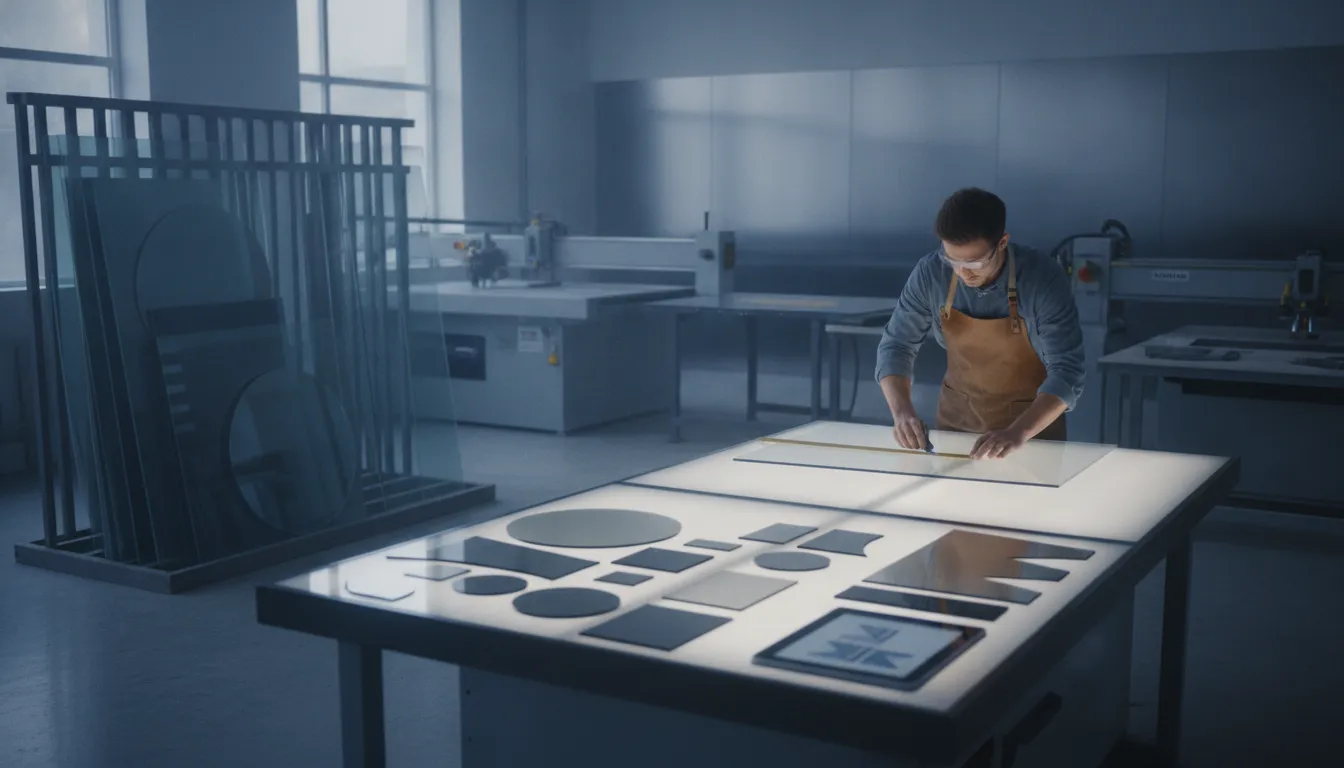
Custom cut glass replacement is the process of removing a damaged or failed glass panel and fabricating a new one to match the opening, frame, hardware, and intended use. Rather than selecting a standard pane and hoping it fits, a glass professional confirms the measurements and specifies the correct thickness, glass type, edge finish, and modifications before fabrication.
This service suits many residential and commercial projects, including windows, mirrors, frameless shower doors, mirror closet doors, storefronts, office partitions, and glass walls. A replacement panel may need to match an existing tint or finish, accommodate hinges and handles, or include holes and cutouts for brackets, outlets, or other hardware.
A precise fit affects more than the finished appearance. Incorrect dimensions can create gaps, prevent a door from opening properly, place stress on the glass, or allow water and air leaks. Custom replacement may also include site measurement, removal of the damaged pane, disposal, delivery, installation, sealing, and hardware alignment.
Glass Rescue provides residential and commercial glass services throughout Dade and Broward counties, including Hollywood, and is expanding into Hillsborough County. A professional can assess the opening and recommend a replacement that suits the space, safety requirements, and surrounding materials.
Custom Panels vs. Stock Panes
Stock panes are manufactured in standard sizes and can work well for simple openings with common dimensions. They may be suitable when the project does not require unusual shapes, special edgework, hardware cutouts, or a particular finish. However, a standard pane may not fit an older, irregular, or uniquely shaped opening.
Custom panels are fabricated to specific measurements. They can be made in different shapes, thicknesses, glass types, and edge finishes, making them a better choice for many replacement projects. Fab Glass and Mirror’s custom glass guidance explains how custom panels can be tailored to a particular application.
A custom panel may also be needed when the new glass must match an existing shower enclosure, mirror, window, storefront, or partition. Careful measurements are essential because a panel that is too large may not fit, while one that is too small can leave gaps or affect the stability of the installation.
Replace Cracks, Chips, Breaks, and Failed Insulated Units
Replacement is usually the safest choice when glass has a crack, deep chip, complete break, or visible damage around an edge. Even a small defect can spread when the panel is exposed to temperature changes, vibration, pressure, or repeated use. Cracked glass may also lose strength and create a hazard, particularly in doors, showers, windows, and commercial spaces.
Tempered glass should be replaced after it breaks rather than repaired. It is manufactured to be stronger than standard annealed glass and is designed to break into smaller, cube-like pieces when shattered. One Day Glass explains the properties of custom tempered glass and why it is made to order for specific measurements.
Insulated glass units can fail without a visible crack. Fogging, condensation, or moisture between the panes often signals a failed seal. Once the seal stops protecting the insulating space, replacing the sealed unit is generally more reliable than trying to remove moisture from inside the glass.
Choose Replacement Over Repair
Glass repair may be appropriate for some frame, seal, or hardware issues, but most cracks and breaks cannot be restored to their original strength or appearance. Fillers and surface treatments may improve the appearance of minor damage, but they are not a dependable solution for a compromised pane in a door, window, shower enclosure, storefront, or office partition.
Custom replacement allows the new panel to match the opening and the project’s safety, performance, and appearance requirements. The fabricator can account for details such as polished or seamed edges, holes, notches, curves, tint, privacy finishes, and the clearance required for hinges, handles, channels, and seals.
Accurate measurements are critical. Cypress Door & Glass recommends careful planning for custom-cut commercial glass, since measurement mistakes can lead to installation problems and added costs. Custom fabrication may take longer than purchasing a standard pane, but it produces glass designed for the actual opening.
Before approving an order, confirm the glass type, thickness, dimensions, edge finish, hardware cutouts, delivery details, and installation plan. To discuss a damaged panel or request help with a replacement project, contact Glass Rescue and share the project location, glass application, and visible damage.
Where Can You Use Custom Cut Glass?
Custom cut glass can replace a damaged pane, complete a renovation, or give a room a cleaner, more intentional appearance. Unlike stock glass, it is fabricated to the measurements, shape, thickness, and finish your project requires. That flexibility makes it useful for everything from a small bathroom update to a large commercial installation.
At home, custom glass can improve privacy, light, storage, and everyday function. In commercial spaces, it can help create attractive storefronts, practical office layouts, and welcoming entrances. The right glass depends on where it will be installed, how it will be supported, and whether it needs to meet specific safety or performance requirements.
Glass Rescue serves residential and commercial customers throughout Dade County, Broward County, Hollywood, and nearby areas, with expanding service in Hillsborough County and the Tampa area. You can review Glass Rescue’s glass services to see which solutions may suit your project. Before requesting a quote, consider how the glass will be used, what hardware it must accommodate, and whether professional measurement or installation makes sense.
Residential Uses: Windows, Showers, Mirrors, Closet Doors, Tabletops, and Shelves
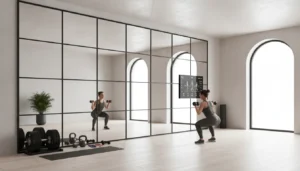
Custom cut glass can solve fit and design challenges throughout the home. A replacement pane can restore a damaged window, while a wall mirror can make a bathroom, bedroom, hallway, or dressing area feel brighter and more spacious. Custom mirror closet doors combine storage access with a clean, reflective surface.
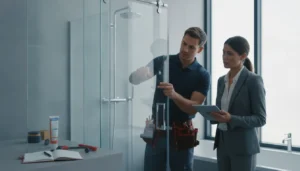
Bathrooms are another common application. Frameless shower doors, fixed panels, and complete shower enclosures can be made to fit the available opening. Since walls and floors are not always perfectly straight or level, accurate measurements help the panels align correctly and seal properly.
You can also use custom glass for tabletops, desk covers, cabinet doors, shelves, and decorative panels. These pieces can match existing furniture or form part of a new design. Custom glass applications include many of these residential uses, along with windows, doors, and room dividers.
Commercial Uses: Storefronts, Entry Doors, Office Partitions, and Glass Walls
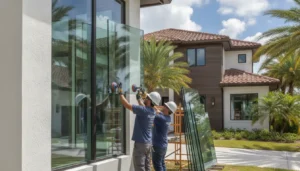
Commercial properties often use custom glass to balance visibility, privacy, natural light, and durability. Storefront panels and entry doors create a polished first impression while allowing customers to see into the business. If a panel cracks or breaks, a properly specified replacement can restore the entrance’s appearance and function.
Inside an office, glass partitions and walls divide work areas without making the space feel closed in. Clear glass supports an open layout, while frosted, tinted, or patterned glass can provide privacy in conference rooms, reception areas, and private offices. Custom panels can also accommodate doors, hinges, handles, outlets, corners, and other site-specific details.
Glass Rescue has experience with projects ranging from residential installations to commercial storefronts and partition walls. For a larger installation, contact Glass Rescue to discuss measurements, glass type, access, scheduling, and installation requirements before fabrication begins.
Match Size, Edgework, and Finish to the Project
A successful custom glass replacement requires more than the correct height and width. Measurements should account for the opening, thickness, shape, support system, and necessary clearances. Measure at multiple points, especially when the panel will fit inside a frame, channel, wall opening, or shower enclosure.
Edgework affects both safety and appearance. Seamed edges reduce sharpness, while polished or beveled edges provide a more finished look for exposed panels, tabletops, shelves, and mirrors. Some projects may also need holes, notches, rounded corners, cutouts, or curved sections. Confirm these details before fabrication because certain modifications cannot be made after glass has been tempered.
The finish should match the purpose of the space. Clear glass keeps a room open, low-iron glass offers a brighter and more neutral appearance, and frosted or tinted glass can provide privacy. Share photos, templates, hardware details, and the panel’s intended use with your glass provider. This information helps the fabricator recommend the appropriate dimensions, edge treatment, and finish for the installation.
Which Glass Type Should You Choose?
The right glass depends on where the panel will go, how much stress it may face, and the appearance you want. A frameless shower door has different safety needs than a decorative shelf, while an exterior window requires insulation and solar control. Choosing the glass type early helps prevent poor fit, premature damage, and avoidable replacement costs.
Consider the panel’s location, size, thickness, edge finish, hardware, and exposure to impact, heat, moisture, and sunlight. Safety glazing is often appropriate for doors, showers, partitions, and other areas where someone could walk into or fall against the glass. The Consumer Product Safety Commission’s glazing safety guidance explains why certain architectural glass applications require added protection.
Appearance also plays an important role. Clear glass creates an open feel, while frosted, tinted, mirrored, low-iron, and privacy glass can change the way light and visibility work in a room. If you are replacing an existing panel, photograph it before removal and record any markings or labels. A professional glass company can use that information, along with measurements and hardware details, to recommend a suitable replacement.
Use Tempered Glass for Showers, Doors, Partitions, and Tabletops
Tempered glass is at least three times stronger than standard annealed glass, making it a practical choice for many safety-focused applications. It is commonly used for frameless shower doors, glass doors, office partitions, tabletops, shelves, and interior panels that may experience regular contact or impact.
When tempered glass breaks, it typically crumbles into small pieces instead of producing large, sharp shards. It is not unbreakable, so the correct thickness, support system, hardware, and installation still matter. A large shower door, for example, needs compatible hinges, clips, and clearances in addition to the appropriate glass.
Tempered glass also handles temperature changes better than ordinary glass. Glass Rescue can help you select and install custom shower glass based on your opening, hardware, and enclosure design.
Use Laminated Glass for Security, Sound Control, and Breakage Retention
Laminated glass consists of two glass layers joined by an inner interlayer. If the glass cracks, the interlayer helps hold the broken pieces in place. This breakage retention makes laminated glass a useful option where security, impact resistance, or falling glass is a concern.
Laminated glass can also reduce sound transmission, which may help in offices, commercial spaces, homes near busy roads, and rooms beside shared walls. It does not make an area completely soundproof, but the right glass, frame, and installation can create a quieter interior.
Performance depends on the full assembly, including the glass makeup, interlayer, frame, and installation method. Review the National Glass Association’s technical resources when comparing safety and performance glazing for an architectural project.
Use Annealed Glass for Suitable Low-Risk Interior Applications
Annealed glass is standard, untreated glass used in many low-risk applications. It may work well for picture frames, cabinet inserts, decorative panels, and other interior uses where the glass is protected and unlikely to experience direct contact or impact.
Because it is easier to cut and modify than tempered glass, annealed glass can suit simple shapes and protected installations. However, it is not recommended for high-stress situations. When it breaks, it can form large, sharp pieces, making it a poor choice for shower doors, entry doors, full-height partitions, or low-mounted panels.
Before choosing annealed glass, consider the panel’s height, location, surrounding foot traffic, and likelihood of impact. Building codes may require safety glazing in specific areas. When in doubt, ask a professional to review the application before ordering.
Use Insulated and Low-E Glass for Exterior Windows
Insulated glass units, often called IGUs, contain two or more panes separated by a sealed airspace. The space may contain insulating gas, which helps reduce heat transfer through the window. This design can improve indoor comfort and reduce the demand on heating and cooling systems.
Low-E glass has a coating that helps control the movement of heat and sunlight. The appropriate coating depends on the climate, window direction, sun exposure, and desired balance between daylight and solar control. The U.S. Department of Energy’s window guidance explains how glazing choices affect heat gain, heat loss, and energy performance.
Insulated glass is especially important when replacing a failed exterior window unit. Fogging, condensation between panes, or damage around the seal may indicate that the complete unit needs replacement. Match the new unit to the existing frame, spacer, thickness, and performance requirements.
Choose Mirrored, Frosted, Tinted, Low-Iron, or Privacy Glass
Glass can influence a room’s appearance and function. Mirrored glass works well for bathroom vanities, dressing areas, gyms, and decorative wall features. Frosted and privacy glass allow light through while limiting visibility, making them useful for bathrooms, offices, conference rooms, and entry areas.
Tinted glass can soften glare and add color. Common options include bronze, gray, and green. Low-iron glass contains less of the material that gives standard glass its slight green cast, creating a cleaner appearance when accurate color and transparency matter.
Choose the finish based on both design and daily use. Custom glass options from Fab Glass and Mirror include clear, low-iron, frosted, bronze, gray, and green finishes. Glass Rescue can coordinate custom mirrors and privacy panels with measurements, edgework, and installation through its residential and commercial glass services.
Match Thickness, Safety Needs, Tint, Coating, and Appearance
Thickness affects the panel’s weight, rigidity, feel, and compatibility with hinges, clips, channels, and frames. A large frameless shower door may need a different thickness than a small cabinet insert, even when both use tempered glass.
Also consider whether the panel needs a coating, tint, privacy finish, low-iron makeup, or a specific edge treatment. Size, shape, thickness, glass type, edgework, and other custom features all affect the final cost. When requesting a custom glass quote, ask for each specification to be listed clearly.
For replacement work, matching the existing panel may be important, but an exact match is not always the safest option. A professional can recommend an improved specification while keeping the new glass compatible with the opening and hardware. Provide photos, rough measurements, intended use, and any visible markings before approving fabrication.
Plan Holes and Modifications Before Tempering
Tempered glass cannot be cut, drilled, or reshaped after tempering. Holes for hinges, handles, towel bars, brackets, and other hardware must be completed beforehand. Even a small modification after tempering can cause the panel to shatter.
Accurate planning is essential for frameless showers, glass doors, tabletops, shelves, and partitions. Confirm the hardware model, hole diameter, hole location, edge distance, and required clearance before fabrication. You may also need rounded corners, notches, cutouts, or polished edges.
The tempered glass fabrication guidance from One Day Glass explains why modifications must be specified in advance. If you are replacing a panel with existing hardware, photograph each fitting and measure from fixed reference points. For unusual shapes or multiple drilled holes, have a professional create or verify the template before ordering.
Which Measurements and Specifications Matter?
Custom cut glass replacement depends on more than the length and width of a broken pane. The replacement must match the opening, surrounding hardware, safety requirements, and installation method. A small measurement error can create visible gaps, prevent hardware from lining up, or require a second panel.
Before requesting a quote, gather details about the existing glass and the opening. Take clear photos of the frame, edges, hardware, seals, and damage. If the project involves a frameless shower door, mirror, closet door, storefront, or office partition, professional measurement can identify details that are easy to overlook.
Glass Rescue provides residential and commercial glass services throughout Dade and Broward counties, including Hollywood, with service expanding into Hillsborough County. A glass professional can review the opening, recommend suitable specifications, and identify installation requirements before fabrication begins.
Measure Width and Height at Multiple Points
Measure the opening in at least three places across the width and three places down the height. Record each measurement, then use the smallest one when discussing the fit with a glass professional. Walls, frames, and older openings may not be perfectly straight, so one measurement rarely tells the whole story.
Use a quality tape measure and record dimensions to the nearest 1/16 inch when possible. Do not assume the replacement glass should match the exact opening size. The panel may need clearance for seals, setting blocks, movement, and installation.
If the old pane remains in place, take photos while measuring. Include the corners, frame, edges, and any hardware. You can share these details when requesting a custom glass replacement quote, giving the fabricator more information than measurements alone.
Confirm the Opening, Pane Size, Thickness, and Squareness
Keep the opening measurement separate from the existing pane measurement. The opening is the available space, while the pane is the piece being replaced. Trim, stops, gaskets, and channels can conceal part of the opening, so do not assume the visible glass shows its complete dimensions.
Measure the glass thickness with calipers, or check markings on the spacer of an insulated glass unit when available. Thickness affects how the pane fits into channels, hinges, gaskets, stops, and frames. Compare the two diagonal measurements of the opening to check whether it is square. If the diagonals differ, the glass may need a custom shape or an installation adjustment.
For insulated glass, record the overall unit thickness, number of panes, spacer type, tint, and any visible low-emissivity coating. These details help ensure the replacement matches the existing window system instead of simply filling the opening.
Record Curves, Radii, Holes, Notches, and Other Cutouts
Straight rectangular panels are generally easier to measure than shaped glass. If the replacement includes a curve, angled corner, radius, hole, notch, or other cutout, document every feature carefully. Measure each one from a consistent reference point, such as the lower-left corner, and record the diameter of circular holes.
Mark the top, bottom, finished face, and outward-facing side. This is important for mirrors, coated glass, patterned glass, and panels with different surfaces on each side. Clear labels can prevent a correctly fabricated panel from being installed in the wrong orientation.
Plan all cutouts before fabrication, especially when the glass will be tempered. Tempered glass cannot be drilled or cut after heating without breaking. Holes for shower handles, hinges, brackets, outlets, and pass-throughs must be included in the original specifications. Glass Rescue can review these requirements through its contact page before fabrication starts.
Choose Seamed, Polished, Beveled, or Unfinished Edges
The edge finish should match how the glass will be installed and handled. A seamed edge has lightly smoothed sharp edges and may work for glass placed inside a frame or channel. A polished edge has a smoother, finished appearance and is often selected for exposed edges on shelves, tabletops, mirrors, and partitions.
A beveled edge removes material at an angle to create a decorative border. This finish is common on mirrors and some interior glass features. An unfinished edge may be suitable when the glass edge will be completely enclosed, but it is not appropriate for every application.
Tell the fabricator which edges will be visible and which will sit inside a frame or channel. Exposed edges require an appropriate finish for safety and appearance. Edge quality is especially noticeable on frameless shower doors, mirrors, shelves, and glass partitions because the panel remains visible from several angles.
Match Frames, Channels, Hinges, Handles, Seals, and Clearances
Replacement glass must work with the complete installation system. Record the dimensions and locations of frames, channels, hinges, handles, rollers, clamps, seals, and stops. For a shower door, note the swing direction, hinge position, handle location, nearby fixtures, and available clearance.
Check whether the hardware attaches through holes in the glass or clamps around its edges. When possible, identify the hardware model and confirm the required hole diameter and distance from each edge. A panel can match the opening and still fail to install if the hardware locations are incorrect.
Consider movement and clearance as well. Doors need room to open, while fixed panels need enough space for seals and setting materials. Storefronts and office partitions may use specific channels or mounting systems. Glass Rescue’s commercial glass services can help coordinate the glass, hardware, and installation requirements as one project.
Create Templates for Unusual Shapes and Site-Specific Fits
A template can provide a more dependable guide than a list of measurements for an irregular opening. Use rigid cardboard, thin plywood, or another stable material to copy the shape. Mark the finished face, top, bottom, wall side, holes, cutouts, and any areas that require clearance.
Make sure the template rests in the same position as the finished glass. Include the intended clearance, not just the edge of the opening. For a curved shower panel, angled storefront, or unusual mirror, a template that does not reflect the final position can lead to an expensive mismatch.
Avoid flexible paper that can fold or change shape. If the opening includes a changing curve, uneven wall, or unusual transition, ask a professional to create and verify the template on site. This step is particularly helpful in older homes, remodeled bathrooms, and commercial spaces with walls that are not level or square.
Approve Final Specifications Before Fabrication
Before fabrication begins, review the complete order in writing. Confirm the width, height, thickness, glass type, color, coating, edge finish, shape, holes, notches, and quantity. For insulated glass, verify the pane arrangement, spacer, gas fill if specified, and low-emissivity coating.
Review the fabricator’s drawing or diagram alongside your measurements and photos. Check the orientation of mirrored, tinted, patterned, and coated surfaces. Confirm hardware compatibility, installation clearances, delivery details, and whether removal or installation is included in the quote.
Once tempered, laminated, insulated, or specially shaped glass enters fabrication, changes may be limited or costly. Ask questions before approving the specifications, and keep a copy of the final measurements for your records. Glass Rescue’s about us page provides more information about its experience with residential installations and larger commercial projects.
Should You Order Custom Glass Locally or Online?
The right source for custom glass depends on the panel, the installation, and your tolerance for measurement errors. Online suppliers can be convenient when you need a simple, flat panel and already have precise dimensions. A local glass company is often the better choice when the project involves an unusual shape, drilled holes, specialty hardware, safety glass, or professional installation.
Before requesting a quote, identify how and where the replacement glass will be used. A shelf, tabletop, or flat interior panel may have straightforward requirements. A frameless shower door, storefront pane, office partition, or glass wall requires more planning because the glass must work with surrounding structures and hardware. Accurate measurements can prevent fabrication delays and installation problems, especially when even a small error affects the final fit. Review this commercial glass measurement guidance before ordering.
For homeowners and businesses in Dade County, Broward County, Hollywood, Tampa, and nearby communities, a local provider such as Glass Rescue can help coordinate the project. Depending on your needs, that may include measuring, selecting the right glass, confirming hardware, fabricating the panel, and completing the installation.
Order Online for Simple, Flat, Accurately Measured Panels
Ordering online may work well for a basic, flat panel without complicated installation requirements. Common examples include a replacement shelf, small tabletop, cabinet insert, or flat piece of glass for a low-risk interior project. Online suppliers such as Fab Glass and Mirror let customers choose custom dimensions, shapes, thicknesses, and edge finishes.
This option makes the most sense when you can measure the opening accurately and know which glass type the project requires. You also need a plan for transporting, handling, and installing the panel after it arrives. Online ordering typically does not include a site visit, hardware coordination, or adjustments if your measurements are incorrect.
Take extra care with tempered glass. It must be cut, drilled, and shaped before tempering, so a mistake after fabrication usually means ordering a new panel. If the glass will fit into a frame, channel, hinge, or countertop opening, confirm the required clearances before submitting the order.
Order Locally for Unusual Shapes, Hardware, and Commercial Projects
A local glass company is often the safer choice when a project requires more than a simple rectangle. Curved glass, angled pieces, notches, cutouts, polished edges, drilled holes, and tight-fitting templates all benefit from professional review. Specialty providers may also offer custom tabletops, tinted glass, and other options, as shown in Lone Star Glass’s specialty glass services.
Local service is especially helpful when the glass must work with hinges, handles, clips, channels, seals, or mounting systems. A professional can inspect the existing hardware and determine whether it can be reused or should be replaced. This helps prevent ordering a panel that matches the opening but cannot be installed properly.
Commercial projects add concerns such as safety requirements, delivery access, scheduling, and coordination with other trades. Storefronts, entry doors, office partitions, and glass walls can be large and difficult to handle. A local provider such as Glass Rescue can help coordinate the project from measurement through installation.
Decide When Professional Site Measurement Makes Sense
Professional measurement is worth considering when the opening is difficult to access, the shape is irregular, or the glass would be expensive to replace. It is also a smart option when the panel must fit existing hardware or when a small error could cause leaks, movement, poor alignment, or installation delays.
A site visit can reveal details that are easy to miss with a tape measure. The opening may not be square, the wall may be out of level, or the frame may have shifted over time. A technician can measure multiple points, check clearances, inspect the surrounding structure, and create a template for an unusual shape. For a frameless shower, the process can also account for hinges, seals, floor slope, and door swing.
Professional measurement is particularly useful for storefronts, commercial doors, partitions, and glass walls. These panels may require specialized equipment and careful planning before fabrication. If you are unsure whether online ordering is suitable, contact Glass Rescue to ask about an on-site assessment.
Follow the Process: Quote, Measure, Fabricate, Deliver, and Install
Most custom glass replacements follow five stages: quote, measurement, fabrication, delivery, and installation. The quote should identify the glass type, thickness, dimensions, edge finish, hardware, labor, delivery, removal, and other project costs. This gives you a clear basis for comparing providers.
Next, the measurements are confirmed and sent for fabrication. Custom-cut glass often takes longer to produce than standard panes, especially when the project includes complex shapes, special finishes, or treatments. Custom commercial glass guidance recommends reviewing production schedules so you can plan around the expected lead time.
When the panel is ready, confirm how it will be packaged and delivered. Large or fragile pieces may require crating, freight service, or local delivery. Installation may include removing damaged glass, disposing of it, setting the replacement, sealing the edges, and fitting hardware. Clarify each step before approving the work.
Compare Return, Recutting, Delivery, and Installation Policies
Custom glass is made for a specific project, so its return policy may differ from the policy for standard products. Ask what happens if the panel arrives damaged, the dimensions do not match the approved specifications, or the glass cannot be installed because of a fabrication issue. Also confirm whether the provider will recut the panel or whether a new order is required.
Delivery terms deserve the same attention. Find out whether shipping includes curbside delivery, placement inside the property, or installation by a trained crew. A large glass panel may require multiple people and specialized equipment to move safely. If the order is shipped, ask who is responsible for filing a damage claim with the carrier.
For local projects, request a written explanation of installation, removal, disposal, sealing, and hardware services. Before the crew leaves, inspect the finished panel for chips, scratches, cracks, alignment issues, and gaps. Clear policies and a documented scope of work can prevent confusion if a problem appears later.
Use a Custom Glass Replacement Checklist
A checklist helps you collect the details a glass provider needs to prepare an estimate. Start by recording where the panel will be used, such as a window, shower, mirror closet door, office partition, storefront, or tabletop. Include photos of the opening and surrounding hardware so the provider can understand the project.
Then note the approximate width and height, the existing glass type if known, the thickness, the edge finish, and any tint, coating, privacy treatment, or mirror finish. Mark the location of holes, notches, curves, corners, and cutouts. If the panel sits in a frame, record the frame material and channel dimensions.
The custom-cut glass measurement guide from Aviora Wholesale also covers thickness, safety considerations, and installation requirements. Use this information as a starting point, but ask a professional to confirm the details when the panel is large, heavy, elevated, or safety-critical.
Confirm Dimensions, Glass Type, Thickness, Finish, Hardware, and Clearances
Before fabrication begins, review every specification in writing. Confirm the final width and height, the number of panels, the glass type, the thickness, and whether the piece will be tempered, laminated, insulated, mirrored, frosted, tinted, or low-E. For an insulated replacement unit, verify the overall thickness and the required spacer and seal configuration.
Check the edgework, too. A seamed edge may suit a concealed installation, while a visible tabletop or shelf may need polished or beveled edges. Confirm the position and size of every hole, notch, radius, and cutout. For a shower door or partition, review hinge locations, handle placement, seals, and door clearances.
Hardware compatibility matters as much as the glass dimensions. Make sure the panel fits the existing frame, channel, clips, hinges, handles, or tracks. Customers must provide accurate measurements for many custom orders, and tempered glass ordering information notes that thickness options can vary by glass type.
Review Scope, Lead Time, Fees, and Damage Policies Before Approval
Read the estimate carefully before approving the work. The scope should state what the provider will measure, fabricate, deliver, remove, install, and dispose of. It should also list the selected glass specifications, hardware, finishes, labor charges, delivery fees, taxes, and any minimum project charges.
Ask when fabrication will begin, how long production should take, and whether the schedule changes for tempered, laminated, insulated, curved, tinted, or specialty glass. Confirm whether the quoted lead time starts after measurement, deposit, or final approval. These details can affect the installation date.
Finally, review the damage and warranty policies. Ask how the company handles damage discovered during delivery, installation defects, seal failures, hardware problems, and accidental breakage after installation. A written estimate from a local provider such as Glass Rescue gives you a clear record of the project details before fabrication begins.
How Much Does Custom Cut Glass Replacement Cost?
Custom cut glass replacement does not have one fixed price. The total depends on the panel’s size, glass type, thickness, shape, finish, and the work required to remove and replace it. A small, flat pane may be relatively simple, while a large storefront panel, curved mirror, or frameless shower enclosure may require specialized equipment and careful on-site installation.
When comparing estimates, look beyond the price of the glass itself. A starting rate may not include edge finishing, holes, delivery, disposal, hardware, sealing, or labor. For residential or commercial projects in Dade, Broward, or Hillsborough County, contact Glass Rescue to discuss the replacement and request a quote based on your project’s specifications.
Consider Size, Thickness, Type, Quantity, and Availability
Panel size is one of the first factors that affects the price. Larger pieces require more material, stronger packaging, and additional care during delivery and installation. Thickness matters too. Thicker glass generally costs more and may require extra equipment or labor for safe handling.
The type of glass also affects the estimate. Tempered, laminated, insulated, low-E, mirrored, frosted, tinted, and low-iron glass each have different uses and material costs. Availability may affect both price and lead time when you need a less common thickness, coating, or finish.
Quantity can change the cost as well. Ordering several matching panels may make fabrication and delivery more efficient, while a single custom piece may include a setup or minimum-order charge. Custom glass suppliers typically need complete specifications before providing a firm estimate.
Account for Edges, Holes, Notches, Curves, and Coatings
A plain rectangular panel is usually simpler to fabricate than glass with several custom details. Holes for handles, hinges, brackets, or outlets require precise placement. Notches, cutouts, rounded corners, curves, and unusual shapes also add fabrication time and make accurate measurements more important.
Edgework can affect the cost too. Seamed edges reduce sharpness, while polished or beveled edges create a more finished appearance. Frosted finishes, tints, privacy treatments, and other coatings may add to the material price.
Confirm these details before fabrication begins. Tempered glass must be cut and drilled before tempering, since it cannot be modified afterward. For commercial work, planning custom-cut glass details in advance can help prevent rework and scheduling delays.
Compare Starting Prices With Total Replacement Costs
A listed starting price can provide a general idea of raw material costs, but it is not the same as the price of a completed replacement. Some suppliers list custom tempered glass from around $4.95 per square foot, although the final amount depends on the panel’s specifications and the services included.
Before relying on a starting rate, ask what it covers. Does it include cutting, edgework, holes, packaging, delivery, and installation, or does it cover only a basic sheet of glass? A smaller panel with several modifications may cost more per square foot than a larger, simpler piece.
The most useful estimate reflects the complete scope of work. When comparing custom tempered glass pricing, make sure each quote includes the same glass type, thickness, finish, and services.
Compare Glass-Only, Delivered, and Installed Pricing
Glass-only pricing may seem less expensive, but it leaves more work for you. You may need to arrange transportation, inspect the panel, remove the damaged glass, supply compatible hardware, and complete the installation. This option may suit an experienced contractor or a simple panel with easy access.
Delivered pricing includes transportation, but ask where the glass will be placed. Some services offer curbside delivery only, while large or heavy panels may require additional help, lifting equipment, or a safe route into the building.
Installed pricing generally includes professional handling, setting, alignment, and sealing. Removal of the old panel may or may not be included. Ask for glass, delivery, removal, and installation to appear as separate line items so you can compare the full cost of each option.
Review Per-Panel, Per-Square-Foot, and Project-Based Estimates
Glass companies may price a replacement by the panel, square foot, or complete project. Square-foot pricing is useful for comparing basic material costs, but it may not include minimum charges, fabrication details, hardware, or installation. Per-panel pricing can be easier to understand when each piece has a different size or shape.
Project-based estimates are often more practical for frameless showers, storefronts, office partitions, and glass walls. These projects may involve several panels, hardware, framing, removal, delivery, and on-site adjustments. One project price can make the full scope easier to review.
Accurate measurements remain essential, especially for tempered glass. The panel must be cut, drilled, and shaped before tempering. Custom glass ordering guidance can help you identify the dimensions and specifications to confirm before production.
Include Removal, Disposal, Framing, Hardware, Sealing, Delivery, and Labor
The replacement panel is only one part of the project. If the existing glass is broken, it must be removed safely and disposed of properly. This may require protective equipment, careful cleanup, and additional time, particularly in a shower, storefront, entry door, or occupied office.
The surrounding system may need attention too. Frames, channels, hinges, handles, clips, locks, gaskets, and seals all affect the final price. If existing hardware is damaged or incompatible with the replacement panel, it may need to be repaired or replaced.
Ask whether the estimate includes measuring, fabrication coordination, delivery, installation, sealing, cleanup, and disposal. Glass replacement services may include several of these steps, but the exact scope should be confirmed in writing before work begins.
Ask About Commercial Minimums, Volume Pricing, Scheduling, and Promotions
Commercial projects may have different pricing rules than single-panel residential replacements. A provider may set a minimum order or service charge for smaller jobs. Larger orders, repeated panel sizes, or multiple locations may qualify for volume pricing because fabrication and delivery can be coordinated more efficiently.
Scheduling can affect the estimate as well. An urgent replacement may cost more than a standard production order, while work outside regular hours may involve additional labor charges. For a storefront, office partition, or glass wall, discuss building access, site requirements, and the preferred installation window in advance.
You can also ask about package pricing or promotions for multiple services. Do not compare discounts alone. Confirm that every quote includes the correct glass type, hardware, installation method, warranty terms, and project timeline.
Request an Itemized Quote With Warranty Terms and Lead Time
An itemized quote should identify the glass type, dimensions, thickness, finish, edgework, holes, and quantity. It should also separate fabrication, delivery, removal, disposal, installation, hardware, sealing, taxes, and other fees. This makes it easier to compare providers and identify charges that may otherwise be overlooked.
Ask when the glass will be ready, how long installation should take, and what could affect the schedule. Custom pieces may require more time when the material is not in stock or when the project needs a template and site measurement. Confirm whether the lead time begins after approval, deposit, or final measurement.
Review the warranty and damage policy before authorizing the work. Ask what the warranty covers, how long it lasts, and whether it applies to materials, workmanship, hardware, or seals. A written estimate from an experienced custom glass installation provider should make these terms easy to find.
How Can You Ensure Safe Delivery?
Custom-cut glass needs careful planning from fabrication through installation. Unlike stock panes, each piece is made for a specific opening, shape, thickness, and finish. A delivery problem can delay your project, damage nearby materials, or leave you with a panel that no longer fits. Before placing your order, confirm how the glass will be packed, transported, inspected, and replaced if it arrives damaged.
Treat delivery as part of the replacement plan, not as a final detail. Ask for a written quote, confirm the production schedule, and clarify who handles the glass at every stage. This matters especially for frameless shower doors, large mirrors, storefront panels, office partitions, and other products that require precise handling. Glass Rescue offers custom glass services for residential and commercial projects.
A safe delivery plan should also include a receiving location, proper lifting equipment, and enough help to move the panel. If you are replacing glass at a busy home or commercial property, clear the path before delivery and keep people away from the unloading area. These small preparations can help prevent damage and reduce the risk of injury.
Choose Standard, Expedited, Pickup, or Local Delivery
Ask your glass provider which delivery options are available before approving the order. Standard delivery usually costs less, but custom-cut glass may take longer to produce than stock panes. Complex shapes, polished edges, special finishes, and treatments can add to the fabrication schedule. Expedited service may shorten transit or production time, but it often comes with additional fees and may not be available for every glass type.
Local delivery or professional pickup can be a practical choice for fragile, oversized, or unusually shaped panels. It may also give you a clearer arrival window. If you plan to collect the order yourself, confirm that your vehicle can safely support the panel and that you have suitable equipment and assistance. Do not assume a large sheet can lie flat in a car or rest unsecured in a truck bed.
For small, simple panels, standard delivery may be sufficient. For a time-sensitive repair, expedited service could make sense if the supplier can meet your deadline. Local delivery is often the better choice for mirrors, shower glass, and large panels that need careful handling from the supplier’s facility to the property.
Estimate Shipping Costs by Size, Destination, and Service Level
Request a detailed delivery quote instead of relying on a general shipping estimate. Costs can vary based on the panel’s dimensions, weight, destination, packaging, delivery speed, and special handling requirements. Oversized orders may also involve freight charges, liftgate service, residential delivery fees, or limited-access delivery charges. One Day Glass explains how custom glass shipping costs can change according to size, destination, and service level.
Give the supplier accurate delivery information, including the property address, stairs, narrow driveways, loading conditions, and commercial access restrictions. Ask whether the quote includes packaging, insurance, appointment scheduling, and inside placement. An itemized estimate makes it easier to compare providers and reduces the chance of unexpected charges when the glass reaches the job site.
Also ask whether taxes, fuel surcharges, crating, disposal, and redelivery fees are included. A lower glass-only price may not represent the lowest total cost once transportation and special handling are added. Comparing complete delivery estimates gives you a more realistic project budget.
Confirm Fabrication Lead Times and Delivery Windows
Custom glass requires more planning than a standard replacement pane. Before ordering, ask how long the material will take to source, fabricate, finish, package, and deliver. Complex cutouts, unusual thicknesses, specialty coatings, and large quantities can extend the schedule. Material shortages may also affect production, so leave some flexibility in your project timeline. Cypress Door & Glass recommends planning for custom glass lead times early in the process.
Request an estimated fabrication date and delivery window in writing. Confirm whether the carrier will call ahead and whether someone must be present to receive the order. Do not schedule installation based only on an order confirmation. Wait until the supplier confirms that the glass is complete and ready for delivery.
For commercial work, coordinate arrival with the general contractor, site manager, or installer. The receiving area should be accessible, well lit, and free of equipment or materials that could interfere with unloading. If the schedule changes, notify everyone involved before the carrier arrives.
Arrange Freight or Crated Delivery for Oversized Commercial Glass
Large storefront panels, glass walls, office partitions, and entry doors often require freight delivery rather than standard parcel service. Freight carriers use different equipment and procedures for heavy, oversized items, so ask the supplier how the panel will be loaded, secured, unloaded, and moved to the installation area. Freight delivery for oversized glass may require a pallet, crate, liftgate, forklift, or several people at the receiving location.
Confirm that the delivery site can accommodate the truck and unloading equipment. A freight carrier may deliver only to the curb or loading area, not inside the building. Ask whether inside placement, debris removal, or movement near the final opening is included in the quote.
For a busy commercial property, schedule delivery when the entrance, loading zone, and path to the installation area are clear. Assign a qualified person to receive the order and check the crate before the driver leaves. If the panel is too large to move safely with the available team and equipment, arrange professional handling instead of attempting an improvised lift.
Choose Protective Packaging, Insured Shipping, and Clear Carrier Responsibility
Proper packaging helps protect custom glass from impact, vibration, moisture, and pressure during transport. Ask whether the panel will be secured in a crate, A-frame, or another purpose-built support. The package should prevent the glass from shifting and protect corners, edges, hardware holes, and finished surfaces. A reputable supplier should also explain how the order is labeled and handled during transit.
Confirm whether shipping insurance is included and identify who is responsible for damage at each stage. The supplier may cover the glass until the carrier accepts it, while the carrier may assume responsibility after pickup. Ask for tracking information, delivery instructions, and a written process for reporting damage. Cypress Door & Glass recommends inspecting custom glass upon arrival, even when the outer packaging looks intact.
Ask whether the packaging is designed for the specific panel size and weight. Thin cardboard or loose wrapping may not provide enough protection for a large mirror or finished shower door. Confirm that the crate can be opened safely and that the carrier will wait while you complete the initial inspection.
Confirm Safe-Arrival Guarantees, Damage Claims, and Replacement Policies
Before you pay, read the supplier’s policy for damaged, missing, incorrect, or unusable glass. Find out how long you have to report a problem, what evidence the supplier requires, and whether replacement fabrication or shipping is covered. Some companies require photos of the crate, packaging labels, and damaged panel. Others may require the carrier to inspect the shipment before it leaves the property.
Ask what happens if the glass arrives in good condition but does not match the approved specifications. A replacement policy may cover manufacturing errors, but it may not cover incorrect measurements or changes made after approval. One Day Glass recommends reviewing damage claims and replacement policies before ordering.
Keep the quote, approved drawing, measurements, delivery receipt, and related messages. These records can help resolve questions about the glass type, dimensions, finish, or responsibility for damage. If the provider offers a safe-arrival guarantee, ask whether it applies to both delivery and pickup orders.
Inspect the Packaging and Glass Before Accepting the Order
Set aside enough time to inspect the delivery before signing for it. Look for crushed corners, punctures, broken crate boards, loose straps, moisture, shifting, or other signs of rough handling. If the packaging shows damage, note it on the delivery receipt and ask the driver about the carrier’s inspection process. Do not sign a clean receipt if the package clearly appears compromised.
If possible, completely unwrap the glass before accepting the order. Examine both faces, all edges, corners, holes, notches, and finished areas in good lighting. Check the dimensions and glass type against your approved order. Look for cracks, chips, scratches, cloudiness, coating damage, and incorrect edgework.
Keep the packaging until you confirm that the panel is correct and undamaged. Some damage may not be visible until the crate or protective wrap is removed. If the carrier cannot wait for a complete inspection, ask about the correct notation to make on the delivery receipt and contact the supplier immediately.
Photograph and Report Damage Before Moving or Installing the Panel
Take clear photos before moving the glass from its delivery position. Photograph the full package, close-ups of damaged areas, shipping labels, crate markings, and visible impact points. If the panel is broken, do not remove pieces or clean up until you have documented the condition, unless leaving it creates an immediate safety risk.
Report damage as soon as possible, preferably on the day of delivery. Include the order number, delivery date, photos, a description of the problem, and whether the damage was visible through the packaging. Follow the supplier’s instructions for preserving the glass and packaging while the claim is reviewed.
Avoid installing or modifying a damaged panel. Cutting, drilling, or setting it into hardware can make responsibility harder to determine. Quick reporting gives the supplier and carrier the best chance to investigate and arrange a replacement. If broken glass presents an immediate hazard, keep people away from the area and contact the provider for safe removal instructions.
Store Glass Upright and Use Proper Lifting Equipment
If you cannot install the glass immediately, store it upright on a stable, padded A-frame or approved glass rack. Keep the panel in a dry, protected area away from vehicles, foot traffic, children, and active construction. Do not lay large sheets flat, lean them against an unsecured wall, or place tools and materials on top of them. Protect the edges from contact with concrete, metal, and other hard surfaces.
Large or heavy panels should be moved by at least two trained people using suitable lifting equipment. Wear cut-resistant gloves, closed-toe footwear, and eye protection, and keep the panel vertical while carrying it. Safety guidance for delivering glass also recommends using two people to move large sheets. Never carry glass under your arm or above your head.
For oversized storefront glass, glass walls, and difficult-to-reach installations, arrange professional handling. A qualified provider can plan the route, use appropriate equipment, and coordinate setting, leveling, sealing, and hardware installation. Contact Glass Rescue to discuss delivery and installation requirements for your residential or commercial project.
When Should You Hire a Professional Installer?
Custom glass replacement involves more than ordering a panel that matches the old one. The installer must verify the opening, select the correct glass type, transport the panel safely, and secure it with compatible hardware and sealants. Even a small measurement error can create gaps, leaks, stress points, or a panel that does not fit.
A small, flat, non-structural panel may be suitable for an experienced DIY homeowner. Professional installation is the safer choice when the glass is large, heavy, elevated, difficult to access, or part of a shower, door, storefront, partition, or exterior opening. Glass Rescue provides residential and commercial glass services across Dade County, Broward County, and surrounding service areas.
Consider DIY for Small, Simple, Non-Structural Panels
DIY installation may be reasonable for a small, flat panel with a simple shape and an accessible location. Examples include a shelf, a small tabletop, or a replacement pane that fits into an existing frame without specialized hardware. Only consider this option if you can take accurate measurements and handle the panel without placing pressure on its corners or edges.
Before ordering, confirm the width, height, thickness, edge finish, and any required cutouts. Custom glass ordering guidance can help you identify the specifications a supplier may need. Tempered glass must also be cut, drilled, and notched before tempering, so modifications cannot usually be made after fabrication.
Hire a Professional for Large, Heavy, Elevated, or Hard-to-Reach Glass
Large glass panels are difficult to carry, position, and support safely. Their weight can make them unstable on stairs, upper floors, narrow hallways, or elevated openings. One person may not have enough control to move the panel safely, and contact with a hard surface can damage the glass.
Professional installers use suitable lifting methods, protective equipment, and coordinated handling techniques. They can also inspect the opening and plan how the panel will enter the property before delivery. This preparation is particularly important for oversized or unusually shaped glass, which requires careful transportation and support. Hiring a professional reduces the chance of injury, breakage, and damage to nearby walls or fixtures.
Hire a Professional for Frameless Showers, Mirrors, Closet Doors, and Hardware
Frameless shower doors require accurate measurements, properly placed hinges, level hardware, and carefully applied seals. The glass must align with the wall and floor so the door opens smoothly and water remains inside the enclosure. A small alignment problem can place stress on the glass or cause a persistent leak.
Mirrors and mirror closet doors also need secure mounting. Installers must account for wall conditions, attachment points, tracks, handles, hinges, and clearances. Custom products may require fabrication drawings and hardware coordination before production, as outlined in this custom glass ordering resource. A professional can coordinate the components as one complete installation.
Hire a Professional for Storefronts, Entry Doors, Office Partitions, and Glass Walls
Commercial glass installations affect security, access, appearance, and daily operations. Storefronts and entry doors must fit their frames and function reliably. Office partitions and glass walls also require careful planning so panels align with floors, ceilings, walls, doors, and neighboring sections.
These projects may involve multiple panels, specialized hardware, jobsite coordination, and building requirements. A professional installer can assess the opening, plan panel placement, and coordinate delivery around your business schedule. They can also identify uneven floors, concealed framing, or inadequate support before fabrication. Commercial custom glass guidance highlights the importance of planning specifications before ordering.
Secure and Level Tabletop and Shelf Installations Properly
Glass shelves and tabletops may look straightforward, but they still need reliable support. Brackets, clips, bases, or other supports must suit the panel and its expected load. The surface should remain level and stable during everyday use. If the panel rests unevenly, it may rock, slide, or experience concentrated pressure at one corner.
Before installation, confirm the glass thickness, edge treatment, support locations, and exact dimensions. Use compatible supports and prevent direct contact between the glass and hard surfaces. For an unusual shape, create a paper or cardboard template to check the fit before fabrication. Have a professional review large, heavy, elevated, or custom tabletop installations before work begins.
Hire a Professional for Safety-Critical, Structural, and Code-Regulated Replacements
Professional installation is essential when glass forms part of a door, guard, exterior window, shower enclosure, storefront, partition, or another safety-related assembly. The replacement must suit the opening and meet the requirements for its location. Choosing the wrong glass type or thickness can create a serious safety concern.
Building codes and project specifications may affect the use of tempered, laminated, insulated, or specialty glass. Confirm these details before ordering to avoid delays and costly rework. Glass Rescue’s experienced team works on residential and commercial projects that require careful planning and precise installation. If you are unsure whether a replacement is structural or code regulated, consult a qualified glass professional first.
Let Professionals Handle Removal, Disposal, Setting, Sealing, Alignment, and Hardware
Replacement work often starts with removing broken or failed glass. That process can expose sharp edges, damaged frames, loose glazing, and hidden hardware. A professional can secure the area, remove the existing panel safely, and dispose of debris before preparing the opening.
Installation includes more than placing the new glass. The panel may require setting blocks, channels, gaskets, clips, hinges, handles, fasteners, or sealant. The installer must position each component correctly, check alignment, and follow the sealant manufacturer’s curing instructions. Careful planning helps prevent problems during delivery, setting, sealing, and hardware installation, especially on commercial projects where delays can affect business operations.
Prevent Leaks, Breakage, and Safety Risks With Proper Fit and Installation
Even the right glass can perform poorly when it is measured or installed incorrectly. In a shower, an uneven door or incomplete seal may allow water to escape. In a door or partition, misaligned hardware can place stress on the panel. In a window or storefront, gaps can affect weather protection, comfort, and security.
Professional installers check clearances, support points, level, plumb, and sealant coverage before completing the work. They can also identify problems with the frame or opening that may not be obvious at first. If your project involves unusual shapes, custom measurements, replacement hardware, or multiple panels, request a project consultation before ordering. Careful planning helps prevent leaks, breakage, delays, and unnecessary replacement costs.
How Should You Choose a Custom Glass Replacement Provider?
Choosing a custom glass replacement provider involves more than comparing the lowest glass-only price. The right company should understand your project, recommend an appropriate glass type, take accurate measurements, fabricate each piece carefully, and coordinate delivery or installation. These details matter whether you need a replacement window, frameless shower door, mirror closet door, office partition, storefront panel, or another custom glass feature.
Start by reviewing the provider’s residential and commercial experience, service area, product range, fabrication process, and installation capabilities. Ask how the company handles measurements, unusual shapes, hardware requirements, delivery, removal, and damage claims. Glass Rescue has more than two decades of experience with projects ranging from residential glass installations to commercial storefronts and partition walls. Learn more about the company’s background on its About Us page.
Before approving an order, request a written estimate that clearly lists the glass, hardware, labor, delivery, and installation services included. A detailed conversation at the start can help prevent scheduling problems, surprise fees, and a replacement panel that does not fit the opening.
Consider Glass Rescue’s Residential and Commercial Experience
Choose a provider with experience that matches the size and complexity of your project. Residential work may include shower enclosures, mirrors, closet doors, shelves, tabletops, and replacement panes. Commercial projects often involve storefronts, entry doors, office partitions, glass walls, and multiple panels that must have consistent dimensions and finishes.
Glass Rescue serves both residential and commercial customers, with experience handling straightforward installations and larger custom applications. This range can be helpful when a project involves specialized hardware, several glass elements, or coordination with contractors and other trades. Review the company’s glass services to find solutions related to your project.
Ask whether the provider has completed work similar to yours. A company experienced with frameless shower doors should understand hinge placement, sealing, clearances, and wall conditions. A commercial glass provider should also be comfortable discussing access, safety requirements, scheduling, and job-site coordination.
Confirm Service Across Dade and Broward Counties, Including Hollywood
A local service area can simplify projects that require site measurements, delivery, removal, or installation. Before requesting a quote, confirm that the provider serves your city and county. Availability may vary based on project type, travel distance, scheduling, and whether the work requires an on-site visit.
Glass Rescue serves customers throughout Dade County and Broward County, including Hollywood. Local coverage can make it easier to arrange an assessment, discuss an unusual opening, or ask questions during fabrication and installation. Use the company’s contact page to ask about service at your property.
When you call, provide the address, project type, approximate dimensions, and whether you need glass only or complete replacement service. Ask about measurement fees, delivery areas, installation availability, and expected scheduling. Confirming these details early helps you compare providers using the same scope of work.
Check Hillsborough Expansion and Tampa-Area Availability
If your project is in Tampa or another Hillsborough County community, ask whether the provider currently accepts work in that area. Service coverage can depend on crew availability, project size, delivery requirements, and the distance from established service locations.
Glass Rescue is expanding into Hillsborough County, so Tampa-area customers should confirm availability before making plans. Ask whether the company can provide site measurement, fabrication, delivery, removal, and installation for your address. You can contact Glass Rescue with your property details and project requirements.
For a commercial project, include the number of panels, glass type, access conditions, and preferred schedule in your first inquiry. A provider may be able to support a larger storefront, office partition, or glass wall project even when smaller service calls require different scheduling arrangements.
Look for Custom Sizes, Shapes, Glass Types, Edgework, and Hardware Compatibility
Replacement glass must match more than the opening’s width and height. Ask whether the provider can produce the required shape, thickness, glass type, edge finish, holes, notches, cutouts, and surface treatment. These specifications affect the panel’s appearance, safety, and fit.
Hardware also requires careful planning. Hinges, handles, clamps, channels, clips, seals, and mounting brackets each require specific clearances and hole locations. The provider should review the hardware before fabrication, especially for frameless shower doors, glass doors, partitions, and wall-mounted installations. Glass Rescue offers custom glass solutions for residential and commercial projects through its glass services.
Provide photos, sketches, existing hardware, or manufacturer information when available. If the replacement must fit an existing frame, ask how the provider will account for glazing channels, gaskets, expansion space, and installation tolerances. Confirming these specifications before fabrication can help prevent an expensive recut.
Ask About Product Quality Checks and Precise Fabrication
Ask how the provider checks measurements and inspects glass before it leaves the shop. Quality checks may include reviewing dimensions, thickness, edgework, holes, corners, surface condition, and final appearance. These checks are especially important when a panel must fit a tight opening or align with several other pieces.
Find out whether the company completes a professional site measurement or relies on customer-supplied dimensions. For unusual openings, an on-site measurement and physical template can reduce the risk of errors. Also confirm that the glass will meet the safety requirements for its intended use, such as a shower door, entry door, partition, or tabletop.
Precise fabrication includes more than cutting glass to size. The provider should account for clearances, hardware placement, wall conditions, edge finishes, and the installation method. Before production begins, request a written summary of the approved specifications and review every detail.
Request Written Estimates, Responsive Communication, Warranties, and Damage Policies
Request an itemized estimate before approving custom glass replacement. It should identify the glass type, thickness, dimensions, finish, edgework, hardware, labor, delivery, removal, disposal, installation, taxes, and other charges. Clear pricing makes it easier to compare providers accurately.
Ask how the company communicates changes and approvals. A responsive provider should explain measurement concerns, lead times, material availability, and any issue that could affect the estimate. Glass Rescue’s contact page provides a convenient way to share project details and ask questions.
Review warranty terms and damage policies before work begins. Confirm what the warranty covers, how long it lasts, and whether it applies to the glass, hardware, installation, or seals. Ask what happens if the glass arrives damaged, a measurement is incorrect, or a fabrication problem appears before installation. Keep these details in writing rather than relying on a verbal promise.
Confirm Delivery, Removal, Installation, and Project Coordination
Custom glass replacement may involve several separate services. Confirm whether the provider will remove and dispose of the damaged pane, prepare the opening, deliver the new glass, install hardware, apply sealants, and clean the work area. Some companies provide glass only, while others coordinate the complete replacement.
Ask how the provider handles delivery and site access. Large panels may need protective packaging, special handling, additional workers, or a scheduled delivery window. Commercial properties may also require coordination with building managers, general contractors, security teams, or other trades.
Clarify installation responsibilities before fabrication begins. For a shower door or glass partition, the installer may need to confirm that walls and floors can support secure attachment. For storefronts and exterior openings, the scope may include framing, setting blocks, seals, weatherproofing, and related adjustments. Review the company’s service offerings and ask which parts of the project the team will manage.
Compare Total Service Value, Not Just Glass-Only Pricing
The lowest glass-only quote may not be the least expensive option after adding shipping, packaging, removal, installation, hardware, sealants, disposal, or a second visit. Compare estimates according to the complete scope of work. A higher quote may provide better value if it includes professional measurement, fabrication, delivery, installation, and warranty support.
Make sure each provider is quoting the same glass type, thickness, dimensions, edge finish, coating, hardware, and installation method. Custom features such as holes, notches, curves, and specialized finishes can affect the final cost. Glass size, quantity, availability, and project complexity may also change the estimate.
Ask for separate line items for glass, hardware, labor, delivery, removal, disposal, and permits, if applicable. Then compare lead time, communication, damage protection, warranty coverage, and installation experience alongside the price. A complete estimate from a qualified local provider gives you a clearer basis for choosing custom glass replacement services.
Frequently Asked Questions
How do I know if my glass needs replacement instead of repair?
Cracks, deep chips, shattered areas, and fogging between insulated panes usually call for replacement. Tempered glass cannot be repaired after breaking, and surface fillers cannot restore a damaged panel’s original strength. A professional can inspect the glass and determine whether the issue involves the pane, frame, seal, or hardware.
Can custom-cut glass match my existing shower door, mirror, or window?
Yes. A replacement panel can be specified to match the opening, thickness, tint, finish, edgework, hardware, and required cutouts. For an accurate match, provide photos, measurements, hardware details, and any markings found on the existing glass.
What should I provide when requesting a custom glass quote?
Share the project location, intended use, approximate dimensions, photos of the opening, visible damage, glass type if known, and details about frames or hardware. Mention whether you need measurement, removal, delivery, disposal, and installation. These details help the glass provider prepare a more complete estimate.
Is professional installation necessary for every replacement project?
Not always. A small, flat panel in an easy-to-access frame may be manageable for someone with the right experience. Professional installation is recommended for large or heavy glass, frameless showers, doors, storefronts, mirrors, office partitions, glass walls, and panels requiring drilled holes or specialized hardware.
Where does Glass Rescue provide custom glass replacement services?
Glass Rescue serves residential and commercial customers throughout Dade County, Broward County, and Hollywood, with expanding service in Hillsborough County and the Tampa area. Contact the company with your address and project details to confirm availability and discuss the next steps.