A mirror should fit your space, not force your space to accommodate it. That’s the main advantage of choosing custom mirrors for walls. You can cover a precise area above a vanity, fill a full commercial wall, create a full-length dressing mirror, or work around fixtures that make standard sizes impractical. Custom fabrication also gives you control over the glass type, thickness, frame, edge finish, shape, and mounting method. Whether you’re updating a Hollywood bathroom, furnishing a Tampa office, or improving a Broward fitness studio, thoughtful planning matters. Here’s what to consider before ordering a mirror that looks refined and performs well for years.
Key Takeaways
- Match the mirror to the space: Consider the room’s layout, lighting, moisture levels, traffic, furniture, and intended use before choosing a shape, size, glass type, or frame.
- Confirm measurements and installation details early: Check dimensions from several points, mark fixtures and trim, verify wall support, and plan delivery access before fabrication begins.
- Choose professional support for complex projects: Glass Rescue can assist with custom designs, safety features, mounting, delivery, and installation for homes and businesses in Dade, Broward, Hollywood, Hillsborough, and Tampa.
What Types of Custom Wall Mirrors Are Available?
Custom wall mirrors come in many shapes, sizes, finishes, and mounting styles. The best option depends on the room, the available wall space, and how people will use the mirror. A bathroom mirror may need moisture-resistant materials and openings for outlets or sconces, while a gym or dance studio may require large panels with secure mounting and minimal seams.
Custom fabrication also makes it easier to work around architectural details. You can account for baseboards, trim, cabinets, lighting, switches, unusual corners, and sloped walls instead of trying to make a standard mirror fit. Glass Rescue provides custom glass solutions for residential and commercial projects, including mirrors, closet doors, glass walls, and other installations.
Frameless wall mirrors
Frameless wall mirrors create a clean, seamless appearance that suits modern, minimalist, and transitional interiors. With no visible frame, the mirror keeps attention on the reflection and allows the surrounding wall, tile, paint, or cabinetry to remain part of the design. This makes frameless mirrors a versatile choice for bathrooms, bedrooms, entryways, hallways, gyms, and living rooms.
A frameless mirror can be cut to fit a precise width and height, including the space between cabinets or other architectural features. You can also select polished or beveled edges and request custom cutouts for outlets, faucets, sconces, and other fixtures. Before choosing the final dimensions, review examples of custom-size frameless mirrors to see how different sizes work in residential and commercial settings.
Framed and decorative mirrors
Framed mirrors add structure, color, and texture to a room. They can coordinate with cabinet hardware, lighting, furniture, and architectural details, or act as a focal point on an otherwise plain wall. Popular frame finishes include black, brass, bronze, silver, wood tones, and painted colors.
Decorative frames may also feature textured surfaces, acrylic details, leather-style finishes, or natural stone accents. Choose the frame material based on the room’s moisture and traffic levels. For example, a bathroom, restaurant, or busy commercial space may need a finish that is easy to clean and resistant to everyday wear.
A framed mirror can also make a large reflective surface feel more like furniture or artwork. Compare the frame’s width with the size of the wall and the items around it so the design feels balanced. Browse these decorative bathroom mirror ideas for inspiration before selecting a finish.
Rectangular, square, round, and arched mirrors
Classic mirror shapes remain popular because they work with many room layouts. Rectangular mirrors are especially practical above vanities, dressers, consoles, mantels, and long walls. Square mirrors can bring symmetry to compact spaces or form part of a larger arrangement. Round mirrors soften rooms filled with straight lines, while oval mirrors offer a similar effect with a taller profile.
Arched mirrors add architectural character and can complement arched windows, doorways, niches, and traditional interior details. They also create a softer alternative to a standard rectangle without requiring an elaborate frame.
When choosing a shape, consider the furniture beneath the mirror and the open space around it. A mirror should look intentionally sized, not crowded against a ceiling, corner, cabinet, or nearby fixture. Current custom mirror shape trends can provide useful ideas, but the room’s proportions should guide the final choice.
Asymmetrical and specialty-shaped mirrors
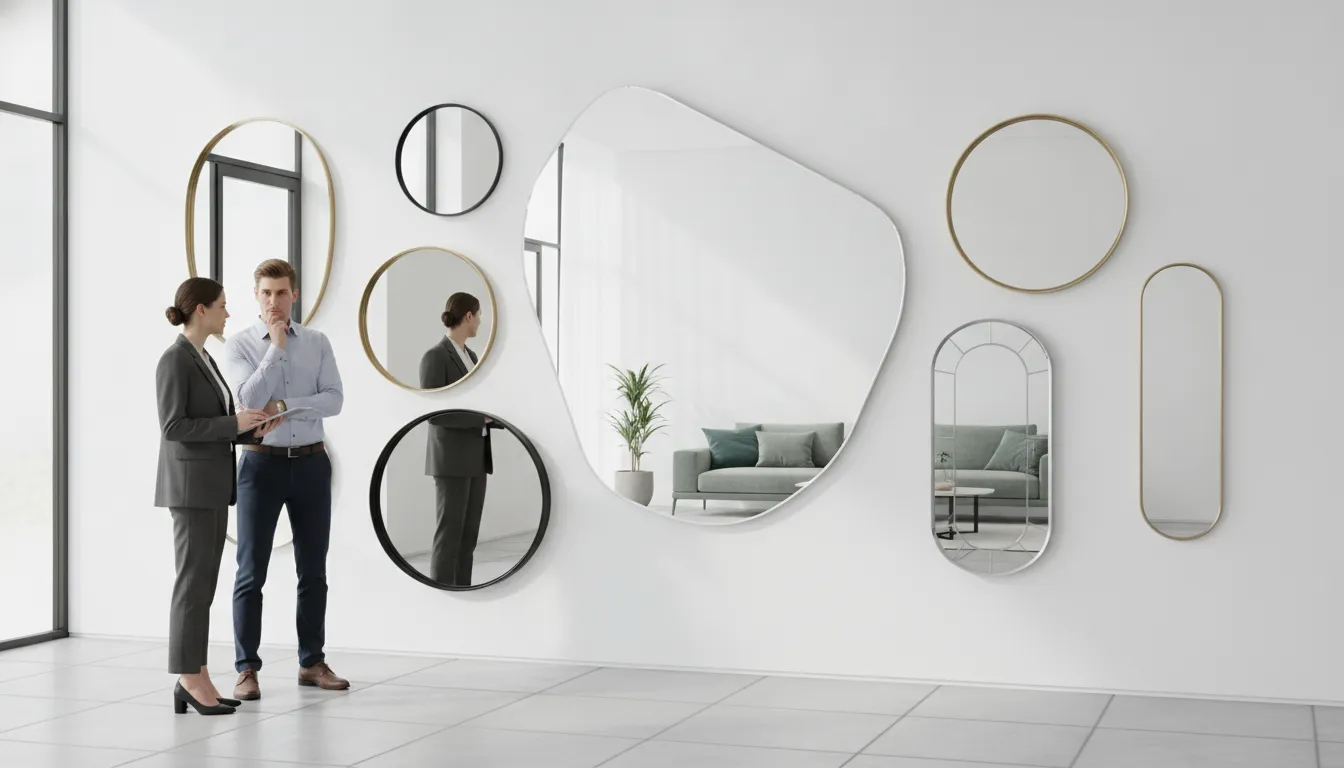
Asymmetrical mirrors can make a wall feel more artistic and personal. Organic curves, angled profiles, scalloped edges, irregular outlines, and geometric designs add visual interest to entryways, bedrooms, living rooms, restaurants, salons, and hospitality spaces. They are also useful when a standard rectangle, square, or circle does not fit the wall.
Specialty shapes require careful planning because small changes to an angle or curve can affect the finished fit. A paper or cardboard template can help you review the outline before fabrication. Place the template on the wall and consider how the mirror will interact with artwork, shelving, lighting, furniture, and doorways.
Think about the reflection as well as the shape. A dramatic outline may look attractive, but it should still reflect a useful area of the room. Examples of tailored mirror designs can help you compare organic and geometric styles before ordering.
Vanity, full-wall, and floor-to-ceiling mirrors
Vanity mirrors are designed around sinks, countertops, cabinets, backsplashes, and lighting. A custom piece may cover the space between a backsplash and ceiling, span multiple sinks, or include openings for outlets and wall-mounted sconces. Precise measurements are essential because a small error can interfere with fixtures or create uneven gaps.
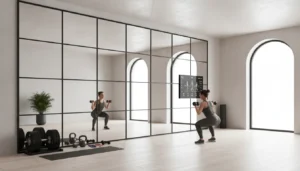
Full-wall and floor-to-ceiling mirrors provide a broad reflective surface and can make a room feel more open. They are common in dressing areas, bedrooms, gyms, dance studios, restaurants, salons, and commercial interiors. Large mirrors can also improve visibility and help distribute natural or artificial light across the space.
Oversized installations require careful attention to glass thickness, safety backing, wall support, access, and installation. Some projects may call for tempered or safety-backed mirror glass, particularly in high-traffic areas. Review different large wall mirror styles before deciding on the size, placement, and glass specifications.
Mirror closet doors and wardrobe panels
Mirrored closet doors combine storage access with a full-length reflection. They are useful in bedrooms, dressing rooms, apartments, salons, boutiques, and commercial changing areas. Depending on the opening and existing hardware, they may be installed as sliding, bypass, hinged, or panel-style doors.
Wardrobe panels can use clear, tinted, or decorative mirror glass, with framed and frameless options available. The door system must support the mirror’s weight, and the panels need enough clearance to open, close, and slide properly. Measurements should include tracks, hinges, handles, surrounding trim, and the finished opening.
A custom fit can reduce awkward gaps and help the doors operate smoothly. It also gives you more control over the mirror’s appearance, from a simple frameless design to a framed style that matches the room. Glass Rescue provides mirror closet door services along with other residential and commercial glass solutions.
Commercial mirrors for offices, retail, fitness, and hospitality
Commercial mirrors must maintain a consistent appearance while handling frequent use, cleaning, and occasional contact. Offices may use mirrors in reception areas, conference rooms, restrooms, elevators, and glass partition systems. Retail stores often install them in fitting rooms, display areas, and product-focused interiors.
Gyms, dance studios, and fitness centers typically need large panels that provide clear sightlines for movement and training. Hotels, salons, restaurants, and other hospitality businesses may prefer decorative framed mirrors, floating designs, or channel-mounted installations that support the overall interior concept.
For any commercial application, consider safety backing, edge protection, secure mounting, wall support, cleaning requirements, and local building standards. Floating and channel-framed designs are among the options discussed in this commercial mirror guide. Glass Rescue serves residential and commercial customers in Dade County, Broward County, Hollywood, Hillsborough County, and Tampa. You can discuss your project requirements through the company’s contact page.
How Do You Choose the Right Size and Style?
The right custom wall mirror should fit the room, support its purpose, and work with the features already in place. Start with the wall’s dimensions, the furniture below it, and the way people will use the space. A bathroom vanity mirror has different needs than a decorative mirror in an entryway or a full-wall installation in an office.
Custom sizing gives you more flexibility than a standard store-bought mirror. Before ordering, review the design with a professional glass company such as Glass Rescue. A professional can help account for outlets, trim, unusual angles, lighting, moisture, and mounting requirements before fabrication begins.
Think about the mirror’s practical role, too. Will it provide a clear view at a vanity, reflect light into a dark hallway, make a commercial space feel more open, or give customers a full-length view of products? Answering these questions first makes it easier to choose the right proportions, shape, glass, and finish.
Match mirror proportions to the wall
Measure the wall or the area above the furniture before choosing a mirror shape. A mirror that is too small may look disconnected from the room, while one that is too large can overpower nearby furniture and make the wall feel crowded. This wall mirror sizing guide explains why proportions matter when selecting a custom size.
For a mirror above a vanity, console, dresser, or sideboard, use the furniture as a reference point. The mirror often looks balanced when it is slightly narrower than the piece below it. On an open wall, a larger rectangular, round, or arched mirror can act as a focal point. Leave enough surrounding space so the mirror looks intentional rather than squeezed into the available area.
Coordinate mirrors with furniture and fixtures
Look at the room as a whole before selecting the mirror’s frame, shape, or finish. A frameless mirror can complement modern cabinetry, polished hardware, and simple architectural lines. A framed mirror may suit traditional furniture, warm wood finishes, or decorative lighting.
Pay attention to the fixtures around the mirror. In a bathroom, coordinate its shape with the vanity, faucets, sconces, and cabinet doors. In an entryway or living room, consider nearby artwork, shelving, and furniture finishes. Also check what the mirror will reflect. Aim it toward natural light, attractive architectural details, or an organized part of the room. Avoid common placement issues such as hanging a mirror too high or overlooking nearby lighting, which interior design guidance identifies as frequent decorating mistakes.
Choose horizontal, vertical, or full-wall placement
Horizontal mirrors work well above wide vanities, sideboards, reception desks, and long furniture pieces. They can make a wall feel broader and fill a low, wide section without making the ceiling appear shorter. This orientation is also useful when several people need to use a mirror at the same time, such as in a commercial restroom or salon.
Vertical mirrors suit narrow walls, entryways, bedrooms, and dressing areas. They emphasize height and provide a better full-body view. A full-wall mirror can create a continuous appearance in bathrooms, fitness facilities, dance studios, retail spaces, and commercial interiors. Before choosing this option, account for outlets, switches, faucets, sconces, vents, access panels, and wall transitions.
Plan reflections, lighting, and sightlines
A mirror changes the appearance of a room based on what it reflects. Walk through the space from different positions and note what people will see from the entrance, seating areas, vanity, reception desk, or product displays. This step matters in offices, retail stores, gyms, salons, and hospitality spaces, where many people may view the mirror from different angles.
Lighting also affects the result. A mirror opposite a window can reflect daylight, while one near sconces or overhead fixtures can improve visibility. However, direct glare may make the reflection uncomfortable. Think about how sunlight changes throughout the day, then position the mirror to support clear sightlines without reflecting harsh light. Commercial installations can be planned around lighting layouts and architectural features, as shown in this guide to custom designer mirrors.
Set the viewing height
Set the mirror height according to the people who will use it and the purpose it serves. A bathroom mirror should let users see their face and upper body comfortably without forcing them to bend or stretch. A full-length mirror needs enough clearance from the floor for shoes and clothing to appear in the reflection.
For general wall placement, the mirror’s center is often positioned about 55 to 65 inches from the floor. Treat this as a starting point rather than a strict rule. Household height, furniture dimensions, accessibility needs, and room function may call for an adjustment. Bathroom mirror installation advice recommends adapting the center height to the average height of the people using the space. A professional can also check the proposed height against outlets, backsplash materials, trim, and lighting.
Choose styles for bathrooms, entryways, living spaces, and offices
Bathrooms often suit frameless, rectangular, round, or arched mirrors that coordinate with the vanity and plumbing fixtures. In an entryway, a decorative framed mirror can provide a final appearance check while adding visual interest near the door. Living rooms may suit a large statement mirror, a grouped arrangement, or a design that reflects light across the space.
Offices, salons, retail stores, and fitness facilities usually need mirrors that support visibility and regular use. Consider clean lines, durable finishes, and sizes that work with the floor plan. Custom options include arched, circular, oval, asymmetrical, and geometric shapes, so you can choose a design that fits the architecture instead of forcing the space to fit a standard shape.
Balance statement designs with easy maintenance
A bold frame, unusual shape, or oversized mirror can create a strong focal point. Before choosing a statement design, consider how often it will need cleaning and whether its details will collect dust. Intricate frames, deep bevels, and complex arrangements may require more care than a simple frameless panel.
Frameless mirrors, backlit LED mirrors, rounded designs, and statement frames can suit different interior styles. These bathroom mirror ideas provide examples of popular design directions. For busy homes and commercial areas, select a finish that looks attractive but remains easy to wipe, inspect, and maintain. Keep cleaning access in mind, especially when a mirror is installed behind a sink, above a wide vanity, or across an entire wall.
Consider humidity, traffic, and cleaning needs
The room’s conditions should influence the glass, backing, frame, and installation method. Bathrooms experience regular humidity, so the mirror needs suitable moisture protection and enough separation from direct water sources. A mirror near a shower, sink, or tub may require additional planning to protect its edges and backing.
High-traffic locations also need secure mounting and durable materials. In offices, gyms, retail stores, and restaurants, consider frequent contact, cleaning products, impact risks, and the number of people using the space. Improper installation can damage both the wall and the mirror, so custom mirror installation guidance recommends evaluating the environment before fabrication. Glass Rescue can review these conditions as part of its residential and commercial glass services, serving customers throughout Dade, Broward, Hollywood, Hillsborough, and Tampa.
How Do You Measure for Custom Wall Mirrors?
Accurate measurements help a custom wall mirror fit cleanly, leave the right amount of space around fixtures, and install securely. A small mistake can affect the mirror’s finished size, frame, edge clearances, outlet openings, or placement beside cabinets and walls. Before you begin, clear the area and gather a steel tape measure, pencil, notepad, level, and phone for photos.
Measure in inches and record dimensions to the nearest 1/16 inch whenever possible. Write down where each measurement was taken instead of relying on memory. Royalty Mirror recommends measuring edge to edge and checking dimensions more than once, which is especially important when walls, ceilings, countertops, or cabinets are not perfectly square.
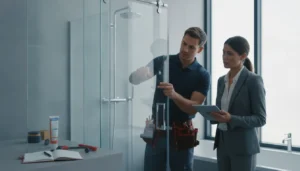
For large, unusually shaped, or difficult-to-access installations, professional measuring can prevent expensive fabrication changes. A glass professional can review the wall, mounting method, support, access route, and relationship between the mirror and nearby fixtures before the final size is approved.
Measure width and height at multiple points
Measure the available width near the top, center, and bottom of the wall. Then measure the height along the left side, middle, and right side. Compare the results to see whether the wall, vanity, cabinet, or recessed opening changes size from one point to another.
Record every measurement and label its location. For a recessed space, measure from edge to edge inside the opening. For a mirror above furniture or a vanity, measure the usable area rather than assuming the entire wall can be covered.
Do not choose the final mirror size from one measurement alone. If the dimensions differ, share all of them with the glass professional. The final size should account for clearances, mounting hardware, wall conditions, and the amount of visible space you want around the mirror.
Record diameters, angles, and unusual wall shapes
For a round mirror, measure the diameter across the widest point through the center. Take the measurement in at least two directions to confirm that the opening is truly round. If the results differ, note the variation instead of rounding it away.
For arched, angled, curved, or asymmetrical mirrors, record each straight section and photograph the entire area. A paper, cardboard, or digital template can show the shape more accurately than a few measurements, particularly around sloped ceilings, corners, columns, or curved walls.
Label the top, bottom, left, and right sides of any template. Include measurements for angles and unusual corners when possible. This helps prevent a specialty-shaped mirror from being fabricated in reverse or with an incorrect curve.
Separate glass size from framed and installed size
The glass size is not always the same as the mirror’s finished installed size. A frame adds width and height around the glass, while clips, channels, spacers, trim, or a decorative border can change the overall footprint.
When requesting a quote, ask whether the listed dimensions refer to the glass, the frame, or the complete installation. Also confirm whether the measurement describes the outside edge or the visible reflective area. These details affect both fit and price. As Fab Glass and Mirror explains in its custom mirror guide, dimensions, shape, thickness, mirror type, edge work, and safety features can all influence the total cost.
For a framed mirror, start with the desired outside dimensions and then discuss the frame width. For a frameless mirror, confirm how much space the mounting hardware needs around the edges.
Mark outlets, switches, fixtures, trim, and baseboards
Identify every feature the mirror must avoid or fit around. Mark outlets, switches, sconces, faucets, medicine cabinets, vents, towel bars, shelves, door casings, crown molding, and baseboards. Measure each item from two fixed wall edges so its location can be transferred accurately to the mirror plan.
For outlets and switches, record the electrical box size as well as the faceplate dimensions. Do not measure only the visible cover. The mirror may need a precise opening around the box, and a glass professional should review any cutouts near electrical components before fabrication.
Also note whether trim can be removed or whether the mirror must stop beside it. Detailed measurements help custom mirror installation fit the space without forcing adjustments after the glass has been made.
Plan edge clearances, mounting gaps, and corners
Decide how much space you want between the mirror and nearby walls, countertops, faucets, lights, and cabinets. These gaps affect the appearance and give the installer room to position and secure the glass. In a bathroom, leave enough room above the faucet and below light fixtures for comfortable use and easier cleaning.
Inspect each corner for obstacles. A wall-to-wall mirror may need a small clearance on both sides, especially when the walls are uneven. If the mirror meets a corner, measure both walls and identify which surface should receive the finished edge.
Clips, channels, adhesives, and backer materials may also require space around or behind the glass. Ask the installer what clearance the selected mounting method needs. These bathroom mirror installation tips can help you plan space around faucets, lighting, and surrounding fixtures.
Check wall condition, studs, and support
Measurements cannot show whether the wall can support the mirror. Inspect the surface for loose tile, cracks, water damage, bowed drywall, or areas that may not hold anchors securely. In bathrooms, look for signs of moisture around the installation area.
Locate studs when possible and mark their positions on your notes or photos. Oversized or heavy mirrors may require direct attachment to studs, blocking, reinforced backing, or another support system. The right method depends on the mirror’s weight, dimensions, wall material, and location.
Do not assume adhesive alone is suitable for every project. The adhesive must be compatible with both the mirror backing and the wall surface. Proper anchoring helps keep the mirror secure and level over time, as explained in this residential mirror installation guidance.
Account for doors, access routes, and installation space
Measure the route the mirror will take from delivery to the installation room. Check entry doors, hallways, stairwells, elevators, gates, and tight turns. A mirror may fit the wall but fail to pass through a doorway or around a corner when carried to the installation area.
Measure doorway width and height, and note which way each door opens. Record ceiling height and any low fixtures along the route. In a commercial property, include loading areas, security desks, elevators, and building access requirements in the plan.
Clear furniture and fragile items before installation day. The installation team needs enough room to unpack, inspect, position, and secure the glass. If the mirror will be installed over a vanity, closet, or work area, ask whether those items need to be removed first.
Take photos and verify measurements
Photos provide context that measurements alone cannot. Take wide photos of the entire wall, close-ups of outlets and fixtures, and images of corners, trim, baseboards, and damaged areas. When photographing a specific feature, include a tape measure to show its position and size.
Label each photo with the room and wall location. On your measurement sheet, identify the top of the wall and the direction you were facing. This helps prevent confusion when several walls or mirror panels look similar.
Measure everything again before sending the information to the glass company. If two measurements differ, record both and explain where they were taken. The largest measurement may help show the full opening, but it should not become the final mirror size without reviewing clearances and mounting requirements.
Schedule professional measuring for complex installations
Professional measuring is a practical choice for oversized, full-wall, floor-to-ceiling, framed, arched, or unusually shaped mirrors. It is also helpful when the wall is out of square, the mirror will cover tile, or the design includes several adjoining panels and cutouts.
A glass professional can check dimensions, wall support, access routes, mounting requirements, and the position of nearby fixtures. They may create a template for corners, outlets, sloped ceilings, or irregular surfaces. Careful planning at this stage can prevent fabrication errors that are difficult or expensive to correct.
Glass Rescue serves residential and commercial customers in Dade County, Broward County, Hollywood, Hillsborough County, and Tampa. To discuss measurements, installation requirements, and custom mirror options, contact Glass Rescue before fabrication begins.
How Do You Choose Mirror Glass, Frames, and Edges?
Choosing a custom mirror involves more than selecting a shape. The glass type, thickness, backing, frame, and edge finish all affect the mirror’s appearance, durability, cleaning requirements, and installation method. Start by considering where the mirror will be installed, how often it will be used, and whether it will face humidity, frequent contact, or heavy traffic.
A bathroom mirror may need moisture-resistant materials and protected edges, while a full-wall mirror in a fitness studio may require thicker glass and reinforced mounting. Large mirrors, mirror closet doors, and unusual shapes also need careful measurements and secure installation. Glass Rescue provides residential and commercial glass services throughout Dade County, Broward County, Hillsborough County, Hollywood, and Tampa, helping customers select materials that suit the space.
Before ordering, gather room measurements, photos, and details about nearby outlets, lighting, cabinets, trim, and plumbing. These details help your glass professional recommend a design that looks right and fits safely.
Choose standard mirror glass for everyday use
Standard mirror glass is a practical choice for bedrooms, hallways, bathrooms, entryways, retail spaces, and offices. It provides a dependable reflective surface and works with many frame styles and mounting methods. If you want a traditional mirror without a tinted, distressed, or illuminated finish, standard glass may be the right starting point.
The mirror’s size and location still matter. A small decorative mirror has different requirements than a full-wall mirror or mirror closet door. Larger pieces may need thicker glass, additional support, or professional installation. Ask your glass professional which thickness, backing, and mounting method suit the wall and intended use.
Choose low-iron glass for clearer reflections
Low-iron glass contains less iron than standard glass, which reduces the subtle green tint that can appear along the edges of regular glass. The result is a cleaner, more color-accurate reflection. This difference can be especially noticeable on large mirrors, exposed edges, and installations placed near bright white surfaces.
Low-iron mirror glass may suit luxury bathrooms, dressing rooms, salons, showrooms, and retail spaces where accurate color matters. It can also complement minimalist interiors with white walls, pale tile, and light cabinetry. Ask to compare standard and low-iron samples under the room’s actual lighting before making a decision.
Compare tinted, antique, and specialty mirror glass
Tinted mirror glass adds color and contrast while preserving the reflective quality of a mirror. Bronze and gray finishes can bring warmth or depth to dining areas, accent walls, retail displays, and commercial interiors. Specialty colors may also help a mirror coordinate with cabinetry, flooring, hardware, or other design elements.
Antique mirror glass uses intentional patterns or distressed details to create a vintage appearance. It can work well in traditional, rustic, or decorative spaces, but some finishes may show dust, fingerprints, and streaks more clearly. Request samples before ordering a large piece. Reviewing finish options with a professional glass installation company can help you choose a look that fits both the room and its maintenance needs.
Compare glass thickness and backing materials
Glass thickness affects a mirror’s weight, rigidity, handling, and resistance to visual distortion. Smaller mirrors may work well with a standard thickness, while large wall mirrors often benefit from a thicker specification. An oversized mirror that is too thin may be more difficult to support, particularly when the wall is uneven.
The backing also plays an important role. Safety backing can help hold broken pieces together, while protective coatings may provide additional resistance to moisture and impact. Ask which backing is appropriate for bathrooms, gyms, commercial spaces, and mirror closet doors. Your installer should also confirm that the wall, adhesive, clips, brackets, or other supports can handle the finished weight.
Choose frameless, framed, or acrylic construction
Frameless mirrors provide a clean, contemporary appearance and can make a smaller room feel more open. They are common in bathrooms, entryways, gyms, offices, and full-wall installations. Depending on the size and location, a frameless mirror may use clips, brackets, adhesive, or a combination of mounting methods.
Framed mirrors add structure and allow you to introduce wood, metal, color, or texture. Acrylic mirrors are lighter and less likely to shatter, but they can scratch more easily and may provide a less precise reflection than glass. Compare the advantages and limitations of each option before ordering. Glass Rescue’s custom glass solutions can help you choose a construction style that fits the design and installation site.
Select frame materials, profiles, colors, and textures
A frame should complement the room without distracting from the mirror’s purpose. Wood frames can add warmth to bedrooms, living areas, and traditional bathrooms. Metal frames often suit modern, industrial, and commercial interiors. Painted, brushed, polished, and textured finishes reflect light differently, so compare samples under the room’s actual lighting when possible.
The frame profile also changes the mirror’s finished size. A wide decorative frame occupies more wall space, while a slim profile creates a quieter look. Confirm whether the measurements refer to the glass, the outside of the frame, or the total installed size. This detail matters when the mirror sits near trim, lighting, outlets, cabinets, or door openings.
Choose flat-polished, pencil-polished, or beveled edges
The edge finish affects how a frameless mirror catches light and how it appears from the side. A flat-polished edge is smooth, clean, and understated. It works well for contemporary designs and mirrors installed close to tile, cabinetry, or an adjacent wall.
A pencil-polished edge has a softly rounded profile that creates a subtle finished appearance. A beveled edge slopes away from the main face of the glass, forming a decorative border that adds depth without a separate frame. Bevel widths can vary, so request examples before choosing. For exposed edges, confirm that the finish is polished and appropriate for the installation location.
Add custom cutouts, notches, outlet openings, and corner details
Custom fabrication allows a mirror to fit around existing wall features. Cutouts and notches may be necessary around outlets, switches, sconces, faucets, brackets, vents, shelves, or architectural details. Rounded or angled corners can also help a mirror fit neatly around cabinets, trim, or an unusual wall.
These details require precise measurements because a mirror cannot be easily modified after fabrication. Mark every obstruction and provide clear photos with your measurements. For a complicated wall, arrange professional measuring through Glass Rescue’s contact page before approving the final design. A site visit can reveal conflicts that are easy to miss in a sketch or phone photo.
Add lighting, anti-fog, or smart mirror features
Lighted mirrors combine reflection with built-in illumination. They can provide useful task lighting in bathrooms, dressing areas, salons, hotels, and retail spaces. Features may include front lighting, backlighting, dimming, touch controls, and adjustable color temperature. Electrical connections should be planned before the mirror is fabricated and installed.
Anti-fog features can keep a bathroom mirror clear after a hot shower. Smart mirrors may include clocks, Bluetooth speakers, displays, or other integrated functions. These options require additional planning for power, controls, ventilation, and future repairs. Confirm that the selected product is rated for its intended environment, and ask how technicians can access wiring or components if maintenance becomes necessary.
Compare appearance, durability, cleaning, and moisture resistance
The most attractive mirror is not always the best option for every room. Compare how each glass type and finish handles fingerprints, water spots, cleaning products, humidity, and daily contact. A decorative finish may suit a dining room but require more care in a busy bathroom, gym, or commercial space.
For humid areas, choose mirror glass and backing designed for bathroom conditions, then make sure the edges are properly finished and protected. Prevent water from collecting along the bottom edge, and clean the surface with a soft, lint-free cloth and a product recommended for mirrors. Spray cleaner onto the cloth rather than directly onto the glass, especially near frames, lights, edges, and electrical components. For large, heavy, or unusually shaped mirrors, professional installation services can provide secure support while protecting the finished surface.
How Do You Keep Custom Mirrors Safe?
A custom mirror should look beautiful, but it also needs to remain stable, durable, and appropriate for the room where it will be installed. Safety starts before fabrication. The mirror glass, backing, edge treatment, mounting hardware, wall condition, and installation method all affect how securely the finished mirror performs.
A bathroom mirror may need protection from humidity and repeated splashes. A mirror in a gym, hallway, retail store, or office may face more frequent contact and impact. Large and full-wall mirrors also require careful planning because their size and weight can place significant demands on the wall and mounting system.
Before ordering, tell your glass professional where the mirror will go, how large it will be, who will use the space, and whether it will include cutouts, lighting, a frame, or unusual edges. These details help determine the right construction and installation approach.
Safety also includes the process of transporting and handling the mirror. A custom piece can be difficult to move through narrow doors, stairways, elevators, and corners. The installation team should plan the access route, prepare the wall, and use suitable equipment before bringing the mirror into the room.
Glass Rescue provides custom glass and mirror services for residential and commercial properties. Professional guidance is especially useful for oversized mirrors, bathroom installations, mirror closet doors, glass walls, and projects with specific commercial requirements.
Choose safety backing and shatter-resistant construction
Safety backing is a protective film applied to the back of a mirror. If the glass breaks, the backing helps hold the pieces together and may reduce the chance of shards falling away from the wall. This added protection can be useful in bathrooms, gyms, homes with children, busy corridors, and commercial spaces.
Safety backing does not make a mirror impossible to break. It should work alongside suitable glass, secure mounting hardware, and an installation method designed for the wall. Ask whether the backing is compatible with the adhesive, clips, frame, or channel being used.
The mirror’s size and intended location also matter. A large mirror in a high-traffic area may need a different specification than a small decorative mirror in a bedroom. Review the available custom mirror options with your installer before fabrication.
Use tempered mirror glass where appropriate
Tempered glass is processed to provide greater strength than standard annealed glass. If it breaks, it is designed to crumble into smaller pieces instead of producing long, sharp shards. This makes tempered mirror glass worth considering for areas where impact is more likely, such as gyms, commercial interiors, busy hallways, and some bathroom installations.
Not every mirror can be tempered after it has been fabricated. Holes, notches, outlet openings, and other edge work usually need to be completed before tempering. Make sure your installer knows about every cutout and mounting detail during the design stage.
Tempered glass is not automatically the right choice for every application. The best option depends on the mirror’s location, size, thickness, frame, and local requirements. A glass professional can help you compare tempered glass with standard mirror glass and safety backing before you approve the order.
Polish and protect the edges
Exposed mirror edges need careful finishing, especially when the mirror will be installed without a frame. A flat-polished edge creates a smooth, refined perimeter. A pencil-polished edge has a softly rounded profile, while a beveled edge adds an angled detail around the glass. A seamed edge removes the sharpness without creating a highly decorative finish.
Choose the edge based on the mirror’s design and location. A decorative bevel may suit a bedroom or entryway, while a smooth polished edge may work better for a bathroom vanity or commercial wall. Mirrors near corners, doorways, or busy walkways deserve particular attention because their edges may be more exposed to contact.
Edge finishing also makes the mirror safer to handle during installation. In humid rooms, ask whether the edges need additional protection or sealant. Properly specified edge work supports both the mirror’s appearance and its long-term performance.
Secure oversized and heavy mirrors
Large mirrors require more support than lightweight decorative pieces. Their size and weight place additional demands on the wall, hardware, and installation surface. A professional mounting system should distribute the load and keep the mirror secure and level over time.
Depending on the project, an installer may use cleats, channels, brackets, clips, or another professional-grade system. The right choice depends on the mirror’s dimensions, frame, wall material, and whether the mirror needs to be removable later.
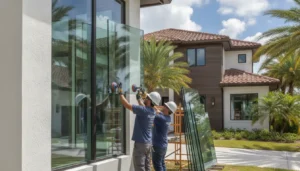
Access planning is just as important as mounting. Confirm how the mirror will enter the property and reach the installation room. Narrow doors, stairways, elevators, and tight corners can affect the final dimensions or installation method. Professional mirror installation services typically account for handling, alignment, stability, and long-term support.
Use anchors, adhesives, studs, and wall supports
The mounting method should match both the mirror’s weight and the wall material. Depending on the installation, a contractor may use construction-grade mirror adhesive, mechanical anchors, studs, clips, channels, or a combination of methods. Adhesive alone may not be suitable for every large or heavy mirror.
Studs offer a strong attachment point, but they may not line up with the mirror’s planned position. In that situation, the installer may use properly rated anchors or add support behind the wall. Drywall, concrete, tile, masonry, and wood each require different hardware and preparation.
Do not drill or glue a custom mirror before checking the wall type, surface condition, and adhesive compatibility. The installer should also consider plumbing and electrical lines before drilling. Proper support helps prevent movement, detachment, cracked glass, and damage to the wall.
Level the mirror and set the right height
A mirror that sits slightly out of level can make the surrounding room look unfinished. Before securing the piece, the installer should check the wall, mounting hardware, and mirror alignment. This matters even more for large panels, grouped mirrors, and installations beside cabinets, tile lines, or architectural trim.
Viewing height should suit the people using the space. A common starting point is to place the mirror center about 55 to 65 inches above the floor, then adjust it based on household height and nearby fixtures. This is a guideline, not a fixed rule.
Bathroom mirrors need to work with the vanity, faucet, backsplash, and lighting. Entryway and full-length mirrors may need a different position so they provide a useful reflection without interfering with doors or furniture. Confirm the height before fabrication when the mirror includes precise cutouts or an integrated frame.
Protect mirrors from bathroom moisture
Bathrooms expose mirrors to steam, condensation, splashes, and cleaning products. Over time, moisture can affect the backing or edges, particularly if water repeatedly collects along the bottom perimeter. Leave the recommended clearance around the mirror and avoid allowing water to sit against exposed edges.
An edge sealant may provide added protection in a humid room, but it must be compatible with the mirror and installation materials. Good ventilation also helps reduce condensation and limits prolonged moisture exposure.
Use a cleaner intended for mirrors or glass, apply it to a soft cloth instead of spraying directly onto the mirror, and wipe the edges after cleaning. Spraying liquid directly onto the surface can allow moisture to run behind the mirror. Discuss edge protection with your glass professional, especially for a mirror installed above a sink or in a frequently used bathroom.
Handle mirrors safely through fabrication and installation
Custom mirrors can crack, chip, or detach when they are lifted, transported, or mounted incorrectly. Their size can make them difficult to control, even when they appear relatively light. Trained glass professionals use suitable handling methods, protective equipment, and enough people for the mirror’s dimensions and weight.
The installation surface should be clean, dry, sound, and properly prepared before the mirror is placed. The team should also check for uneven areas, weak sections, protruding hardware, and obstacles that could affect the fit. A mirror should never be forced into position because pressure at one point can create stress in the glass.
Careful handling helps prevent cracks, detachment, and uneven placement. Glass Rescue’s company background includes experience with residential and commercial glass projects, making professional support a practical choice for complex mirror installations.
Inspect delivery packaging for damage
Inspect the crate or packaging as soon as the mirror arrives, before moving it into the installation area. Look for crushed corners, punctures, broken straps, moisture, or other signs of impact. Photograph the packaging from several angles, including any damaged areas.
Next, inspect the mirror carefully for cracks, chips, backing damage, scratches, or a frame that has shifted during transport. Do not discard the packaging until the mirror has been checked and accepted. The packaging may be needed when documenting a shipping claim or arranging a replacement.
If you find a problem, contact the seller or installer promptly and follow the damage reporting instructions. Avoid installing a damaged mirror, even if the issue appears minor. A crack or weakened edge can worsen during mounting. Early documentation helps identify when the damage occurred and can prevent unnecessary delays.
Meet commercial safety and building requirements
Commercial mirror installations may need to meet requirements related to impact resistance, safety glazing, accessibility, fire protection, mounting, and occupancy type. The right specification can differ between an office, retail store, gym, hotel, restaurant, and healthcare facility.
A mirror that works in a private residence may not suit a busy commercial property. Designers and contractors often specify safety-backed or tempered mirror glass for areas where contact or impact is more likely. Protective framing and specialized mounting may also be appropriate.
Share the project plans, location, and intended use with your glass contractor before fabrication. Your architect, designer, general contractor, or local building department may need to review the installation details. Discuss these requirements early so the selected glass and mounting system do not need to be changed after fabrication begins.
Decide when to hire professional installers
Professional installation is the safest choice for oversized mirrors, full-wall installations, framed panels, mirrors with cutouts, and projects involving tile, drywall, concrete, or unusual wall conditions. It is also a smart option for mirrors above vanities, near doorways, or in commercial spaces where a fall could injure someone or damage property.
An experienced installer can verify measurements, recommend suitable hardware, prepare the wall, protect the mirror during handling, and create a clean, level finish. Most installations can be completed efficiently once the mirror has been fabricated, although complex shapes and specialty features may require additional preparation.
Before approving the order, confirm who will measure, fabricate, deliver, and install the mirror. Ask how the team will protect the glass and surrounding finishes during the work. To discuss your project with Glass Rescue, use the contact form and share the mirror’s location, approximate size, and intended application.
What Do Custom Wall Mirrors Cost?
Custom wall mirror prices vary widely because every project has different requirements. A small, frameless mirror with a basic rectangular shape may cost far less than a full-wall installation with specialty glass, polished edges, custom cutouts, and professional mounting.
The mirror itself is only one part of the estimate. Fabrication, frame materials, edge treatment, delivery, removal of an existing mirror, wall preparation, hardware, and installation can all affect the final cost. A mirror for a bathroom may also require different materials and installation methods than one designed for an office, retail space, or fitness studio.
Online listings can offer a general starting point. For example, custom cut-to-size mirror pricing may range from less than $10 for small pieces to $2,000 or more for larger, detailed designs. These figures typically do not represent the complete cost of a locally measured and installed project.
When requesting an estimate from a company such as Glass Rescue, share the mirror’s intended location, approximate dimensions, preferred style, and any access or installation concerns. The more information you provide, the easier it is to prepare an accurate quote.
Compare pricing by size and project scope
Size is one of the biggest factors in custom mirror pricing. A small mirror for a powder room, bedroom, or entryway uses less material and usually requires simpler handling. A large mirror that spans an entire wall requires more glass, careful transportation, additional support, and a larger installation crew.
Project scope matters, too. A basic rectangular mirror may involve cutting, edge finishing, and mounting. A floor-to-ceiling mirror, mirrored closet door, or wall-to-wall installation may require multiple panels, precise seams, specialty hardware, and coordination with other trades.
When comparing estimates, check whether the price covers the mirror only or includes measuring, fabrication, delivery, removal, mounting, and installation. Comparing complete project scopes helps you avoid choosing a quote that appears less expensive simply because it leaves out essential services.
Consider dimensions and mirror weight
A larger mirror generally weighs more, which affects transportation, handling, and installation. Weight also determines how the mirror should be supported after it is mounted. Depending on the wall, an installer may need to locate studs, use heavy-duty anchors, install a track, or combine mechanical fasteners with an approved adhesive.
Measure carefully when the mirror must fit between cabinets, trim, walls, or ceiling features. Even a small measurement error can prevent the glass from fitting properly or create uneven gaps around the edges.
Access also affects the project. Ask how the mirror will move through doorways, elevators, stairwells, and narrow hallways. Professional mirror installation services can account for the mirror’s weight and help reduce the risk of cracking, chipping, or damage during handling.
Compare glass thickness, types, and finishes
Custom mirror glass commonly comes in thicknesses such as 1/8 inch, 3/16 inch, and 1/4 inch. Thicker glass may cost more, but it can provide additional rigidity for larger installations. The appropriate thickness depends on the mirror’s dimensions, location, support system, and intended use.
Glass type also affects appearance and price. Standard mirror glass works well in many bedrooms, bathrooms, hallways, and living spaces. Low-iron glass offers a clearer reflection with less of the slight green tint associated with standard glass. Tinted, smoked, antique, and other specialty finishes create distinctive looks but may require a larger budget.
Edge finishing adds another design choice. Flat-polished, pencil-polished, and beveled edges each produce a different appearance. A custom mirror supplier can help match the thickness, glass type, and edge finish to your project.
Compare frame materials and decorative details
A frame can change both the appearance and cost of a custom wall mirror. Wood, metal, composite, and specialty frames are available in a variety of widths, profiles, colors, textures, and finishes. A simple frame may fit a modest budget, while an ornate or hand-finished design can add considerably to the total.
Remember that a framed mirror has a larger finished size than the glass alone. If the mirror must fit within a specific opening, confirm whether the quoted dimensions refer to the glass, the frame, or the completed outside dimensions.
Decorative details may include layered profiles, inset trim, metallic finishes, carved elements, or custom color matching. Basic framed options may start around $62.88, while more elaborate styles cost more, according to custom framed mirror pricing. Ask for a sample or finish reference before approving the frame.
Price beveling, cutouts, notches, and complex shapes
A simple rectangle is usually less expensive to fabricate than a circle, arch, asymmetrical design, or multi-sided shape. Complex shapes require detailed cutting and careful edge finishing. Curves and angled corners may also require a drawing or template for approval before fabrication begins.
Cutouts and notches can add to the cost. They may be necessary around outlets, switches, faucets, light fixtures, shelving, or wall-mounted hardware. These features must be measured accurately because an error can affect the entire piece.
Beveling creates a sloped decorative edge around part or all of the mirror. A narrow bevel may have a limited effect on the price, while beveling a large mirror requires more labor and material. Ask the fabricator to list each custom mirror feature separately so you can see exactly what you are paying for.
Factor in delivery, removal, mounting, and installation
The listed mirror price may not include delivery or installation. Large and fragile pieces often need protective packaging, careful transportation, and several people for safe handling. Delivery costs may depend on the distance, mirror size, building access, and scheduling requirements.
If an existing mirror is installed, ask whether removal and disposal are included. Adhesive-mounted glass can take time to remove and may reveal damaged drywall, tile, paint, or backing material. Any wall repairs or surface preparation may be billed separately.
Mounting costs vary based on the mirror and wall. Options may include clips, channels, brackets, French cleats, adhesive, or a combination of support methods. Glass Rescue’s residential and commercial glass services can help coordinate measuring, mounting, and installation as part of one project.
Account for lead times, rush requests, and site conditions
Custom mirrors must be cut, finished, inspected, and prepared for delivery. Some standard cut-to-size orders may be produced within three to five days, while larger projects, framed mirrors, and specialty glass can take longer.
Rush requests may involve additional charges if they require an expedited production schedule or delivery arrangement. Before placing an order, ask for the expected fabrication date and installation window. Confirm whether those dates depend on material availability, approved drawings, or completed site preparation.
Site conditions can affect both cost and timing. Uneven walls, tile surfaces, narrow access points, upper-floor locations, active construction, and nearby plumbing or electrical fixtures may require extra preparation. A site visit can identify these concerns before fabrication begins and reduce the chance of costly changes later.
Compare itemized custom mirror quotes
An itemized quote makes it easier to compare suppliers and identify unexpected charges. Look for separate line items for the glass, thickness, shape, edge finish, frame, cutouts, delivery, removal, mounting hardware, and installation labor.
The quote should state the finished dimensions and explain whether they refer to the glass or the completed framed mirror. For multiple panels, confirm the number of pieces, seam locations, panel sizes, and whether each piece will be labeled for installation.
Product-only listings, such as custom cut mirror specifications, may not include local measuring, delivery, or installation. Compare the total project cost rather than the material price alone. Also review what happens if the installer finds an uneven wall, an obstruction, or a difference between the submitted measurements and the actual opening.
Confirm warranties, damage policies, and change fees
Before fabrication begins, ask what happens if the mirror arrives damaged, differs from the approved specifications, or cannot be installed because of a measurement problem. Custom glass is made for a specific project, so replacement and return policies may differ from those for standard products.
Confirm who is responsible for taking measurements. Some suppliers offer a replacement discount when a customer provides incorrect dimensions, while others may not cover a custom piece once production starts. Written policies are especially important for large mirrors and multi-panel installations.
Ask what the warranty covers, including the glass, frame, mounting hardware, and installation. A custom mirror replacement policy may not apply to every component. Review exclusions and ask whether design changes, cancellations, remakes, or return visits create additional fees.
Weigh price against quality and long-term value
The lowest estimate is not always the best option for a custom mirror. A lower price may reflect thinner glass, a simpler edge finish, limited mounting support, minimal delivery protection, or fewer installation services. Those differences can affect the mirror’s appearance, safety, and service life.
Quality also matters in humid bathrooms and busy commercial spaces. Proper backing, protected edges, suitable mounting hardware, and careful installation can help reduce premature damage. A mirror in a fitness studio, hotel, office, or retail space may need materials and support that can withstand frequent cleaning and daily use.
When reviewing an estimate, consider the complete value: accurate measuring, careful fabrication, safe delivery, professional installation, clear communication, and dependable service. Glass Rescue has more than two decades of experience with residential and commercial glass projects throughout Dade County, Broward County, Hollywood, Hillsborough County, and Tampa.
What Should You Do Before Ordering Custom Wall Mirrors?
A custom wall mirror should fit your space, style, and daily routine. Before fabrication begins, confirm the details that would be difficult or costly to change later. A clear plan helps prevent measurement errors, installation problems, and unexpected charges.
Start by deciding who will manage each stage of the project. Glass Rescue provides residential and commercial glass services, including custom mirrors, mirror closet doors, glass walls, and other installations. Reviewing the available glass services can help you determine the right support for your project.
Confirm final dimensions and finished size
Measure the installation area carefully, even if a professional will verify the measurements. Record the width and height in inches, and measure to the nearest 1/16 inch when possible. Take measurements at multiple points because walls, ceilings, floors, trim, and corners may not be perfectly level.
Confirm whether your measurements describe the mirror glass only or the complete finished size. A frame, beveled edge, mounting gap, or decorative border can change the amount of wall space required. Write down the final width, height, shape, and orientation before approving fabrication. This custom mirror measurement guide also recommends measuring edge to edge and identifying the longest and shortest sides.
Match the glass to the room
The right mirror glass depends on where you plan to install it. Standard mirror glass may work well in a bedroom, hallway, living room, or dressing area. Bathrooms and other humid spaces require additional planning, especially near sinks, showers, and tubs.
Consider how clear you want the reflection to appear, how much light the mirror will receive, and how often you will clean it. You may also compare low-iron, tinted, antique, or specialty mirror glass for a more specific look. Frameless bathroom mirrors are often installed with adhesive or clips, but the mounting system should match the room and the mirror’s weight. Review these bathroom mirror installation tips before choosing your materials.
Approve the frame, edge, shape, and thickness
Approve every visible detail before production starts. Decide whether you want a frameless mirror, a framed design, or a decorative style with a custom border. Then confirm the shape, including rectangular, round, arched, asymmetrical, or specialty designs.
The edge finish affects the mirror’s appearance and handling. Common options include flat-polished, pencil-polished, and beveled edges. Confirm the glass thickness as well, since a large or heavy mirror may require different specifications than a smaller decorative piece. Available custom mirror options can include 1/8-inch, 3/16-inch, and 1/4-inch glass, along with several edge finishes. Ask for a drawing or written specification if the design includes custom mirror cutouts, notches, angled corners, or outlet openings.
Review the mounting method and wall requirements
Choose the mounting method before fabrication, not after the mirror arrives. Depending on the mirror’s size, weight, location, and wall material, installation may require clips, brackets, anchors, adhesive, studs, or a combination of systems.
Inspect the wall for drywall damage, uneven areas, tile, wood paneling, plumbing, electrical wiring, and other obstacles. Large mirrors may need additional support. A mirror over a vanity also requires precise clearance around faucets, backsplashes, outlets, and lighting. Ask whether the installer will prepare the wall or whether another contractor must complete that work. Professional mounting systems support stability and long-term performance, as explained in this guide to residential mirror installation.
Plan cleaning, maintenance, and moisture protection
Think about maintenance before selecting the final design. A simple mirror with accessible edges is usually easier to clean than one with deep bevels, ornate framing, or tight corners. Ask which cleaning products are safe for the glass, frame, backing, and edge treatment.
Bathrooms need extra care because repeated exposure to steam and water can damage the mirror backing or cause deterioration around unprotected edges. Use a soft, lint-free cloth and a mirror-safe cleaner. Avoid spraying liquid directly onto the mirror’s edges or allowing moisture to collect behind it. Confirm that any adhesive used during installation is made for mirrors, since unsuitable adhesives can damage the reflective backing. These bathroom mirror care recommendations can help you avoid common mistakes.
Confirm delivery timing and damage-free arrival procedures
Ask when the mirror will be ready, how it will be transported, and whether delivery is included in the quote. Custom pieces may take additional preparation, especially when they have unusual shapes, cutouts, decorative edges, or large dimensions.
Clear the route from the entrance to the installation area before delivery. Check doorways, elevators, stairwells, narrow hallways, and corners. When the mirror arrives, inspect the packaging before signing for it. Look for crushed corners, punctures, broken seals, moisture, or other impact marks, and photograph any concerns immediately. Custom mirrors are often shipped in protective packaging designed to limit movement, as described in this information about custom mirror shipping.
Ask who handles measuring, fabrication, delivery, and installation
Do not assume one company manages every stage of the project. Ask whether the seller will take final measurements, fabricate the mirror, coordinate delivery, and complete installation. If several contractors are involved, clarify when responsibility changes from one party to the next.
This is particularly important for full-wall mirrors, mirror closet doors, commercial interiors, and designs with cutouts or tight clearances. Professional measuring can account for uneven walls, trim, fixtures, access limitations, and mounting requirements before the glass is ordered. Glass Rescue works on both residential installations and larger commercial projects. You can contact Glass Rescue to discuss your project requirements and installation support.
Review the written quote before fabrication
Read the quote carefully before approving fabrication. It should identify the mirror dimensions, glass type, thickness, shape, edge finish, frame details, cutouts, safety features, and mounting hardware. It should also separate material, delivery, removal, and installation charges when applicable.
Make sure the quote reflects the finished product you discussed, not just the base price for a sheet of mirror glass. Ask about taxes, site preparation, wall repairs, disposal of an old mirror, and additional labor for difficult access. If anything is unclear, request a revised written quote instead of relying on a verbal agreement. The final document should give you and the installer the same reference point throughout the project.
Check cancellation, replacement, and damage policies
Custom mirrors are made for a specific order, so cancellation rules may differ from those for standard products. Before approving fabrication, ask when changes can no longer be made and whether design revisions will carry an additional fee.
You should also understand what happens if the mirror arrives damaged, contains an incorrect measurement, or does not match the approved specifications. Confirm who pays for replacement glass, shipping, and installation in each situation. Some sellers offer replacement assistance when customers provide incorrect measurements, while others do not accept returns on made-to-order pieces. Keep the policy in writing, along with your approved measurements, drawings, quote, and delivery photos.
Plan for safety and function, not just appearance
A mirror should look right, but it also needs to perform safely in its intended space. Consider whether it will be installed near a shower, bathtub, high-traffic walkway, exercise area, retail display, or busy office. Oversized and heavy mirrors require suitable support, secure mounting, and careful handling from fabrication through installation.
Ask whether safety backing, shatter-resistant construction, or tempered mirror glass is appropriate for your project. Commercial installations may also need to meet property, building, or workplace requirements. Consider who will use the space, how often the mirror will be cleaned, and whether doors, furniture, lighting, or foot traffic could create an impact risk. A professional installer can help you balance the desired design with the practical needs of the room.
How Do You Choose a Reliable Custom Mirror Seller?
A custom mirror should fit your space, suit its purpose, and remain secure after installation. The right seller does more than cut glass to a requested size. They help you choose the right mirror type, confirm measurements, select an edge finish, plan the mounting method, and coordinate installation.
Before choosing a company, compare its experience, workmanship, communication, service area, and written policies. Look for a glass professional who can handle related projects, such as mirror closet doors, glass walls, shower enclosures, and commercial partitions. This can simplify your project if you need several glass features with a consistent appearance.
It is also helpful to prepare a few questions before requesting a quote. Ask who measures the space, who verifies the final dimensions, how the mirror is protected during delivery, and what happens if the product arrives damaged. A detailed conversation early on can reveal whether the seller has a careful, organized process.
Consider Glass Rescue’s residential and commercial experience
A seller with experience in both residential and commercial projects can recommend materials and installation methods based on how the mirror will be used. A bathroom mirror may need moisture-resistant materials and careful placement around plumbing, while a full-wall mirror in a gym, salon, retail space, or office may require heavier glass and additional support.
Glass Rescue has more than two decades of experience with projects ranging from residential glass installations to commercial storefronts and partition walls. This background can be useful when your project includes unusual dimensions, several mirrors, or multiple types of glass work. Review the company’s residential and commercial experience before scheduling a consultation.
Look for local measuring and installation support
Accurate measurements are essential for custom mirrors. A small error can affect clearances around trim, outlets, cabinets, doors, baseboards, and corners. A local seller may be able to visit the property, assess the wall, confirm the finished dimensions, and identify installation concerns before fabrication begins.
Ask whether measuring is included in the quote and who is responsible for verifying the final size. Confirm whether the same company handles delivery and installation, too. Coordinating these steps through one provider can reduce misunderstandings and make it easier to resolve questions before the mirror is made. Glass Rescue’s glass services offer a starting point for discussing your project requirements.
Compare fabrication quality and finish precision
Ask how the mirror will be fabricated and finished before approving the order. Important details include the glass thickness, edge treatment, backing, corner shape, and any cutouts needed for outlets, switches, or fixtures. Cleanly finished edges and precise cuts are especially important on frameless mirrors or designs with exposed edges.
It is also worth asking how the seller inspects the mirror before delivery. The process should include a review of the dimensions, finish, and visible surface. Request a written description of the materials and specifications so you can compare quotes accurately. A lower price may not include the same glass quality, edge work, mounting method, installation service, or project support.
Choose a seller experienced with mirrors, closet doors, and glass walls
A company that works with several types of glass can offer more practical advice when your project involves more than one feature. For example, you may want a custom wall mirror to coordinate with mirror closet doors, a glass partition, or a larger glass wall. One experienced seller can help keep the appearance, measurements, and installation details consistent.
Ask to see examples of comparable work, especially if you need an oversized mirror, a shaped design, or a floor-to-ceiling installation. Glass Rescue serves residential and commercial clients with mirrors, glass walls, and other custom glass applications. Review the company’s range of glass solutions before requesting a project-specific quote.
Read reviews about fit, workmanship, communication, and timing
Reviews can show how a seller manages the complete customer experience, not just the finished product. Look for comments about accurate measurements, clean installation, professional conduct, responsiveness, and whether the project was completed when promised. Reviews that mention similar mirror or glass projects are particularly useful.
Pay attention to repeated patterns instead of relying on one unusually positive or negative comment. Consistent feedback about careful workmanship and clear communication may indicate a dependable process. You can also ask for recent project examples or references when appropriate. During your first conversation, notice whether the company answers specific questions and explains the next steps in a straightforward way.
Check feedback about packaging and damage resolution
Mirrors need careful handling from fabrication through installation. Ask how the mirror will be protected during transport and what happens if it arrives scratched, cracked, or otherwise damaged. A reliable seller should explain who inspects the mirror, when damage must be reported, and whether the company manages replacement or repair.
Before accepting delivery, inspect the packaging for visible damage and take photographs of any concerns. Do not assume delivery protection is included, since policies vary between sellers. Request the damage and replacement terms in writing along with your quote. Clear procedures can save time and help you understand your responsibilities if an issue occurs.
Verify insurance, credentials, warranties, and service policies
Before hiring a glass contractor, ask which licenses, registrations, and insurance coverage apply to the work in your location. You should also ask whether subcontractors may be involved and who remains responsible for the installation. These details matter because large or heavy mirrors must be handled safely and mounted correctly.
Review the warranty carefully. Find out whether it covers the mirror, hardware, installation, or only specific manufacturing defects. Ask about exclusions related to wall movement, improper cleaning, moisture, or damage after installation. Confirm the company’s policies for changes, cancellations, delays, and service calls. You can contact Glass Rescue to discuss project details and service questions directly.
Confirm residential and commercial support
Residential and commercial mirror projects often have different requirements. A home installation may focus on design, storage, and daily use, while a commercial project may involve multiple rooms, higher traffic, scheduling restrictions, and coordination with other trades. Choose a seller that understands the expectations of your property type.
Tell the company where the mirror will be installed, how many pieces you need, and whether the work must happen during specific hours. For a business, ask how the team manages building access, cleanup, installation phases, and communication with property managers or contractors. Experience with both settings can help the seller identify practical details before they affect the schedule or final result.
Check service availability in Dade, Broward, Hollywood, Hillsborough, and Tampa
Confirm service availability before spending time on design decisions or requesting a final quote. Ask whether the company serves your exact city, whether travel fees apply, and whether measuring and installation are available in your area. You should also ask about scheduling, especially for larger projects or locations outside the company’s primary service region.
Glass Rescue serves customers throughout Dade County and Broward County and is expanding into Hillsborough County, including the Tampa area. Since Hollywood is in Broward County, customers there can confirm service details based on the property address and project scope. Use the Glass Rescue contact page to ask about availability, measurements, installation, and the next steps for your location.
How Do You Order Custom Wall Mirrors from Glass Rescue?
Ordering a custom wall mirror starts with more than choosing a shape from a catalog. The mirror needs to fit the wall, work with nearby fixtures, suit the room’s purpose, and remain secure after installation. Sharing the right information at the beginning gives Glass Rescue a clear picture of your project and helps prevent avoidable changes later.
Glass Rescue works with residential and commercial customers on projects ranging from bathroom vanity mirrors to large wall installations, mirror closet doors, and commercial glass features. The process usually includes design planning, measurements, material selection, pricing, fabrication, delivery, and installation.
Before contacting the team, gather approximate dimensions, photos, inspiration images, and information about the room. Then use your consultation to confirm the specifications and site requirements. You can contact Glass Rescue to discuss your project and request the next steps.
Share measurements, photos, and room details
Start with the wall’s approximate width and height. Measure at more than one point because walls, ceilings, and trim are not always perfectly level or square. If you are ordering a round or specialty-shaped mirror, record the diameter or provide the dimensions of the area where it will be installed.
Take clear photos from several angles. Include nearby doors, windows, outlets, switches, lights, vanities, sinks, baseboards, crown molding, and other fixtures. Photos should show both the full wall and close-up details around the proposed mounting area.
Mention unusual conditions, such as corners, sloped ceilings, tile, wall panels, niches, or built-in features. Preliminary measurements are useful for an initial discussion, but complex installations may require professional measuring before fabrication. Accurate planning helps determine the mirror’s finished size and placement.
Discuss design goals and intended use
Tell Glass Rescue how you want the mirror to function in the room. A bathroom mirror may need to provide a clear reflection above a vanity, while a full-wall mirror in an entryway, studio, or retail space may serve both practical and visual purposes. An office, salon, fitness facility, restaurant, and home can each call for different dimensions and finishes.
Share inspiration photos if you have them. Explain whether you prefer a frameless mirror, a decorative frame, a simple rectangular design, an arched shape, or an asymmetrical feature. Also discuss whether the mirror should reflect light, improve visibility, complement existing finishes, or create a strong focal point.
Glass Rescue provides residential and commercial glass services, so the team can help connect your design preferences with the demands of the space. Be open about your priorities, including appearance, maintenance, privacy, durability, and budget.
Review glass, frame, edge, thickness, and safety specifications
Before approving the order, review each specification carefully. Ask which mirror glass is appropriate for the room and whether standard, low-iron, tinted, antique, or another specialty finish would suit the project. Glass thickness may depend on the mirror’s size, weight, location, and mounting method.
If the mirror will have a frame, confirm the material, profile, color, texture, and finished outside dimensions. For a frameless design, discuss the edge treatment, such as flat-polished, pencil-polished, or beveled edges. These details affect both the appearance and the way the mirror fits against nearby surfaces.
Make sure custom cutouts, notches, outlet openings, corner details, lighting features, or multiple mirror sections appear in the specifications. Also ask about safety backing, shatter-resistant construction, and additional support where appropriate. The right choices help protect the mirror, wall, and people who use the space.
Confirm the written quote and site conditions
Request a written, itemized quote before fabrication begins. It should identify the mirror’s dimensions, shape, glass type, thickness, frame, edge finish, cutouts, delivery, installation, removal, and any other services included in the project. It should also explain the deposit, taxes, change fees, and payment schedule.
Review the quote against the actual installation site. Uneven walls, damaged drywall, tile, limited access, hidden plumbing, electrical components, or a lack of suitable support can affect preparation and installation. Ask which repairs or site work are included and which would be billed separately.
Confirm the finished dimensions rather than relying only on the glass size. A framed mirror, mounting hardware, or required clearance can change the overall footprint. Keeping these details in writing gives everyone the same reference point before materials are ordered. Glass Rescue’s contact page is a good place to provide project information and request a quote.
Coordinate fabrication, delivery, and professional installation
After you approve the specifications and quote, ask about the expected fabrication schedule. Standard mirrors may be prepared more quickly than projects with specialty finishes, unusual shapes, bevels, cutouts, multiple sections, or custom frames. Confirm when the mirror is expected to be ready and whether that timing depends on site approval or material availability.
Discuss how the mirror will be packaged and transported. Large and heavy pieces need careful handling from the fabrication facility to the property. Ask who will receive the delivery and whether the installation team will inspect the mirror before mounting it.
Professional installation is especially useful for oversized, full-wall, multi-piece, or difficult-to-access mirrors. Installers can verify the fit, establish the correct position, level the piece, and secure it with a suitable combination of hardware, adhesives, studs, anchors, or other supports. Glass Rescue’s company experience includes residential and commercial glass projects that require careful planning and workmanship.
Plan access, wall preparation, and installation timing
Prepare the installation area before the scheduled visit. Move furniture, décor, toiletries, equipment, and other items away from the wall. Confirm that installers can reach the property and the room through doors, hallways, stairways, elevators, and entry gates. Oversized mirrors may need additional clearance for turning and carrying.
Ask whether the wall needs to be cleaned, repaired, leveled, dried, or reinforced. This matters when the surface has loose tile, damaged drywall, old adhesive, moisture issues, or an uneven finish. In bathrooms and other humid areas, the selected mounting method should be suitable for the room and wall materials.
Keep the work area available during the agreed installation window. If painting, electrical work, plumbing, or cabinetry installation is also planned, coordinate the order of the trades. Completing nearby work first can reduce the risk of dust, impact, moisture, or accidental damage to the new mirror.
Request a custom mirror consultation from Glass Rescue
When you are ready to begin, send Glass Rescue the project location, room type, approximate measurements, photos, preferred shape, and desired installation timeline. Mention whether the mirror is for a home, office, retail space, fitness facility, hotel, restaurant, or another commercial property.
Use the consultation to ask about glass options, frames, edges, safety features, mounting methods, wall preparation, care, fabrication, delivery, and installation. If you are unsure about the ideal size or style, explain what you want the mirror to accomplish and ask which options suit the space.
A clear conversation helps establish expectations from the first request through completion. Glass Rescue serves customers in Dade County, Broward County, Hollywood, Hillsborough County, and Tampa. To discuss your project with the team, request a custom mirror consultation and provide as many relevant details as possible.
Frequently Asked Questions
How long does it take to order a custom wall mirror?
The timeline depends on the mirror’s size, shape, glass type, edge finish, frame, cutouts, and installation needs. Simple designs may be completed sooner than oversized, framed, or specialty-shaped mirrors. Glass Rescue can provide a more accurate schedule after reviewing your project details.
Can a custom mirror fit around outlets, lights, cabinets, or unusual corners?
Yes. Custom mirrors can include openings, notches, angled corners, and specialty shapes to work around existing features. Accurate measurements, photos, and professional verification are important because the glass cannot be easily changed after fabrication.
Should I install a large wall mirror myself?
Professional installation is recommended for oversized, full-wall, framed, or multi-panel mirrors. The installer can assess the wall, select suitable supports, plan the access route, and secure the mirror safely. This is also helpful for bathroom mirrors, mirror closet doors, gyms, offices, and other busy spaces.
What affects the cost of a custom wall mirror?
Price depends on the mirror’s dimensions, glass thickness, shape, edge treatment, frame, safety features, cutouts, delivery, wall preparation, and installation. Request an itemized quote that explains whether the price includes measuring, transportation, mounting, removal, and cleanup.
How can I request a custom mirror from Glass Rescue?
Contact Glass Rescue with the project address, room type, approximate dimensions, photos, preferred style, and desired timeline. The team can discuss glass options, mounting requirements, installation, and pricing for residential or commercial projects in Dade County, Broward County, Hollywood, Hillsborough County, and Tampa.